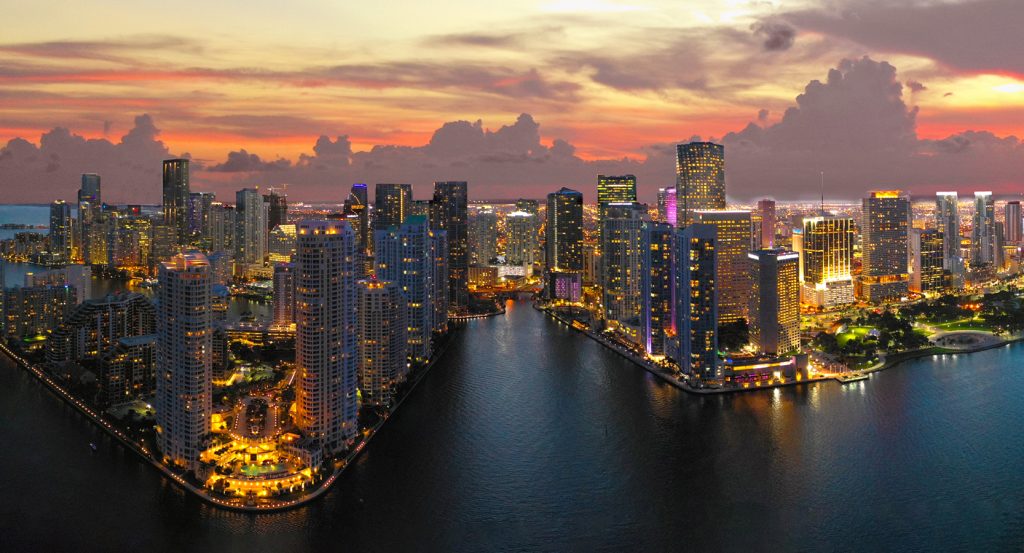
Why you should experience 18th Road in Miami, Florida.
18th Road is a tranquil corridor where The Roads' early suburban planning, Mediterranean Revival architecture, mature tree canopy, and enduring residential character reflect one of Miami's earliest planned neighborhoods.
Running through The Roads between Brickell and Shenandoah, the corridor follows the gently curving street pattern that distinguishes the neighborhood from Miami's surrounding grid, connecting historic residences, landscaped parkways, and quiet residential blocks shaped during the city's first decades of expansion. Broad lawns, mature live oaks, royal palms, Mediterranean Revival homes, and thoughtfully scaled streets create an environment where early twentieth-century planning remains clearly visible. Throughout the corridor, preserved architecture, abundant greenery, and careful neighborhood continuity reinforce a setting that has retained its original design philosophy for more than a century. The result is an experience defined by architectural refinement, shaded streetscapes, and one of Miami's most enduring historic residential environments.
What you should know about 18th Road.
18th Road is best known for extending through The Roads, a neighborhood conceived by developer Mary Brickell and formally platted during the first decade of the twentieth century as one of Miami's earliest suburban residential communities immediately south of the original downtown. Unlike Miami's conventional street grid, the neighborhood introduced gently curving roadways inspired by contemporary City Beautiful planning principles, establishing a distinctive circulation pattern that remains largely intact today. Residential construction accelerated during the Florida land boom of the 1920s, producing substantial collections of Mediterranean Revival, Mission Revival, and early Colonial Revival houses distinguished by stucco façades, barrel-tile roofs, arched loggias, decorative ironwork, and deep landscaped setbacks. Mature live oaks, royal poinciana, mahogany, gumbo limbo, and royal palms, together with native bird species including white ibis and monk parakeets, continue reinforcing the corridor's architectural and ecological character.
Architect Walter De Garmo, whose residential commissions helped define early Miami's architectural identity, designed numerous houses throughout The Roads, establishing a cohesive collection of refined domestic architecture that continues shaping the neighborhood's visual character. Landscape traditions established during the neighborhood's earliest years encouraged generous planting of tropical and subtropical tree species, allowing expansive tree canopies to mature alongside successive generations of historic residences while reinforcing the district's garden-like setting. Longstanding stewardship by individual property owners has preserved original masonry detailing, clay roof tiles, ornamental entryways, and period craftsmanship that remain visible across many blocks without altering the neighborhood's early twentieth-century design intent. Together, these architectural traditions, landscape features, and preserved residences demonstrate how 18th Road continues expressing The Roads' enduring importance as one of Miami's earliest and most thoughtfully planned residential communities.
How to fold 18th Road into your trip.
18th Road works as an exploration of Miami's architectural heritage, tropical landscapes, and early residential planning.
Begin at Alice C. Wainwright Park, where native limestone shoreline, mature tropical vegetation, and sweeping Biscayne Bay views introduce the natural landscape that influenced the city's earliest residential expansion. Continue to Vizcaya Museum & Gardens, whose 1916 estate, designed for James Deering, showcases Italian Renaissance-inspired architecture, formal gardens, and decorative arts that shaped the architectural aspirations of early Miami. Conclude at Simpson Park, where one of the largest remaining remnants of Miami Rock Ridge pine forest provides the historical culmination by preserving a rare ecological landscape that predates the city's twentieth-century growth. The progression moves naturally from Biscayne Bay's natural setting through one of Miami's defining historic estates before concluding within an exceptionally preserved native ecosystem, revealing why 18th Road remains deeply connected to the origins of The Roads.
Where your story begins.
Foresyte Travel reveals places that feel extraordinary long before you arrive.
Experience premium editorial crafted for luxury travelers.