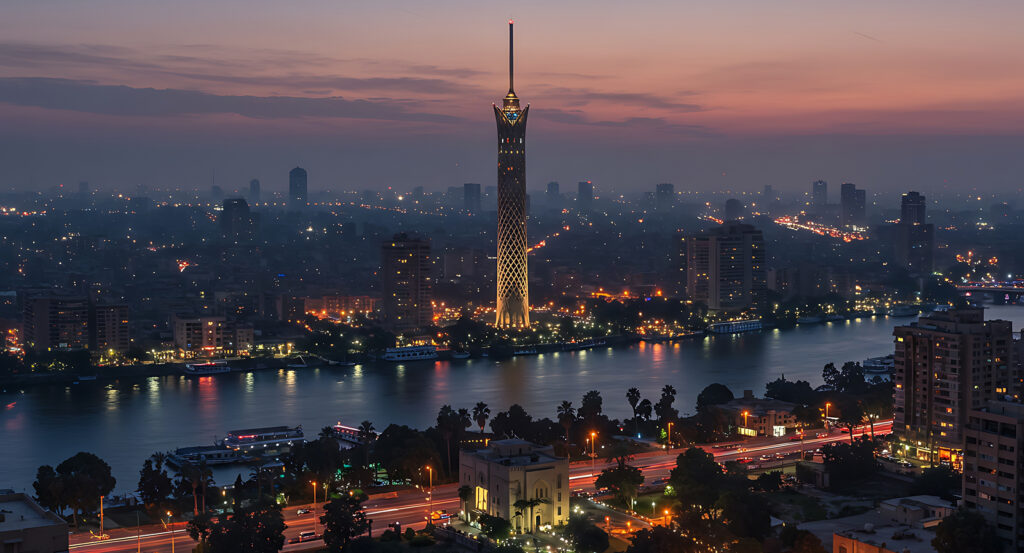
Why you should experience Pearl Hotel in Cairo, Egypt.
Pearl Hotel is a grounded, neighborhood-centric stay where human scale, practical comfort, and authentic urban context shape your Cairo experience rather than theatrical design or curated performance.
Located in one of Cairo's energetic residential and commercial districts, Pearl Hotel operates as a basecamp rather than a monument, a place where the city feels immediate, legible, and inhabitable from the first moment. This property does not announce itself through architecture or branding, it announces itself through position: close to transit, close to everyday life, and close to the rhythms that make Cairo feel lived in. The arrival sequence reflects this intentional directness. You step from the street, pulse of the city around you, into a lobby that is straightforward and purposeful: check-in counters, seating areas that feel familiar rather than staged, and a clear visual line toward elevators and public spaces. There is no theatrical entrance sequence because the city is the show. Inside, the atmosphere is calm, functional, and centered on usability. Public spaces are designed to absorb movement and offer clear orientation rather than to invite lingering for its own sake. Comfortable seating, unobtrusive lighting, and uncluttered circulation patterns make it easy to come and go. Guest rooms at Pearl Hotel are honest and practical. Rather than chasing aesthetic statements, the design prioritizes space that feels livable: beds of reliable comfort, sensible storage, workspaces that function for both digital tasks and paper planning, and sightlines that feel open rather than compressed. Many rooms provide views into the city, a mosaic of rooftops, streets, and daily animation that feels alive and unfiltered. Interiors favor neutral palettes and durable finishes, chosen not for trend cycles but for longevity. Bathrooms lean into practicality: efficient layouts, well-lit mirrors, reliable fixtures, and spaces that support routine. There are no soaking tubs overlooking Nile panoramas here, but there is consistency you can trust after long days exploring or working. Dining at the hotel reinforces the property's grounded sensibility. Meals are straightforward, hearty, and predictable, breakfast that gets your day moving without delay, lunch and dinner options that are straightforward and nourishing. The restaurant functions as a social point rather than a destination, meaning guests and local visitors alike occupy it with the same ease. Service at Pearl Hotel is professional and respectful. Interactions are rooted in competency, requests handled without hesitation, information shared directly, and staff focused on solving rather than performing. This kind of reliability becomes a quiet luxury in a city where unpredictability often feels standard. The surrounding neighborhood is integral to the Pearl Hotel Cairo experience. Step out the door and you are immediately in the urban weave: shops, cafés, transit stops, street life, and the rhythms of Cairo's everyday motion. This is not a staged “experience”; this is Cairo as lived.
What you should know about Pearl Hotel.
Pearl Hotel belongs to a class of accommodations shaped by function first rather than image first, a hospitality logic that predates the current global emphasis on experiential luxury.
Many hotels in Cairo are defined by Nile views, architectural performance, or historic legacy. Pearl Hotel takes a different path: it leans into urban presence. Its location within a busy district ties it directly into Cairo's transport networks, commercial rhythms, and daily cycles of life that begin early and ebb late. This positioning reflects a deeper understanding of how the city works. The building's architecture and interior design respond to this logic. Rather than creating isolated vistas or curated backdrops, spaces are designed to connect, lobby to street, room to neighborhood, breakfast table to commuter flows. Over time, this practical orientation has shaped the hotel's guest profile: professionals on extended stays, independent travelers who value situational clarity, regional guests familiar with Cairo's pace, and visitors who want proximity to multiple parts of the city. Unlike some properties that reinvent themselves every few years to chase trends, Pearl Hotel tends to evolve incrementally, updates focused on need and usability. This stability reinforces a lived-in feeling: the hotel does not present Cairo, it helps you enter it. Culturally, the hotel serves as an urban node. Its dining spaces are frequented by locals and visitors alike, creating an intersection of daily Cairo life that blurs the line between guest and neighborhood patron. This contributes to an experience that feels more anchored than transitory, where residents see you as someone present in the city, not just passing through it. Another lesser-known aspect is how the location supports movement and access. The hotel sits in a district that connects easily to key cultural sites, administrative centers, and transport arteries. This means you can take short walks to cafés and local markets, hop on city transit to museums or historic sites, and return quickly. In a metropolis like Cairo, where traffic and distance can absorb large chunks of the day, this kind of access is not incidental, it is operational advantage. Architecturally, the hotel's restraint is strategic. By avoiding thematic excess or overt local motifs, the space remains neutral, allowing Cairo itself to supply the narrative. You are not meant to look at Cairo from inside a curated frame; you are meant to enter it fluidly. This clarity of purpose, designing space for living rather than displaying the city, gives Pearl Hotel a quiet rigor that many travelers come to value precisely because it does not pretend to be something else.
How to fold Pearl Hotel into your trip.
Pearl Hotel works as your everyday anchor, the base from which Cairo's diversity, scale, and movement become manageable.
Start the mornings with a straightforward breakfast that equips rather than distracts, then step into the neighborhood to absorb Cairo's daily rhythms firsthand, shops opening, street vendors at work, neighbors on their routes. Use the hotel's location to access multiple districts readily: uptown for modern shopping and dining, downtown for museums and historic streets, and Zamalek or Garden City for galleries and cafés. Midday, return to the hotel to regroup, rooms here offer psychological and physical rest without excess, so you can reset efficiently. Afternoons are ideal for structured plans: walking tours, museum visits, or transit rides to Giza, Saqqara, or the Grand Egyptian Museum. The hotel's access to transport options helps make these excursions predictable. Evenings at Pearl Hotel can be organized or spontaneous. Walk to local cafés, visit neighborhood eateries, or simply observe Cairo's night rhythm from just outside your door. Pair your stay here with short stays in different parts of Cairo if you want to experience multiple textures of the city, letting Pearl serve as the grounding bookend between deeper dives. For travelers combining business with exploration or those working on longer assignments, the hotel functions well as both base and launchpad, keeping you connected to the city's arteries without making you feel like a visitor behind glass.
Where your story begins.
Foresyte Travel reveals places that feel extraordinary long before you arrive.
Experience premium editorial crafted for luxury travelers.