
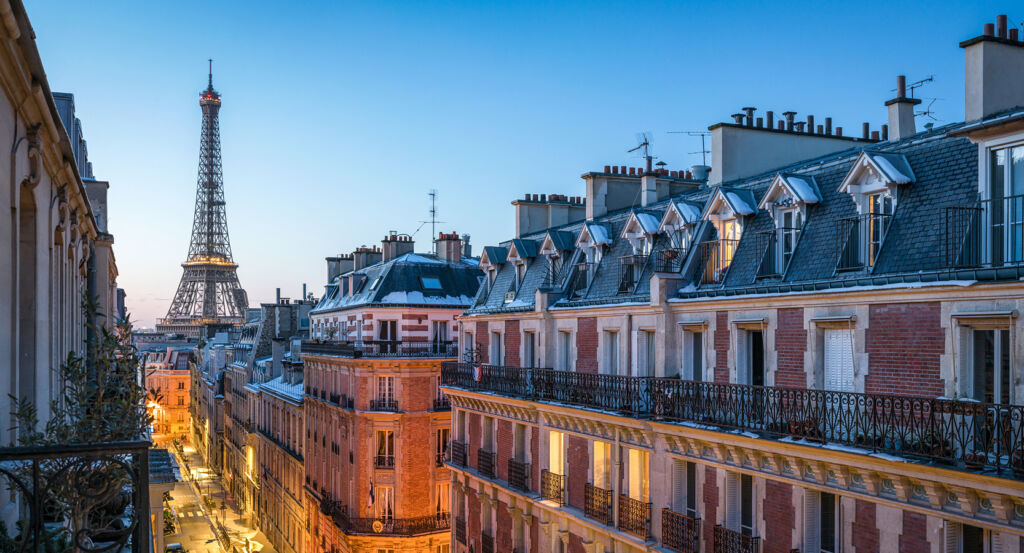
Why you should experience Rue La Boétie in Paris, France.
Rue La Boétie is an elegant Champs-Élysées corridor where aristocratic heritage, artistic innovation, luxury commerce, and Parisian sophistication converge along one of the Right Bank's most distinguished streets.
Running through Champs-Élysées between Avenue des Champs-Élysées and Boulevard Haussmann, this refined historic corridor unfolds through stately Haussmannian residences, prestigious art galleries, luxury fashion houses, diplomatic offices, and celebrated cultural institutions that embody the enduring prestige of the Eighth Arrondissement. Limestone façades, wrought-iron balconies, impeccably maintained buildings, and tree-lined sidewalks create an atmosphere where business leaders, collectors, artists, and visitors move effortlessly between some of Paris' most influential destinations. Every block reflects the architectural refinement and cosmopolitan character that define this celebrated quarter. The result is a corridor defined by cultural distinction, architectural elegance, and one of Paris' foremost avenues of prestige.
What you should know about Rue La Boétie.
Rue La Boétie is best known for honoring the sixteenth century humanist Étienne de La Boétie, whose influential Discourse on Voluntary Servitude became one of history's foundational political essays exploring liberty, civic responsibility, and resistance to tyranny, while the street itself achieved international cultural significance as the location of Galerie Paul Rosenberg, among the twentieth century's most important art dealerships representing Pablo Picasso, Georges Braque, Henri Matisse, and Fernand Léger before Nazi occupation forced the gallery's confiscation during the Second World War. The corridor also preserves an enduring connection to modern art through its association with the Parisian avant-garde, whose exhibitions, collectors, and dealers helped establish the French capital as the world's leading center of artistic innovation during the first half of the twentieth century.
Prestigious galleries, distinguished office buildings, luxury boutiques, and beautifully preserved nineteenth century architecture sustain the sophisticated character that has long distinguished Rue La Boétie. The street's enduring relationship with art, commerce, and intellectual life reinforces its reputation as one of the capital's most culturally significant corridors, where architectural elegance and creative history remain inseparable.
How to fold Rue La Boétie into your trip.
Rue La Boétie works as an exploration through the Champs-Élysées district's celebrated art, architecture, and luxury heritage.
Begin at Petit Palais, where one of Paris' finest beaux-arts museums introduces the extraordinary artistic heritage of the neighborhood before following Rue La Boétie through its distinguished galleries and elegant streetscape. Continue to Musée Jacquemart-André, whose grand mansion and exceptional art collections celebrate the refined tastes that have long defined this district. Conclude at Grand Palais, where grand architecture and internationally acclaimed exhibitions provide a memorable finale celebrating creativity, innovation, and Parisian grandeur. The progression moves naturally from museum masterpieces to private collecting before concluding through one of France's greatest exhibition halls, revealing why Rue La Boétie remains one of Paris' most distinguished cultural corridors.
Where your story begins.
Foresyte Travel reveals places that feel extraordinary long before you arrive.
Experience premium editorial crafted for luxury travelers.














































































































