Why you should experience Al Mashrabiya Hotel in Cairo, Egypt.
Al Mashrabiya Hotel is a quietly sophisticated urban sanctuary where boutique warmth, personalized service, and thoughtful design create a rare sense of place within the kinetic energy of Cairo.
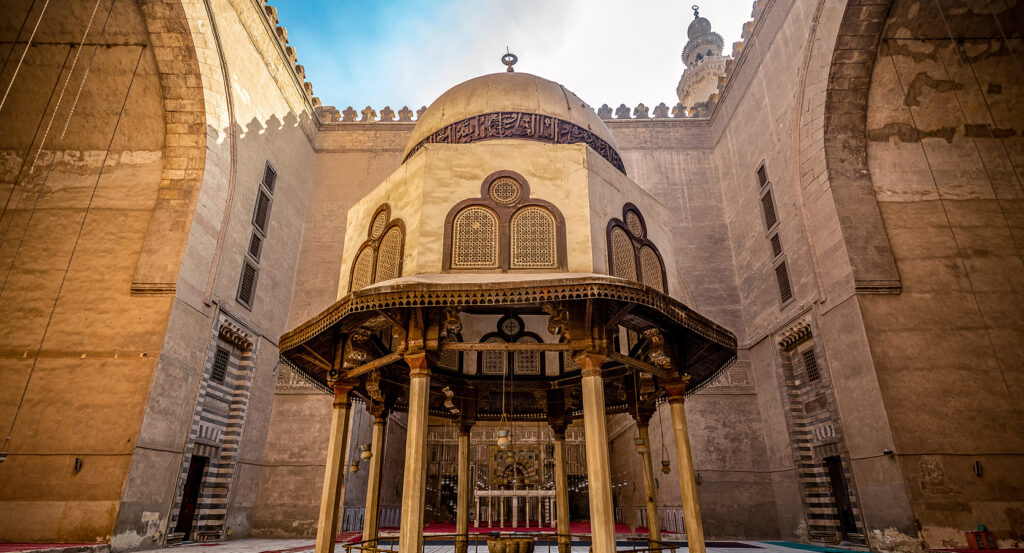
Set in the heart of downtown, Al Mashrabiya Hotel is the kind of property that does not shout its arrival but immediately commands attention through subtler means, atmosphere, curation, and spatial intelligence. Unlike larger luxury hotels that emphasize scale or Nile frontage, Al Mashrabiya stakes its character on contextual intimacy: the ability to feel embedded within the city while retaining a calm, curated interior world that absorbs rather than competes with Cairo's relentless motion. The architectural approach reflects this balance. The façade, though discreet, hints at geometry and texture inspired by traditional mashrabiya latticework, a cultural motif common in Egyptian and broader Islamic architecture. Inside, this influence is reinterpreted with modern refinement: patterned wood screens, warm finishes, and careful play between light and shadow create a rhythm that feels both rooted and contemporary. Public spaces are composed for conversation and pause rather than transit; lounges, nooks, and communal tables feel like curated living rooms rather than lobbies. This is a hotel that encourages lingering. Guest rooms and suites extend the property's design logic into private space. They are not cavernous, but they are precisely composed, every element intentional. Warm woods, soft textiles, muted tones, and layered lighting create spaces that feel restful and distinctly human-scaled. Beds are plush without theatrics, seating areas are generous without excess, and windows frame Cairo's urban mosaic as a constant, shifting backdrop. The bathrooms are refined and functional, featuring walk-in showers, quality fixtures, and materials selected for tactility and longevity. What distinguishes the rooms here is their orientation toward experience rather than feature lists, a sense that these are spaces to live in, not just sleep in. Dining at Al Mashrabiya Hotel reflects the property's calibrated sensibility. The restaurant offers a thoughtful blend of regional flavors and contemporary techniques, with menus that feel both familiar and precise. The atmosphere invites unhurried meals, breakfast experiences that unfold with the morning light, dinners that feel like intentional endings to full days, and shared tables that turn into conversations. Service is warm, deeply personal, and quietly anticipatory. Staff do not perform service, they deliver presence: remembering preferences, offering guidance rooted in local rhythm, and engaging. In a city where hospitality can often be grand or bustling, the service here feels selective, focused, and rhythmically in tune with each guest's pace. The neighborhood reinforces the hotel's identity. Downtown Cairo is dense, layered, and alive with commerce, history, and day-to-day life. From here, the Egyptian Museum, Tahrir Square, historic streets, and cultural institutions are all walkable, offering direct engagement with the city's past and present. Yet Al Mashrabiya Hotel acts as a buffer, an interior world that allows Cairo's scale to be processed.
What you should know about Al Mashrabiya Hotel.
Al Mashrabiya Hotel occupies a unique niche in Cairo's hospitality landscape, a space defined by architectural poetry.
Where many urban hotels orient toward view corridors, Nile frontage, or grand scale, Al Mashrabiya leans into contextual depth. Its name, derived from the traditional lattice window known as a mashrabiya, signals more than aesthetic choice, it signals a philosophy of filtered presence. In style architecture, mashrabiya screens provided shade, privacy, and a way to engage the external environment. The hotel translates this concept into contemporary hospitality: spaces that allow Cairo to be felt, glimpsed, and absorbed. The design is not pastiche. Instead, it uses architectural language that references heritage while anchoring firmly in the present, wood and stone balanced with neutral palettes, screens that modulate light without obscuring, and details that reward attention rather than demand it. Over time, this approach has shaped the guest experience in subtle but profound ways. Regular visitors describe stays here in terms of moments rather than amenities, the way morning light passes through a screen onto a table, the soft muffling of street sounds at dusk, or the cadence of service that anticipates needs without ceremony. This focus on physical calibration has made the hotel particularly appealing to cultural travelers, designers, writers, and visitors who want Cairo with texture and resonance. Behind the scenes, the property has also carved out a reputation among diplomats, academics, and creatives who appreciate its discreet atmosphere. Because the hotel's scale is human rather than institutional, its social spaces function as microcosms of conversation, places where ideas are exchanged with ease and presence rather than performance. Another lesser-known aspect is how the hotel's programming and culinary direction reflect local rhythms. Rather than adopting international templates, seasonal menus and curated experiences evolve with regional produce, cultural cycles, and moments that align with Cairo's own calendar. This creates a sense of continuity between the city and the hotel, making stays feel anchored. In a hospitality market where luxury is often equated with vistas and volume, Al Mashrabiya Hotel stakes its claim through intimacy, contextual calibration, and architectural intelligence, an experience rooted in how you feel inside the city, not how far away you are from it.
How to fold Al Mashrabiya Hotel into your trip.
Al Mashrabiya Hotel works as your contextual anchor, your place of presence in Cairo.
Begin your mornings letting the filtered light in the interiors set your rhythm before stepping onto the surrounding streets. Walk to the Egyptian Museum early, engaging the city's history at your pace, then explore downtown's historic lanes, boutiques, and cafés. Return mid-day to absorb the hotel's calm, settle into a lounge, read in a courtyard, or simply watch light modulate across interior surfaces. Let the hotel soften the city's intensity. Use the property as a base to explore adjacent districts like Garden City and Zamalek where culture, galleries, and cafés unfold with a slower rhythm, then return in the evening for dinner that feels intentional. Pair your stay here with cultural excursions such as Saqqara or the Grand Egyptian Museum, using the hotel's composure to recalibrate between experiences shaped by scale and antiquity. For longer stays, consider dividing your itinerary between Al Mashrabiya Hotel and a Nile-front property to balance presence with panorama.
Where your story begins.
Foresyte Travel reveals places that feel extraordinary long before you arrive.
Experience premium editorial crafted for luxury travelers.