
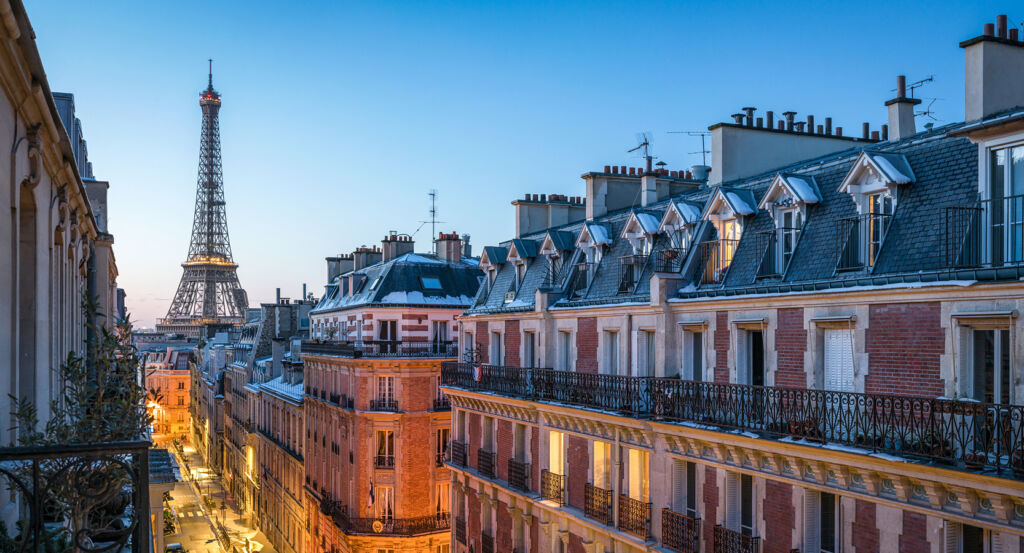
Why Boulevard Henri IV matters.
Boulevard Henri IV is a distinguished Arsenal corridor where royal legacy, Haussmannian grandeur, revolutionary history, and elegant Parisian urbanism converge along one of the capital's most historically significant avenues.
Running through Arsenal between Place de la Bastille and Pont de Sully, this stately boulevard unfolds through grand civic architecture, distinguished Haussmann façades, historic squares, landscaped medians, celebrated institutions, and broad avenues that seamlessly connect the Seine with eastern Paris. Tree-lined promenades, refined residential buildings, generous public spaces, and commanding perspectives create an atmosphere where centuries of royal ambition, revolutionary transformation, and modern city planning coexist. Every stretch of the boulevard reveals another layer in the remarkable evolution of Paris from fortified medieval capital to one of the world's greatest planned cities. The result is a corridor defined by architectural distinction, historical significance, and one of Paris' most impressive ceremonial thoroughfares.
What defines Boulevard Henri IV.
Boulevard Henri IV is best known as one of Baron Haussmann's major Second Empire boulevards, opened in 1864 and named in honor of King Henri IV, whose reign from 1589 to 1610 transformed Paris through ambitious public works that included the creation of Place Royale, today's Place des Vosges, the completion of Pont Neuf, the construction of Place Dauphine, and extensive modernization that established the foundations of the city's early modern development. Constructed during Haussmann's sweeping reconstruction of eastern Paris, the boulevard cut through dense medieval neighborhoods to create a grand connection between Place de la Bastille and the Seine while improving circulation, sanitation, and military mobility across the capital. Its route also occupies one of the most historically charged districts in France, linking the site of the former Bastille prison with the historic Marais and the Île Saint-Louis while passing close to the Arsenal district, once home to the royal arsenal that supplied the French monarchy. The avenue preserves an outstanding collection of Second Empire architecture characterized by harmonious stone façades, wrought-iron balconies, and carefully proportioned residential blocks that exemplify Haussmann's unified vision for modern Paris. Together, the boulevard's royal dedication, transformative urban planning, architectural coherence, and proximity to some of the nation's defining historical landmarks establish Boulevard Henri IV as one of the capital's most important ceremonial avenues.
Grand residential façades, elegantly landscaped medians, uninterrupted sightlines, and carefully integrated nineteenth-century infrastructure continue expressing Haussmann's vision of a healthier, more efficient, and architecturally unified capital. The boulevard's enduring relationship with Henri IV's city-building legacy, revolutionary landmarks, and Second Empire planning demonstrates how successive generations reshaped Paris while preserving its historical identity. Few Parisian corridors combine royal history, urban innovation, architectural consistency, and national symbolism with such remarkable continuity.
How Boulevard Henri IV fits.
Boulevard Henri IV works as an exploration through Arsenal's celebrated monuments and historic riverfront.
Begin at Place de la Bastille, where one of France's defining revolutionary sites introduces the extraordinary historical importance of the boulevard before strolling toward the Seine beneath its elegant rows of trees. Continue to Place des Vosges, Henri IV's pioneering royal square, whose harmonious arcades and red-brick pavilions reveal the king's lasting influence on Parisian urban planning. Conclude at Pont de Sully, where panoramic views across the Seine and the historic islands provide a memorable finale celebrating the remarkable relationship between royal ambition, architectural innovation, and the evolving city of Paris. The progression moves naturally from revolutionary history to royal urbanism before culminating in one of the capital's finest river crossings, revealing why Boulevard Henri IV remains one of Paris' most distinguished historic avenues.
Where your story begins.
Foresyte Travel reveals places that feel extraordinary long before you arrive.
Experience premium editorial crafted for luxury travelers.
Foresyte Travel may earn a commission when you book through the link on this page.














































































































