
Why Accademia di Belle Arti di Brera matters.
Accademia di Belle Arti di Brera is an intellectually charged artistic institution where Brera's creative character meets Maria Theresa's Enlightenment program, Francesco Maria Richini's palatial architecture and 250 years of Milanese art education.
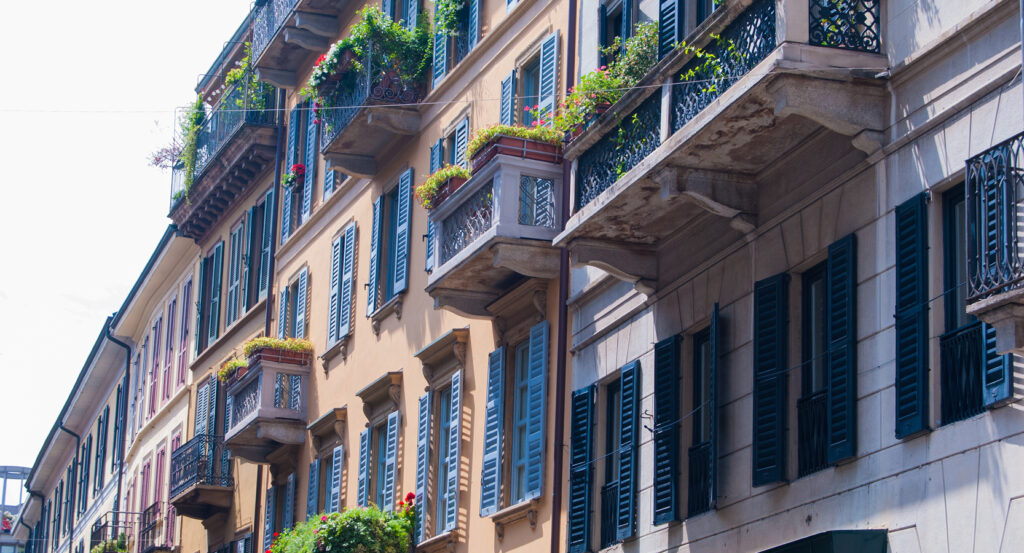
Set along Via Brera near Via Fiori Oscuri and just steps from Via Brera's intersection with Via Pontaccio, the academy occupies Palazzo di Brera within a dense historic enclosure where palatial fronts, narrow side streets and former religious complexes concentrate several of Milan's major artistic institutions into a few adjoining blocks. Richini's immense rectangular courtyard opens beyond the comparatively austere street entrance through two levels of arcades carried on paired columns. Giuseppe Piermarini's grand portal and completion of the courtyard give the interior a scale concealed from Via Brera, with Antonio Canova's bronze Napoleon standing at its center. Studios, classrooms and institutional rooms occupy the surrounding palace beside collections and cultural organizations that developed from the same eighteenth-century concentration of learning. The result is an unusually complete academic environment where architecture, artistic production and centuries of teaching remain embedded inside the physical center of Brera.
What defines Accademia di Belle Arti di Brera.
Accademia di Belle Arti di Brera is best known for transforming artistic education in Milan after Maria Theresa of Austria established the academy in 1776 as part of an Enlightenment concentration of arts, sciences and letters inside Palazzo di Brera. The building had originated around an Umiliati monastery before passing to the Jesuits in 1572, who commissioned Francesco Maria Richini to undertake its major seventeenth-century reconstruction beginning in 1627 and 1628. Suppression of the Society of Jesus in 1772 transferred the complex into public hands, creating the institutional opening through which the existing astronomical observatory and library were joined by the Orto Botanico in 1774 and the new art academy two years later. Giuseppe Piermarini completed portions of the palace and became the academy's first professor of architecture, connecting the physical reconstruction of Brera with the educational institution developing inside it. Maria Theresa's program removed fine-art instruction from private workshops and placed it under public supervision and judgment, establishing a formal academic structure for Milanese painters, sculptors and architects. Giuseppe Parini reinforced the connection between artistic training and broader intellectual study, and a dedicated academy secretary was instituted in 1778 to advance that Enlightenment program. Giuseppe Bossi assumed the secretaryship in 1802 and expanded Brera's European connections through figures including Jacques-Louis David, Antonio Canova and Bertel Thorvaldsen. Bossi also established annual exhibitions that developed into Italy's principal nineteenth-century showcases for contemporary art, turning an educational institution into a major public arena for artistic careers. Francesco Hayez subsequently made history painting central to Romantic Brera, Giuseppe Bisi established its landscape school and Cesare Tallone later taught painters including Carlo Carrà and Achille Funi. The academy's influence continued through Adolfo Wildt, Francesco Messina and Marino Marini in sculpture, with Lucio Fontana and Fausto Melotti among the artists formed within that succession.
Napoleonic Milan gave the academy another mechanism for expanding its influence by joining teaching, exhibitions and collecting inside the same institution. Napoleon entered Milan on May 15, 1796, and the city subsequently became the center of the Cisalpine Republic, Italian Republic and Kingdom of Italy, placing Brera near the artistic machinery of successive regimes. Andrea Appiani became Primo Pittore del Regno, Antonio Canova entered the academy's international circle and Bossi used his secretaryship to strengthen relationships between Milan and European artists. A major competition held at Palazzo Brera in 1802 asked artists to represent the gratitude of the Italian Republic toward Napoleon, directly connecting academic production with the political imagery of the new state. Bossi opened academy rooms to the public in 1806 with works by distinguished students displayed beside historical models and plaster casts, establishing a comparative environment linking contemporary instruction with study of earlier art. Paintings assembled for educational use had formed an academy collection from 1776, and Bossi substantially enlarged it after 1802. Suppression of religious institutions under Napoleonic government then brought ecclesiastical paintings into Brera, enlarging the gallery from an academic teaching collection toward the nucleus of the later Pinacoteca. The institution also exercised authority beyond its classrooms through the Commissione di Ornato, which oversaw public monuments and contributed to the architectural development of Milan. Brera became a place where artists were trained, contemporary work was publicly exhibited, historical art was assembled for study and artistic judgment extended into the city itself.
How Accademia di Belle Arti di Brera fits.
Accademia di Belle Arti di Brera works as the anchor for a daytime exploration through Brera using three nearby sites that move from an Augustinian foundation through an aristocratic palace reshaped by Baroque and Neoclassical architects into a nineteenth-century playhouse recovered for theatrical experimentation.
Begin at Chiesa di San Marco, whose documented history reaches 1254, when Lanfranco Settala, prior general of the Augustinian Hermits, developed a Gothic church with three naves outside Milan's medieval walls. Boniface VIII granted the Augustinians permission in 1302 to establish private funerary chapels within their churches, prompting aristocratic commissions that expanded San Marco's artistic importance. A medieval portal attributed to Giovanni di Balduccio survives beneath figures of Saint Mark, Saint Ambrose and Saint Augustine, and later interventions by Francesco Castelli, Giuseppe Quadrio and Giovanni Ruggeri transformed the complex as the Milanese Augustinian house gained prominence. Carlo Maciachini subsequently reworked the facade during the nineteenth century, placing Neo-Gothic intervention over a church whose architecture had accumulated across more than six centuries. Continue to Palazzo Cusani, where Agostino Cusani established a seventeenth-century family residence before Cardinal Agostino Cusani commissioned a richer exterior during the early eighteenth century. Giovanni Ruggeri developed the Via Brera facade between 1712 and 1719 through a dense composition of curved pediments, sculpture and projecting balconies. Ferdinando Cusani commissioned Giuseppe Piermarini between 1775 and 1779 to reshape the garden side in Neoclassical form, placing the architect simultaneously within the transformation of this aristocratic residence and the institutional development underway farther along Via Brera. Luigi Cusani sold the property to the Kingdom of Italy in 1808 after gambling debts undermined the family fortune, and the former palace entered military use as the Ministry of War. Conclude at Teatro Studio Melato, descended from Carlo Fossati's theater designed by Fermo Zuccari and opened on April 25, 1859. Teatro Fossati became the first Italian theater to experiment with electric lighting in 1881 and received Franz Kafka among its audience in 1912 before theatrical decline led to cinematic use and closure. Giorgio Strehler secured the abandoned building for the Piccolo Teatro, and Marco Zanuso transformed it between 1982 and 1986 into the circular Teatro Studio, organized around a central stage and four levels of balconies. Strehler inaugurated the recovered space with Elvira, o la passione teatrale, then connected it with the Piccolo's new acting school, which opened in the building in 1987; the theater later received Mariangela Melato's name. The progression moves from Settala's medieval Augustinian center through Ruggeri and Piermarini's transformation of aristocratic Palazzo Cusani into Strehler and Zanuso's recovery of Teatro Fossati, extending the academy through three institutions where Brera repeatedly converted inherited architecture into new forms of cultural production.
Where your story begins.
Foresyte Travel reveals places that feel extraordinary long before you arrive.
Enjoy editorial crafted for luxury travelers.
Foresyte may earn a commission when you book.




















































































































