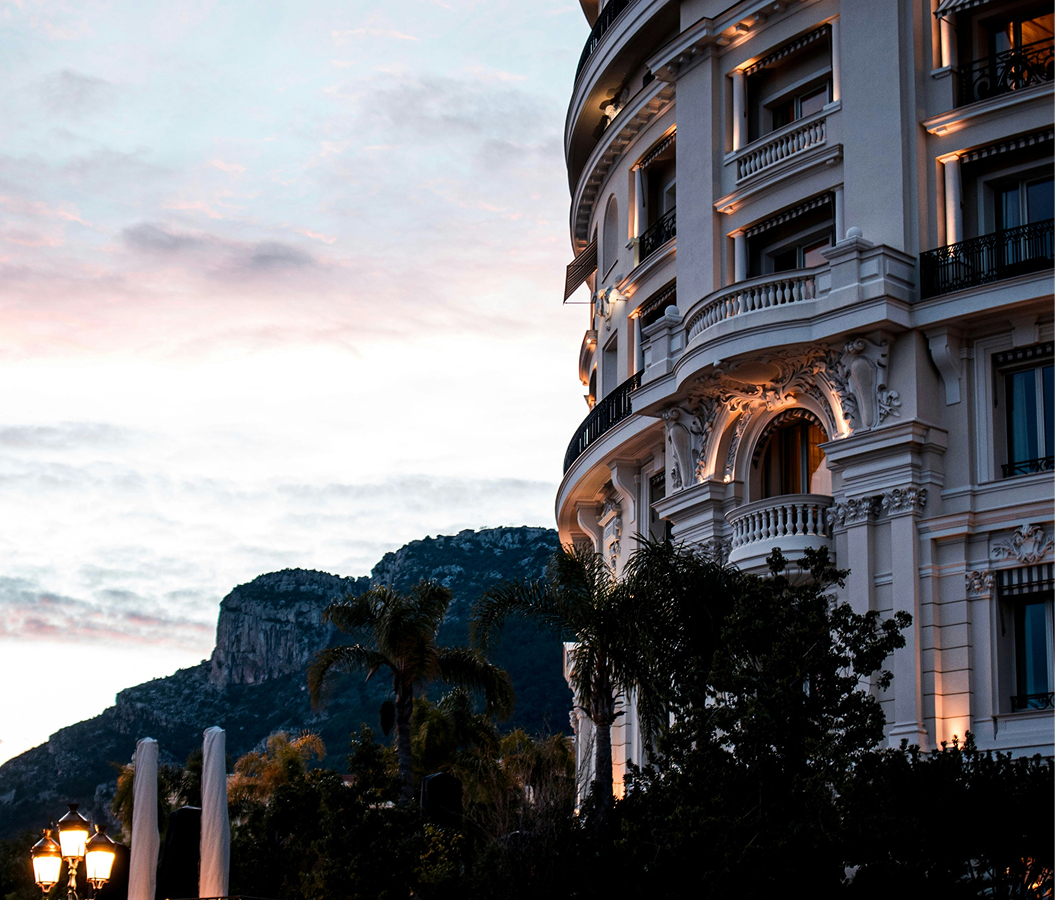
Why Palazzo Cusani matters.
Palazzo Cusani is a sumptuous Baroque palace where Brera's aristocratic character meets a Roman-inflected facade, an eighteenth-century ceremonial interior and the architectural ambitions of a family embedded in Milanese court society.
Set along Via Brera near Via del Carmine and just steps from Via Fiori Chiari, the palace occupies a commanding position among narrow historic streets where restrained residential fronts, gallery entrances and the nearby church precinct give way to one of the district's most elaborate aristocratic elevations. Giovanni Ruggeri's long stone facade rises directly from Via Brera through paired portals, projecting balconies, pilasters and alternating curved and triangular pediments that introduce a strongly modeled surface into the tighter surrounding streetscape. The entrance passages lead toward a courtyard and ceremonial staircase concealed behind the public front, revealing a depth difficult to anticipate from the compressed street. The rear elevation opens toward former garden ground with a markedly different architectural order, placing the building between the dense urban texture of Brera and the more private world historically contained behind its principal rooms. The result is a palace whose street presence, internal sequence and contrasting fronts compress several phases of Milanese aristocratic architecture into one of Brera's strongest surviving residential complexes.
What defines Palazzo Cusani.
Palazzo Cusani is best known for developing from a seventeenth-century family residence into an eighteenth-century architectural commission that brought Giovanni Ruggeri and Giuseppe Piermarini into successive phases of the same aristocratic complex. The Cusani acquired property near the former church of Sant'Eusebio during the seventeenth century, and Agostino Cusani, feudal lord and later Marquis of Chignolo Po, established a substantial residence there during the opening decades of that century. Gerolamo Cusani subsequently promoted an extensive rebuilding campaign and entrusted the Via Brera front to Ruggeri between 1712 and 1719. Ruggeri had trained in the Roman architectural culture associated with Carlo Fontana, and the Milanese commission translated that background into a facade divided by pilasters and animated by projecting balconies, elaborate window surrounds and alternating pediments. The result became one of Ruggeri's principal works and introduced an architectural language with unusually strong Roman associations into early eighteenth-century Milan. Ferdinando Cusani initiated another major intervention between 1775 and 1779, commissioning Piermarini to redesign the elevation toward the garden. Piermarini answered Ruggeri's Baroque street front with a disciplined Neoclassical composition, placing two generations of Milanese architecture on opposing sides of the same residence. Interior spaces retained another strand of the building's development through a courtyard and grand staircase associated with the school of Francesco Maria Richini. Luigi Cusani sold the palace in 1808 to the state property administration of the Napoleonic Kingdom of Italy after financial difficulties ended the family's possession. The sale closed two centuries of Cusani patronage during which the residence evolved from a noble family seat into an architectural complex shaped by Ruggeri, Piermarini and the wider Richinian tradition.
The palace's interiors preserve another historical sequence through decoration, warfare and restoration. Its piano nobile retains eighteenth-century painted and stucco decoration, including the large Salone delle Feste with an allegorical ceiling composition and furnishings partly originating from Palazzo Reale and Ca' Morosini in Venice. Austrian military use connected the building with Field Marshal Josef Radetzky, whose association with the palace preceded the upheaval of the Cinque Giornate in 1848. Three cannonballs embedded in the rear elevation survive from artillery fire during those events, leaving physical traces of the conflict within Piermarini's garden-facing side. Allied bombing struck Palazzo Cusani in 1943 and damaged decorated interiors. Restoration a decade later brought Guido Gregorietti into the recovery of painted surfaces and exposed seventeenth-century frescoes concealed within vaulted areas. Those paintings were transferred to canvas during the intervention, adding previously hidden decoration to the surviving interior ensemble. In the months after Liberation, General Raffaele Cadorna's General Command of the Corpo Volontari della Libertà occupied the palace, connecting the building with another decisive period in Milanese history. Palazzo Cusani preserves an interior chronology extending from aristocratic ceremony through Austrian command, nineteenth-century conflict, wartime destruction and postwar artistic recovery.
How Palazzo Cusani fits.
Palazzo Cusani works as the anchor for a daytime exploration through Brera using three nearby sites that move from an Augustinian foundation tied to medieval Milan through an Enlightenment scientific garden into a nineteenth-century theater recovered for experimental performance.
Begin at San Marco, where Lanfranco Settala, prior general of the Augustinian Hermits, established a major church in 1254 near Milan's medieval northern defenses. The complex became the order's general house and expanded into one of the city's largest churches, with seventeenth-century intervention reshaping the interior after centuries of Augustinian patronage. Giovanni Battista Sammartini later served there as organist, and the young Wolfgang Amadeus Mozart stayed in the adjoining canonica during his Milanese period. Giuseppe Verdi brought another musical chapter on May 22, 1874 when he conducted the first performance of his Messa da Requiem, written for Alessandro Manzoni and presented one year after the writer's death. Continue to Orto Botanico di Brera, where ground cultivated by the Umiliati from the fourteenth century and Jesuits from the sixteenth entered Maria Theresa of Austria's program for public education and research in 1774 and 1775. A sovereign resolution of April 14, 1774 assigned the former Jesuit garden to botanical instruction for medical and pharmaceutical students, and the Vallombrosan botanist Fulgenzio Vitman directed its early scientific development. Vitman organized plants through Linnaean classification, expanded collections through exchanges of seeds and specimens and placed cultivation directly within teaching and research. The garden later entered the University of Milan in 1935, preserving medicinal beds and two Ginkgo biloba trees dating from its early scientific period within five thousand square meters behind the Brera complex. Conclude at Teatro Studio Melato, descended from Carlo Fossati's theater designed by Fermo Zuccari and opened on April 25, 1859. The Fossati became the first Italian theater to experiment with electric lighting in 1881, hosted Franz Kafka during his 1912 Milan visit and later passed into cinematic use before closure. Giorgio Strehler incorporated the deteriorated building into the Piccolo Teatro project, and Marco Zanuso directed its architectural recovery between 1982 and 1986. Reopened as Teatro Studio, the stripped interior became a flexible laboratory for performance and actor training within the institution founded by Strehler, Paolo Grassi and Nina Vinchi; its later dedication to Mariangela Melato connected the recovered nineteenth-century theater with one of Italy's major modern actresses. The progression moves from Settala's medieval Augustinian center through Maria Theresa and Vitman's conversion of monastic cultivation into botanical science into Strehler and Zanuso's recovery of the Fossati for theatrical experimentation, developing three institutions that changed purpose without surrendering the historic fabric of Brera.
Where your story begins.
Foresyte Travel reveals places that feel extraordinary long before you arrive.
Enjoy editorial crafted for luxury travelers.
Foresyte may earn a commission when you book.