Why Eichardt's Private Hotel matters.
Eichardt's Private Hotel is a historic lakeside hotel where Queenstown's gold-rush beginnings meet the Victorian hostelry William Gilbert Rees formed from his woolshed.
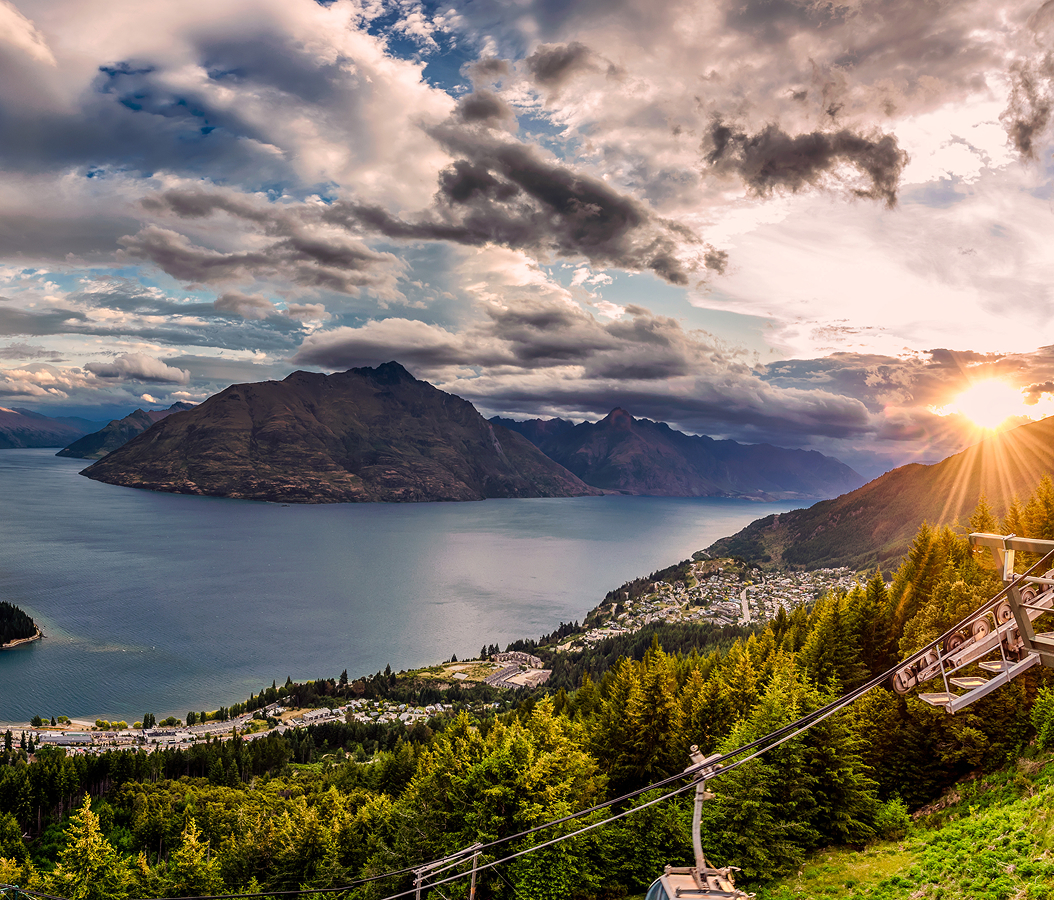
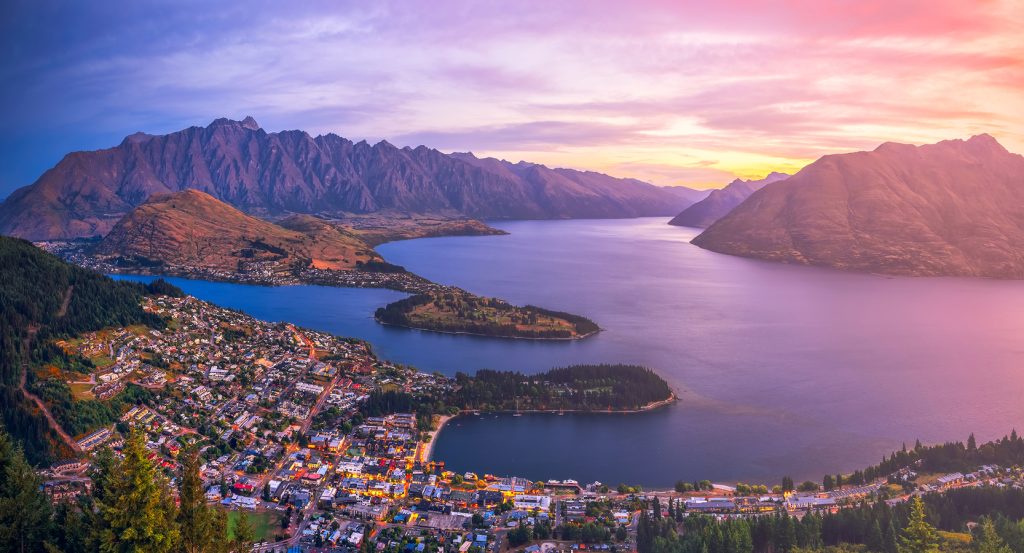
At the junction of Marine Parade and Ballarat Street, facing Queenstown Bay across Lake Whakatipu, Eichardt's occupies a compact waterfront block framed by The Mall, Rees Street, the Remarkables and Cecil Peak, with Ben Lomond rising behind the town. Its position places the historic frontage between the lake's open surface and Queenstown's closely built commercial centre. The white Victorian façade meets the water's edge, while the mountains shape the view beyond the bay. The hotel's original location connects the town's earliest settlement with its later role as a destination on the lake. The result is a waterfront hotel whose physical presence links Queenstown's founding period with its continuing life as an alpine centre.
What defines Eichardt's Private Hotel.
Eichardt's Private Hotel is best known for its transformation from William Gilbert Rees's Queen's Arms into Albert and Julia Eichardt's celebrated goldfields hotel, a lakeside business that bridged Queenstown's mining origins and its growth as a tourist town. Rees arrived in the district in 1859 to find pastoral land and established a homestead on the shore of Lake Whakatipu. A woolshed built on that run became the first building on the townsite. The discovery of gold in the Shotover River in 1862 redirected Rees's plans and brought prospectors, traders and carriers to the lakeside settlement. He converted the woolshed into the Queen's Arms, added a timber frontage and partnered with Hugh William Bracken, a former police sergeant-major. The hotel became a base for the new goldfield's traffic, with coach services departing outside and freight bookings handled at the premises. Albert Eichardt entered the business in 1866, using proceeds from a gold-nugget raffle to fund improvements. In 1867 Eichardt and C.C. Boyes purchased the hotel, and Albert married Julia Shanahan the following year. Julia had already worked as its proprietress and dining-room manager, and her business role continued after the marriage. By 1869 Albert held sole ownership, and the Queen's Arms had become Eichardt's Queen's Arms Hotel. The name later shortened to Eichardt's Private Hotel as the district's mining economy gave way to a more settled town and tourist trade. Rees's sheep station had given way to a hotel shaped by the gold rush, then by the Eichardts' investment and management. The change in name followed a deeper shift in the business: lodging and transport services built for miners and carriers became part of the hospitality offered to visitors exploring the lake district. Julia's stewardship became a defining chapter after Albert's death in 1882. She continued operating the hotel until her own death in 1892, preserving a business she had helped shape from its early years. Her tenure included the arrival of electric lighting, making the hotel Queenstown's first electrified building. Julia also developed a reputation for assisting people in need across the district, combining commercial leadership with a visible civic role. At her funeral, local businesses closed and hundreds of mourners joined the procession, a measure of her place in the community. Eichardt's acquired its name and reputation through the combined work of Albert and Julia, with Julia's management carrying the hotel into a new era of Queenstown hospitality.
How Eichardt's Private Hotel fits.
Eichardt's Private Hotel works as a starting point for a Queenstown outing through its early public gardens, the stone civic institutions that followed the gold rush and the regional collections preserving the district's past.
Begin at Queenstown Gardens, where the settlement's first public reserve was planned on the lakeside peninsula. Queenstown's borough council secured the peninsula for public purposes in 1867, and surveyor Mr. Wright laid out its main avenue and circular walk that September. Mayor J.W. Robertson and nurseryman Mr. McConochie planted two English oaks that winter to mark the borough's incorporation. One survives as a mature tree, linking the gardens' origins with the town's earliest civic decisions. Continue to the Courthouse on Ballarat Street, a schist building designed by Invercargill architect F.W. Burwell. The courthouse was begun in 1875 and completed in 1876, replacing earlier goldfield offices that had operated from tents. Burwell designed the adjoining library, completed in 1877, and the two buildings meet at right angles, sharing a wall. Their stone construction marks the transition from improvised frontier administration to permanent civic architecture. Conclude at Lakes District Museum & Gallery in Arrowtown, established in 1948 as a Centennial of Otago project. It began in the former billiard rooms of the Ballarat Hotel before moving in 1955 to the former Bank of New Zealand building. Its collections span early Māori history, gold mining, Chinese miners and the district's later development. The progression moves from Queenstown's planned public reserve through its permanent civic buildings to the museum preserving the wider district's history, tracing how a frontier settlement created public places and institutions that carried its stories forward.
Where your story begins.
Foresyte Travel reveals places that feel extraordinary long before you arrive.
Enjoy editorial crafted for luxury travelers.