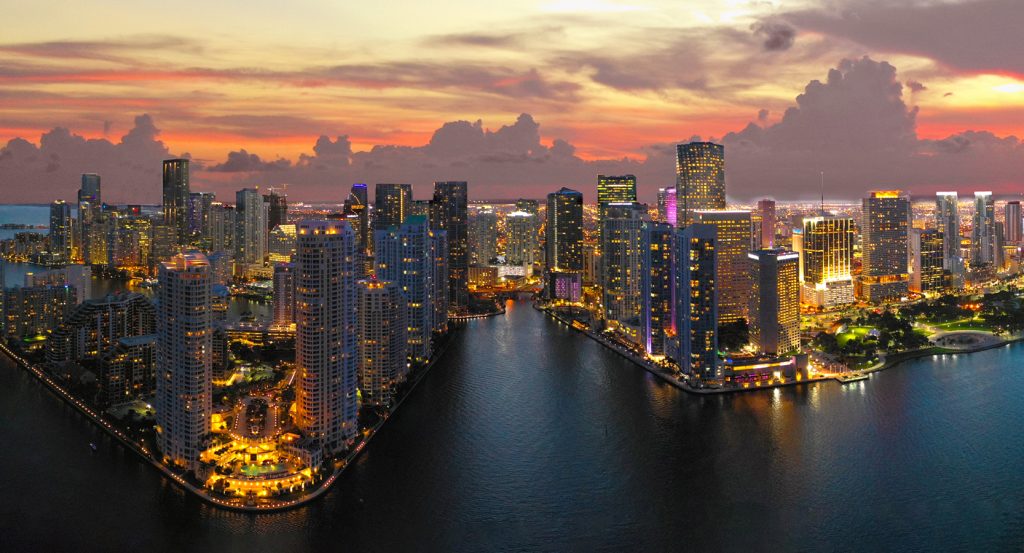
Why you should experience Florida Avenue in Miami, Florida.
Florida Avenue is a welcoming corridor where Little Havana's Cuban heritage, neighborhood traditions, tropical streetscape, and creative spirit continue shaping one of Miami's most authentic residential corridors.
Running through Little Havana between Riverside and Shenandoah, the corridor links early twentieth-century homes, neighborhood churches, locally owned businesses, community institutions, and shaded sidewalks beneath mature royal palms and live oaks. Mediterranean Revival residences, style bungalows, colorful storefronts, and established public spaces create a streetscape where successive generations have preserved the area's distinctive cultural identity. Throughout the corridor, historic buildings, civic organizations, and enduring neighborhood traditions reinforce a setting whose character has evolved through immigration, craftsmanship, entrepreneurship, and community stewardship. The result is an experience defined by cultural depth, architectural variety, and one of Miami's most engaging neighborhood corridors.
What you should know about Florida Avenue.
Florida Avenue is best known for extending through Little Havana, a neighborhood that experienced dramatic growth after thousands of Cuban refugees settled in the area following the Cuban Revolution beginning in 1959, reshaping the social, commercial, and cultural fabric of Miami. Residential development surrounding the corridor began during the first decades of the twentieth century as Miami expanded westward beyond the Miami River, producing a diverse collection of Mediterranean Revival houses, Mission-inspired architecture, masonry duplexes, and modest bungalows that continue defining the neighborhood's built environment. Coral rock, oolitic limestone, decorative stucco, clay barrel tile, Dade County pine, and handcrafted wrought iron appear throughout surrounding historic properties, reflecting regional construction methods adapted to South Florida's subtropical climate. Mature live oaks, royal palms, gumbo limbo, mahogany, sabal palms, and flowering tropical vegetation reinforce the shaded canopy that distinguishes the corridor from more densely developed commercial streets. Florida Avenue also reflects Little Havana's longstanding tradition of small-scale entrepreneurship, where family-operated bakeries, cigar workshops, groceries, and neighborhood businesses established a resilient local economy that has endured across multiple generations.
Tower Theater, completed in 1926, introduced one of South Florida's earliest purpose-built movie theaters and later became an important center for Spanish-language cinema, illustrating the cultural transition that accompanied Little Havana's emergence during the second half of the twentieth century. The City of Miami's local historic preservation program continues recognizing significant buildings throughout the surrounding neighborhood while encouraging the conservation of architectural character established during its formative decades. Decorative ceramic tile, original wood windows, cast stone ornamentation, exposed rafter tails, and hand-laid masonry incorporated throughout surviving buildings demonstrate the craftsmanship that continues distinguishing this section of Miami. Together, these preservation initiatives, cultural institutions, and enduring construction traditions deepen the historical narrative established by Florida Avenue, demonstrating why the corridor remains an essential expression of Little Havana's identity.
How to fold Florida Avenue into your trip.
Florida Avenue works as an exploration of Little Havana's history, culture, and neighborhood traditions.
Begin at José Martí Park, where Miami River views, mature shade trees, and recreational spaces introduce the area's longstanding relationship with the river before following Florida Avenue through the surrounding residential streets. Continue to Cubaocho Museum & Performing Arts Center, whose collections of Cuban art, historical artifacts, and live cultural programming broaden the appreciation for the traditions that continue shaping Little Havana today. Conclude at Domino Park, where spirited domino matches, public gathering spaces, and generations of neighborhood tradition provide the culminating reward by revealing the enduring social fabric that distinguishes Little Havana from anywhere else in Miami. The progression moves naturally from the riverfront through Cuban artistic heritage before concluding within one of the neighborhood's most enduring community gathering places, revealing how Florida Avenue connects history, culture, and local tradition across Little Havana.
Where your story begins.
Foresyte Travel reveals places that feel extraordinary long before you arrive.
Experience premium editorial crafted for luxury travelers.