Why you should experience Freedom Tower at Miami Dade College in Miami, Florida.
Freedom Tower at Miami Dade College in Miami is Miami's soul etched in limestone and light.
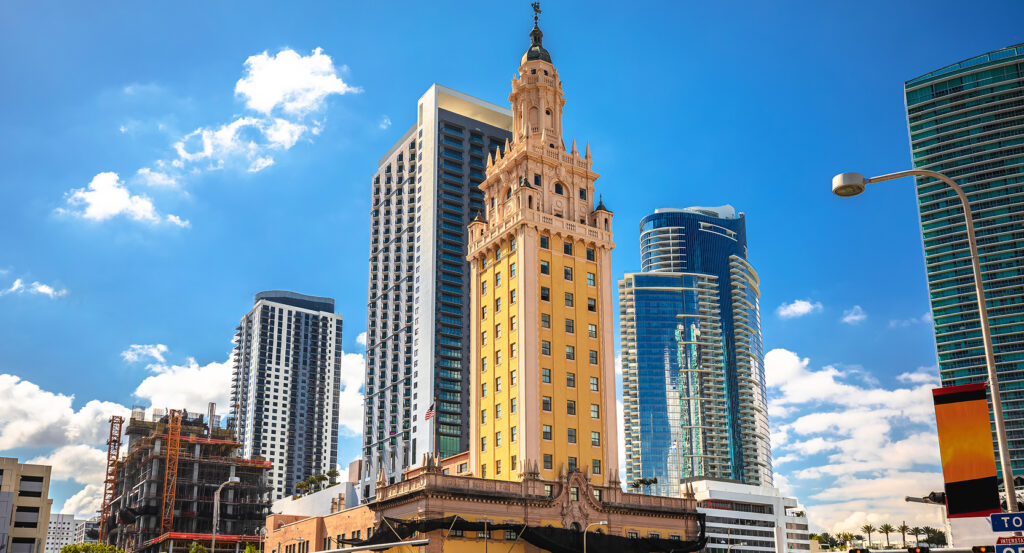
Rising above Biscayne Boulevard with its Mediterranean Revival façade and iconic cupola, the tower stands as one of Florida's most profound symbols of hope, identity, and resilience. Built in 1925 as the headquarters for The Miami News, it took on deeper meaning decades later when it became the reception center for Cuban refugees fleeing Fidel Castro's regime. For thousands arriving by boat or plane, this was their first glimpse of freedom, a place where fear turned into faith and exile into rebirth. Today, its ornate tower glows like a lantern over downtown, housing exhibitions that trace the city's immigrant history and artistic evolution. The architecture itself feels like poetry: arches, balconies, and pale stucco glowing gold at sunset. Freedom Tower isn't just a building; it's Miami's Ellis Island, a monument to courage, culture, and the eternal pursuit of liberty.
What you should know about Freedom Tower at Miami Dade College.
Behind its timeless façade lies a story of reinvention that mirrors Miami's own.
Freedom Tower was designed by Schultze and Weaver, the same architects behind the Biltmore Hotel in Coral Gables and New York's Waldorf Astoria, combining Mediterranean and Spanish Renaissance influences to capture Miami's blend of elegance and warmth. After serving as a newspaper hub, it became a federal processing center for Cuban exiles between 1962 and 1974, distributing food, clothing, and medical care to families starting over. In 2008, it was designated a U.S. National Historic Landmark, preserving its legacy as both architectural gem and humanitarian refuge. Today, the building operates under Miami Dade College as a cultural and educational center, hosting art exhibitions and programs that honor Miami's diverse immigrant communities. Its restoration, painstaking and reverent, revitalized the ornate details that had weathered nearly a century of storms and transformation. Freedom Tower is more than a preserved relic; it's a living narrative of the American dream told through architecture and memory.
How to fold Freedom Tower at Miami Dade College into your trip.
To experience Freedom Tower fully, approach it not as a tourist stop, but as a pilgrimage through Miami's heart.
Begin your visit by walking the length of Biscayne Boulevard, where the tower rises proudly beside the bay, its pastel façade glowing against the glass towers around it. Step inside and wander through the galleries, where exhibits bring to life the stories of Cuban refugees and the broader immigrant experience that shaped South Florida. Climb to the mezzanine for sweeping views of Biscayne Bay and the Port of Miami, reminders of the journeys that once ended here. Pair your visit with nearby cultural landmarks: Pérez Art Museum Miami, Maurice A. Ferré Park, or the Frost Museum of Science, all within walking distance. If you can, time your visit for late afternoon, when the sun's final light bathes the tower in amber and the city hums to life around it. Freedom Tower isn't just a place to see, it's a place to feel: the moment when struggle becomes strength and hope finds its home in the Miami sky.
Where your story begins.
Foresyte Travel reveals places that feel extraordinary long before you arrive.
Experience premium editorial crafted for luxury travelers.