Why Langelinie matters.
The Langelinie Promenade is Copenhagen at its most graceful, a ribbon of harborfront beauty where the city meets the sea in a quiet, continuous rhythm.
Stretching along the Øresund from the Gefion Fountain to Nordhavn, this storied promenade blends history, architecture, and the slow, meditative pace of everyday Danish life. The path curves gently beside the water, lined with leafy trees, open lawns, and sculptures that seem to converse with the waves. Locals stroll here in the morning light, joggers trace the granite edge at sunrise, and families gather in the evenings to watch ships glide into port. The scent of salt and espresso mingles with the sound of bicycles and gulls, and on clear days, the reflection of sky on sea feels endless. Along this waterfront stretch, Copenhagen reveals its true self, not through grand gestures, but through quiet poise and the effortless harmony between people and place.
What defines Langelinie.
The Langelinie Promenade is more than a walkway, it's a story of transformation, carved from the city's maritime and military past.
In the 17th century, this area formed part of Copenhagen's defensive bastions, fortified embankments protecting the harbor and royal quarter. As the city expanded, the space was reimagined into a public promenade in the late 1800s, when King Christian IX commissioned its creation as a gift to the people, an early expression of Denmark's democratic spirit. The promenade was soon dotted with sculptures, gardens, and pavilions, becoming the city's favorite place for leisure and celebration. The most famous of these additions arrived in 1913: Edvard Eriksen's Little Mermaid statue, a gift from brewer Carl Jacobsen of Carlsberg, inspired by Hans Christian Andersen's fairytale. Yet the promenade holds many more layers, memorials to sailors, bronze figures representing trade and travel, and hidden relics from World War II when the harbor was fortified once again. Few realize that beneath parts of the path lie remnants of the old Langelinie Pier, once a grand docking point for transatlantic ships bringing travelers and ideas to Denmark's shores. Today, the promenade stands as a living museum, a place where the city's maritime, royal, and cultural histories quietly coexist under open sky.
How Langelinie fits.
The Langelinie Promenade works as a slow journey, a walk that connects some of Copenhagen's most iconic sights while offering space to breathe.
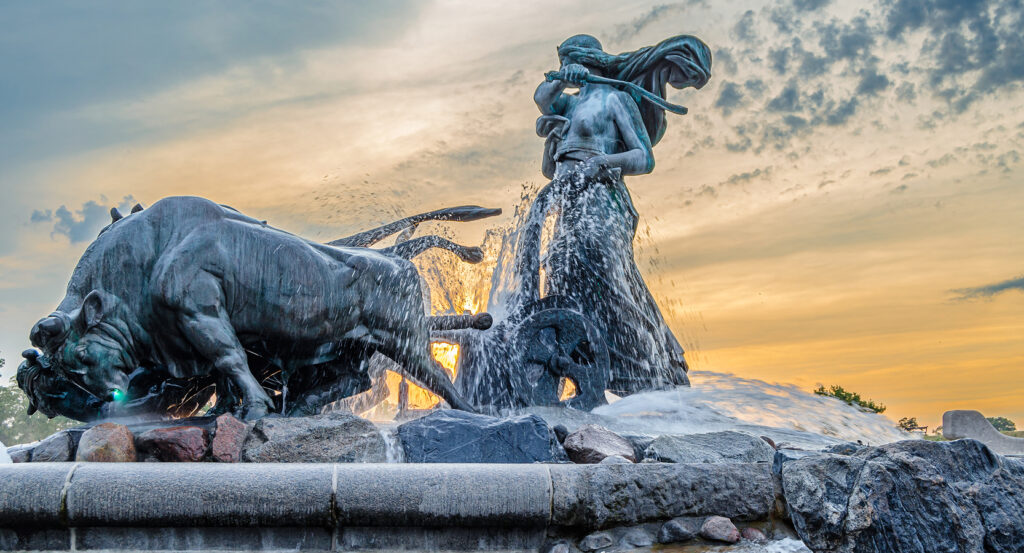
Begin near the Gefion Fountain or St. Alban's Church Gardens, where the fountain's mist and the church's reflection mark the promenade's southern entrance. Move northward along the water, taking time to stop at The Little Mermaid, smaller than many expect, but profoundly moving in its simplicity. Continue toward the Langelinie Pavilion, a mid-century architectural gem that houses a restaurant and café overlooking the sea; its terrace is perfect for coffee and people-watching. As you walk further, the soundscape shifts, from laughter and conversation to the gentle churn of waves against stone. In spring and summer, the promenade bursts into color, its flowerbeds framing the blue expanse of the harbor. Visit near sunset for the full enchantment: the sky mirrored in the Øresund, cruise ships docked like floating cities, and the lights of Kastellet shimmering behind you. Whether you walk the full stretch or linger on a bench to watch the world drift by, the Langelinie Promenade offers something rare, the stillness of nature intertwined with the pulse of a living city, forever in balance.
Where your story begins.
Foresyte Travel reveals places that feel extraordinary long before you arrive.
Enjoy editorial crafted for luxury travelers.
Foresyte may earn a commission when you book.