Why you should experience Goðafoss Waterfall in Iceland.
Goðafoss Waterfall in northern Iceland isn't merely a performance of nature, it's a place where myth, faith, and raw elemental power converge in a single breathtaking tableau.
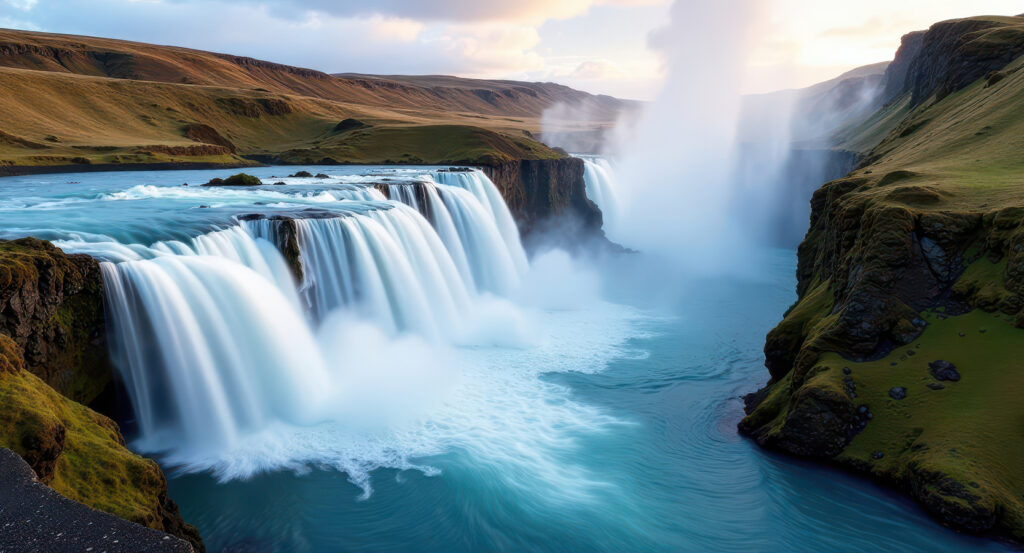
Set along the Skjálfandafljót River, just off the Ring Road near Akureyri, this “Waterfall of the Gods” earns its name from one of the most defining moments in Icelandic history. Around the year 1000, Þorgeir Ljósvetningagoði, a pagan chieftain and law speaker, cast his Norse idols into these roaring cascades, symbolizing the nation's conversion to Christianity. To stand before Goðafoss today is to feel the echo of that ancient choice, the meeting of old gods and new faith carved into water and stone. The falls themselves span 30 meters wide and drop 12 meters into a horseshoe-shaped basin that glows turquoise under the sun and steel-gray under storm clouds. Mist hangs in the air, catching light like diamonds, while the rush of the river seems to hum with ancestral energy. Whether you approach from the east or west bank, the view arrests you completely, a composition of movement, color, and sound that feels alive, like the Earth exhaling. It's easy to see why travelers have called Goðafoss one of Iceland's most poetic landscapes, where history and nature intertwine in a moment of pure awe.
What you should know about Goðafoss Waterfall.
Though its legend often takes center stage, Goðafoss is as much a geological wonder as it is a cultural one.
The falls were born from lava flows nearly 8,000 years ago, when volcanic eruptions sculpted the basalt cliffs that now frame the river. The Skjálfandafljót itself runs for over 180 kilometers, fed by meltwater from the Vatnajökull glacier, and its relentless force continues to shape the landscape each year. The name “Goðafoss” literally translates to “Waterfall of the Gods,” yet interpretations vary, some say it was named for the idols thrown into its depths, while others believe it honors the natural grandeur worthy of deities. Beneath its surface, Goðafoss is a living organism, microcurrents swirl unseen, and rainbows arc through its mist during long summer evenings when the midnight sun refuses to set. In winter, the falls freeze into sculptural cascades of ice, transforming the site into something otherworldly, as if the gods themselves had breathed frost upon it. Few visitors realize how accessible Goðafoss has always been, even in medieval times, it sat along a crucial travel route between northern settlements. Modern infrastructure has only enhanced that, with well-maintained paths leading to both panoramic overlooks and river-level viewing platforms. Yet despite its fame, Goðafoss somehow retains its intimacy, a sense that you are standing not before a tourist attraction but before something eternal, untamed, and profoundly sacred.
How to fold Goðafoss Waterfall into your trip.
Experiencing Goðafoss isn't about checking off a landmark, it's about surrendering to Iceland's rhythm.
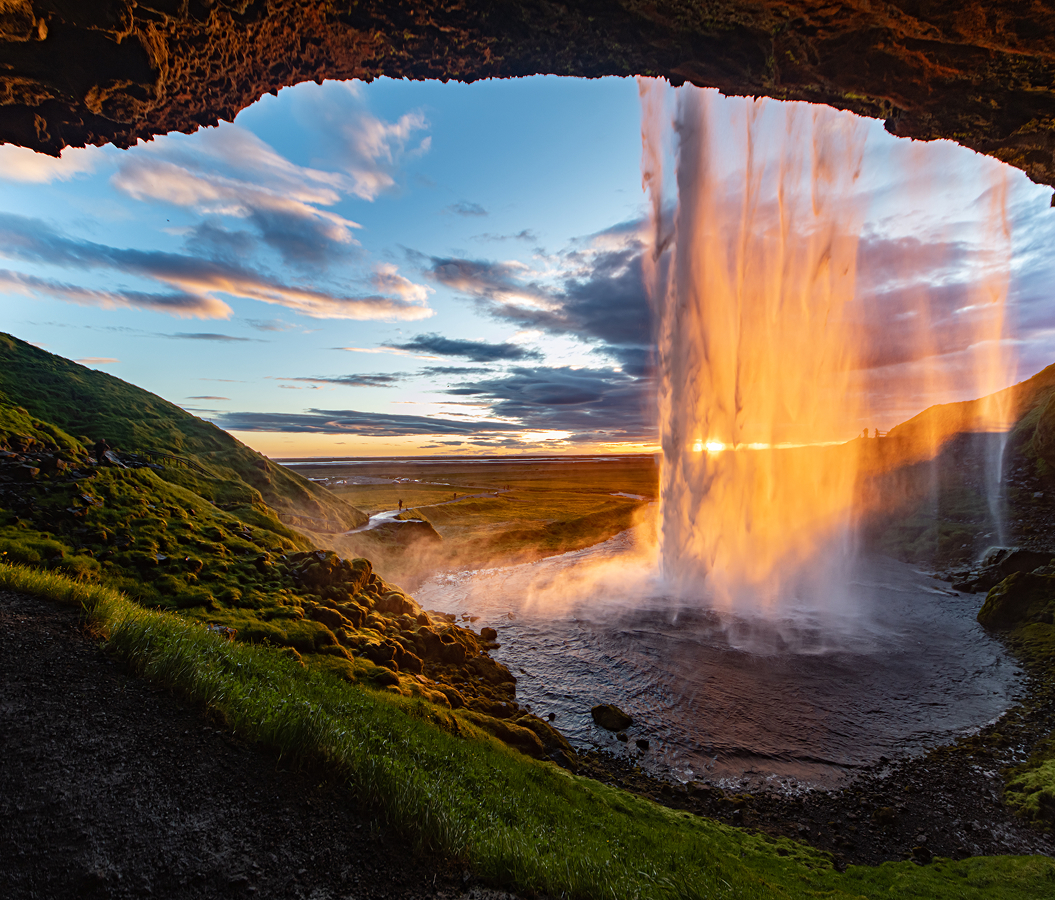
If you're driving the Ring Road, plan the visit as a midpoint between Mývatn and Akureyri, ideally in the early morning or late evening when the light casts the falls in amber and gold. The west bank offers easy access and broad views, while the east side provides a closer, more dramatic perspective, both connected by a short trail that allows you to feel the falls from every angle. Wear waterproof layers; the mist here is part of the experience, wrapping you in cool, charged air that feels electric against your skin. For photographers, long exposures reveal the falls as silky ribbons of motion against dark volcanic stone, while drone views capture its almost symmetrical beauty. In summer, wildflowers bloom along the riverbanks, adding bursts of violet and yellow to the scene; in winter, snow muffles every sound except the low rumble of water under ice. Pair your visit with a stop at nearby Mývatn Nature Baths or explore the lava fields of Dimmuborgir for a full immersion into Iceland's volcanic heart. And if you linger until twilight, when the wind quiets and mist glows faintly in the northern light, you may understand why Þorgeir chose this place to cast away his gods, and why Goðafoss still feels like the meeting point between heaven and earth.
Where your story begins.
Foresyte Travel reveals places that feel extraordinary long before you arrive.
Experience premium editorial crafted for luxury travelers.