
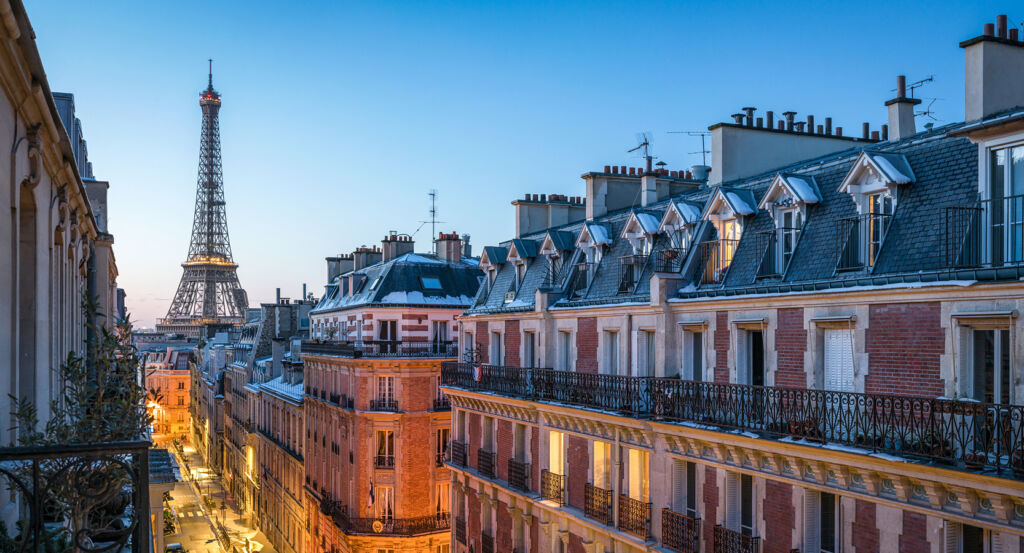
Why you should experience Hotel de Suede Saint Germain in Paris, France.
Hotel de Suede Saint Germain is a discreet three-star hotel where Invalides's diplomatic composure, aristocratic garden culture, literary Left Bank character and extraordinary concentration of private Parisian interiors converge around a secluded courtyard beside the gardens of Matignon.
Set along Rue Vaneau near Rue de Varenne and just steps from Hôtel de Matignon, the 39-room property combines a renovated classical Parisian interior with a separate courtyard pavilion, flowered garden and upper-floor accommodations overlooking one of the capital's most historically significant private estates. The relationship is unusually intimate from the sixth floor, where the hotel's Deluxe accommodation faces the Jardins de Matignon, while other rooms open toward the courtyard, garden or zinc-and-slate roofscape of the seventh Arrondissement. The largest accommodation, the 36-square-meter Pavillon Suite, occupies the quieter garden structure with a private living room, bedroom and naturally lit bathroom, extending the property beyond the conventional geometry of a compact Left Bank hotel. The result is a hotel where garden-facing rooms, pavilion living and the protected calm behind Rue Vaneau give Invalides's institutional grandeur an unexpectedly private scale.
What you should know about Hotel de Suede Saint Germain.
Hotel de Suede Saint Germain is best known for an extensive renovation that recast its 39 guestrooms in a classical Parisian style while preserving an unusually varied arrangement of street rooms, courtyard accommodations, garden-facing rooms and a separate pavilion, creating several distinct relationships with the surrounding seventh-arrondissement fabric within one compact property. Selected Single rooms occupy duplex configurations with upstairs workspaces or mansarded positions overlooking Parisian rooftops, while Superior rooms can face the private Jardins de Matignon and the sixth-floor Deluxe has welcomed and inspired writers from a light-filled position directly overlooking those grounds. The pavilion develops the quieter side of the property through courtyard-facing Deluxe rooms, Junior Suites combining sleeping and lounge areas and an 36-square-meter Pavillon Suite conceived as a small Parisian apartment with a private salon, separate bedroom and daylight-filled bathroom. A flowered interior courtyard completes the plan as an outdoor extension of the hotel, with breakfast and refreshments served there in suitable weather, giving the renovated property a progression from Rue Vaneau frontage through internal garden to pavilion accommodation.
Jean Courtonne's Hôtel de Matignon gives the hotel's garden-facing rooms their exceptional outlook onto an estate begun in 1722 for Christian-Louis de Montmorency-Luxembourg before financial pressure transferred the project to Jacques Goyon de Matignon and his son Jacques IV, who occupied it with Louise-Hippolyte Grimaldi, hereditary princess of Monaco, from 1725. Charles-Maurice de Talleyrand-Périgord acquired Hôtel de Matignon in 1808 and added two garden wings before transferring the estate to Napoleon I, while the French state acquired the property in 1922 and French heads of government have worked there since 1935. The Jardins de Matignon extend the visual experience from Hotel de Suede Saint Germain across one of Central Paris's largest private gardens, where successive prime ministers have established a modern tradition of planting individually selected trees and where the surrounding Régence estate preserves Jean Courtonne's original relationship between residence, courtyard and garden. Together, Jean Courtonne, Jacques Goyon de Matignon, Louise-Hippolyte Grimaldi, Talleyrand and the French premiership turn the view from Hotel de Suede Saint Germain into a direct encounter with three centuries of aristocratic, diplomatic and governmental occupation.
How to fold Hotel de Suede Saint Germain into your trip.
Hotel de Suede Saint Germain works as the anchor for an afternoon tracing sculpture, private collecting and devotional history through the unusually intimate institutions between Invalides and Saint-Germain-des-Prés.
Begin at Musée Rodin, where financier Abraham Peyrenc de Moras commissioned the mansion later called Hôtel Biron from royal architect Jean Aubert between 1727 and 1732, before Auguste Rodin began renting rooms there in 1908, secured its future through three donations to the French state accepted in 1916 and established the foundation for the museum that opened on August 4, 1919. Continue to Musée Maillol, where Dina Vierny, Aristide Maillol's model and muse for a decade, created the foundation that opened the private museum on January 20, 1995, eventually assembling 4,250 square meters around the world's largest Maillol collection and Vierny's broader holdings of twentieth-century art. Conclude at Chapelle Notre-Dame de la Médaille Miraculeuse, where the Daughters of Charity preserve the Rue du Bac chapel associated with Catherine Labouré's 1830 Marian apparitions and the subsequent creation of the devotional medal that carried the chapel's influence far beyond its discreet Saint-Germain setting. The progression moves from Rodin's transformation of a rocaille mansion into his artistic legacy through Dina Vierny's conversion of personal devotion to Maillol into a public collection and Catherine Labouré's private visions into an international devotional tradition, revealing the remarkable culture of intimate institutions surrounding Hotel de Suede Saint Germain.
Where your story begins.
Foresyte Travel reveals places that feel extraordinary long before you arrive.
Experience premium editorial crafted for luxury travelers.














































































































