
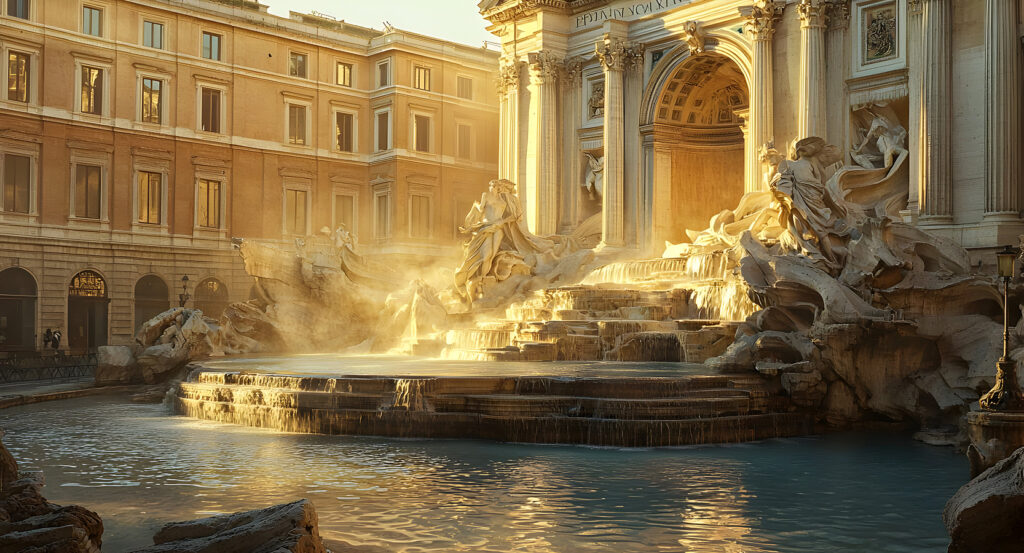
Why you should experience Hotel Tritone in Rome, Italy.
Hotel Tritone is where classic Roman hospitality, modern comfort, and unbeatable proximity to the Trevi Fountain blend into a stay that feels easy, convenient, and warmly connected to the city's historic core.
Set along Via del Tritone, among Rome's most dynamic central arteries, the hotel occupies a polished historic building just a short stroll from the Trevi Fountain, Piazza Barberini, and the elegant streets that define the surrounding district. Its façade reflects the traditional Roman style: clean lines, tall windows, and understated architectural grace that blends seamlessly into the refined urban fabric of the Centro Storico. Step inside, and the atmosphere becomes instantly inviting. Interiors balance contemporary design with classic Roman character, sleek surfaces, soft lighting, warm wood, elegant stone, tasteful décor, and an overall ambiance of calm modernity. The spaces feel fresh, comfortable, and thoughtfully arranged, ideal for travelers who value both sophistication and simplicity. Rooms at Hotel Tritone continue this modern, welcoming aesthetic. Expect soft bedding, contemporary furnishings, elegant color palettes, ample lighting, and layouts that prioritize comfort and functionality. Many rooms offer views of the thriving street below or nearby rooftops, giving guests an authentic sense of Rome's energetic central energy. Suites extend the experience with larger spaces, curated décor, enhanced seating areas, and touches that elevate the stay for couples or longer visits. Bathrooms are clean, bright, and modern, featuring sleek fixtures, glass showers or tubs, well-lit mirrors, and amenities selected for ease and comfort. One of the hotel's signature features is its rooftop breakfast room, a bright, panoramic space where morning light spills across the city's historic rooftops. Breakfast includes fresh pastries, breads, cheeses, meats, eggs, fruits, vegetables, yogurt, juices, and espresso prepared with care. The setting feels peaceful and uplifting, a rare rooftop vantage point in the heart of Rome that makes each morning memorable. Service at Hotel Tritone is warm, efficient, and genuinely helpful. Staff members are attentive without being intrusive, offering recommendations for restaurants, cultural landmarks, walking routes, shopping streets, and local gems. Their knowledge of the area, and their emphasis on making guests feel welcome, adds comfort and confidence to each day's explorations. The location is exceptional. From the hotel, you can walk to the Trevi Fountain in minutes, reach the Spanish Steps with ease, wander to Piazza Venezia or the Pantheon, and explore the elegant shopping of Via del Corso. Via del Tritone itself provides quick access to public transportation, shops, cafés, gelaterias, and some of Rome's most charming hidden streets. Couples appreciate the convenience and the polished, comfortable feel. Solo travelers value the safety, ease, and centrality. Families enjoy the practical layouts and the walkability of the district. First-time visitors love the proximity to Rome's major icons, while returning travelers appreciate the hotel's stability, comfort, and reliability. Through every season, Hotel Tritone reflects the atmosphere of Central Rome. In winter, the streets feel crisp and cinematic.
What you did not know about Hotel Tritone.
Hotel Tritone stands on land shaped by Rome's evolving urban history, an area once defined by ancient aqueducts, Renaissance trade routes, and the Baroque transformation that created the Trevi Fountain and reshaped the district into one of the city's most iconic cultural crossroads.
Long before modern buildings lined Via del Tritone, this area formed an essential link between the Quirinal Hill, the ancient aqueducts feeding the city, and the early routes that connected Rome's hills to the river and beyond. In antiquity, the Aqua Virgo aqueduct, constructed in 19 BCE by Agrippa, passed through the zone, ultimately terminating at the site of what would become the Trevi Fountain. In the Middle Ages, the surrounding area developed into a lively network of small residences, workshops, inns, and markets, attracting artisans, merchants, and travelers. The narrow street plan, still visible in nearby alleys, was shaped by this organic growth. During the Renaissance and Baroque periods, the district underwent profound change. As popes invested in Rome's artistic and architectural rebirth, Via del Tritone became a key urban axis linking major civic and religious zones. When Nicola Salvi's Trevi Fountain began construction in 1732, the surrounding streets, including those near the present-day hotel, were realigned to complement the grand Baroque vision of the fountain. Over the centuries, the area continued to evolve, blending traditional Roman residences with commercial buildings that supported the city's rapidly growing cultural and political life. Via del Tritone became an important thoroughfare by the 19th century, connecting the historic center to newer districts and hosting shops, cafés, printing houses, and artisan studios. The building that now houses Hotel Tritone emerged during this period of modernization, designed with the symmetrical windows, clean stonework, and understated elegance characteristic of 19th- and early-20th-century Roman palazzi. As tourism increased in the 20th century, the structure transitioned into a hotel, taking advantage of its prime location and classic architectural bones. Today, Hotel Tritone stands as a quiet witness to Rome's layered history, anchored in a district shaped by ancient engineering, Renaissance ambition, Baroque artistry, and the city's modern transformation.
How to fold Hotel Tritone into your trip.
Hotel Tritone becomes the practical, comfortable, centrally placed anchor of your Roman adventure, where mornings begin with rooftop calm, days unfold into easy exploration, and evenings settle into the soft glow of the historic center.
Start the morning with breakfast overlooking the rooftops, then stroll to the Trevi Fountain before the crowds arrive. Walk to the Spanish Steps, Pantheon, or Piazza Venezia, or continue toward charming side streets lined with boutiques, cafés, and artisan shops. Spend afternoons exploring museums, shopping along Via del Corso, or discovering hidden corners of the Centro Storico. Return to your room for a quiet pause before heading back out for dinner at a local trattoria or enjoying gelato near the fountain. End your night with a peaceful walk through Rome's softly illuminated streets. In winter, the district feels atmospheric and serene. In spring, the air is fresh and lively. In summer, warm nights bring energy to the piazzas. In autumn, golden light enriches every façade. Hotel Tritone becomes not just where you stay, but the central, comfortable, quietly elegant heart of your entire Roman experience.
Where your story begins.
Foresyte Travel reveals places that feel extraordinary long before you arrive.
Experience premium editorial crafted for luxury travelers.




















































































































