
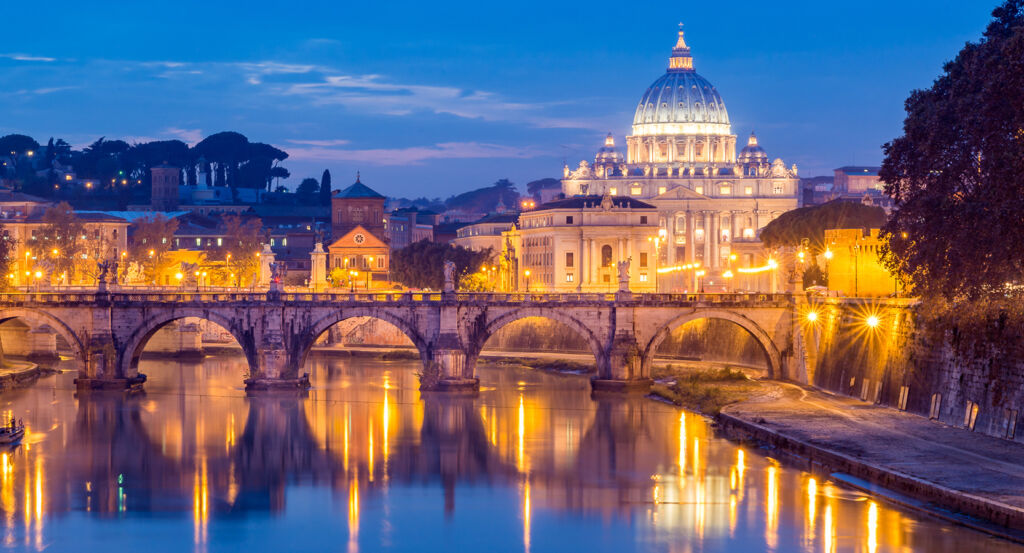
Why you should experience Navona in Rome, Italy.
Navona is a grand theater of public life, where Baroque artistry, ancient performance, and Roman culture converge within one of the most celebrated urban spaces in the world.
Grand fountains, elegant palaces, historic churches, thriving cafés, street performers, architectural masterpieces, and lively piazzas create a neighborhood that has served as a gathering place for Romans and visitors for centuries. Built atop one of ancient Rome's most important public venues, the district evolved from a center of athletic competition into a showcase of artistic patronage and civic life. Popes, architects, artists, merchants, and residents helped shape a neighborhood defined by beauty, celebration, and cultural influence. Over generations, Navona became one of Rome's most beloved destinations while preserving visible connections to its ancient foundations. Today, visitors encounter a district where history unfolds in plain sight through the shape of the streets and the grandeur of its monuments. The result is a neighborhood that feels thriving, theatrical, and unmistakably Roman. To the east, Pantheon's celebrated architectural landmarks extend naturally from Navona across one of the city's most historically significant urban landscapes, reinforcing the neighborhood's place at the heart of Rome. Every fountain, façade, and public square reflects a district shaped by performance, creativity, and civic pride.
What you should know about Navona.
Navona is best known for being built atop the Stadium of Domitian, preserving the exact elongated shape of an ancient Roman arena that once hosted athletic competitions for more than 30,000 spectators.
Constructed in the first century AD, the stadium became Rome's premier venue for Greek-style athletic contests and public events. Unlike many ancient structures that disappeared beneath later development, the arena's footprint remained so influential that it directly determined the shape of the modern piazza. As buildings, churches, and palaces emerged over the centuries, the distinctive outline of the stadium remained intact beneath the evolving cityscape. This rare continuity allows visitors to experience the physical dimensions of an ancient Roman sports venue simply by walking through the neighborhood. Today, Piazza Navona stands as one of the clearest examples of ancient urban infrastructure shaping a modern city. Few neighborhoods possess a public space so visibly rooted in the fabric of imperial Rome.
How to fold Navona into your trip.
Navona works as an exploration of the fountains, palaces, and historic landmarks that define one of Rome's most iconic neighborhoods.
Begin at Piazza Navona, where the neighborhood's defining connection to ancient Rome and Baroque grandeur immediately comes into focus. Continue toward the Fountain of the Four Rivers, whose dramatic design reveals the artistic ambitions that shaped the district for generations. From there, make your way to Sant'Agnese in Agone, where remarkable architecture and centuries of history provide a broader perspective on the cultural legacy that continues to define Navona today. Along the route, you'll encounter historic palaces, architectural masterpieces, public fountains, cultural institutions, elegant cafés, celebrated churches, and lively gathering spaces that reveal the neighborhood's extraordinary significance. The progression moves naturally from ancient arena footprint to artistic centerpiece to architectural landmark, revealing the forces that shaped the neighborhood. The experience showcases a side of Rome defined by performance, continuity, and some of the finest public spaces ever created.
Where your story begins.
Foresyte Travel reveals places that feel extraordinary long before you arrive.
Experience premium editorial crafted for luxury travelers.




















































































































