Why Stadium of Domitian matters.
Stadium of Domitian at Palatine Hill in Rome feels like an echo chamber of empire, a place where glory lingers in silence.
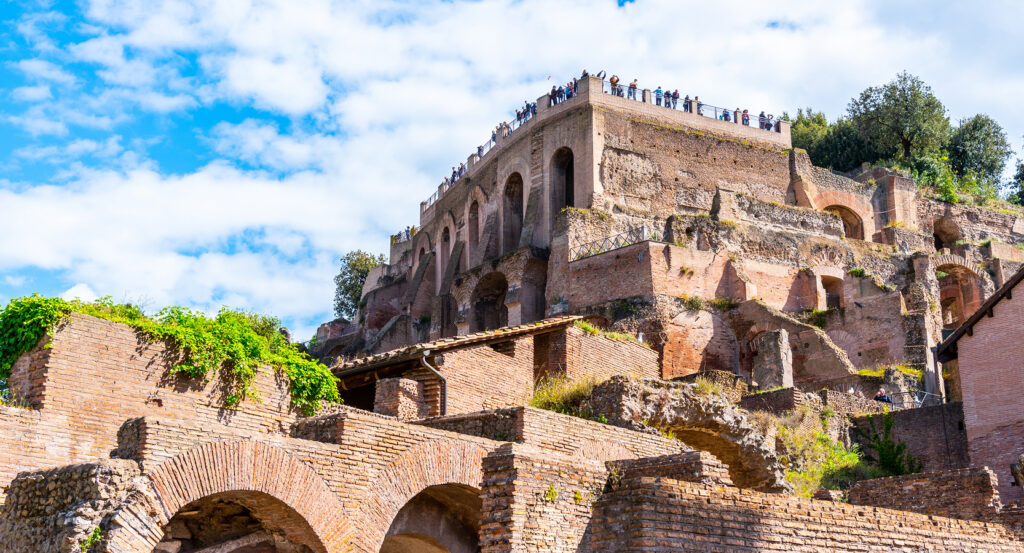
Stretching along the southern edge of the Palatine, its oval form unfolds like a marble dream, once lined with statues, fountains, and gardens reserved for the emperor's eyes alone. Though often called a “stadium,” it was not an arena of public games but a private sanctuary of performance and leisure. Here, Domitian's court watched races, athletic contests, and performances framed by rose gardens and colonnades. Today, grass grows where marble once gleamed, and the wind carries the faint hum of forgotten applause. The scale alone stirs awe, expansive yet intimate, designed as both retreat and theater. Stadium of Domitian defines grandeur distilled through stillness, where power once performed in whispers.
What defines Stadium of Domitian.
Built in the late 1st century CE as part of Domitian's vast palace complex, the stadium was a masterpiece of imperial landscaping, a blend between architecture, sport, and serenity.
Its design, 160 meters long, mimicked the layout of a Greek hippodrome but served a more ceremonial purpose: morning exercises, court rituals, and private spectacles staged for the emperor and his guests. The surrounding porticoes were adorned with statues of deities and heroes, their marble gleam reflecting sunlight into the inner track. At the curved northern end stood a pulvinar, or imperial viewing box, from which Domitian could observe events in luxury. Archaeologists believe the central garden later evolved into an ornamental courtyard filled with fountains and exotic plants imported from across the empire. Few realize that beneath the site lie vaulted corridors connecting to other wings of the palace, a hidden web of power and procession. The stadium's layout even inspired later Roman villas and Renaissance gardens, where geometry and grace intertwined as symbols of control.
How Stadium of Domitian fits.
Begin your visit from within Palatine Hill Park, following signs toward the stadium's long, sunken expanse.
Visit in early afternoon when light angles sharply across the grass, illuminating the contours of the ancient track. Walk the full oval, the rhythm of your steps tracing those of athletes and courtiers long vanished. Pause near the semicircular end, where the emperor's box once stood, and look back over the field; the view frames the Palatine's ruins like a stage set for eternity. Continue along the outer path for glimpses of the Domus Augustana terraces rising above, the perfect pairing of private luxury and imperial vision. Visit near golden hour when shadows lengthen and the marble foundations seem to glow from within. Stadium of Domitian is a space where Rome's might revealed its softer pulse: elegance, symmetry, and the quiet confidence of an empire at its height.
Where your story begins.
Foresyte Travel reveals places that feel extraordinary long before you arrive.
Enjoy editorial crafted for luxury travelers.
Foresyte may earn a commission when you book.