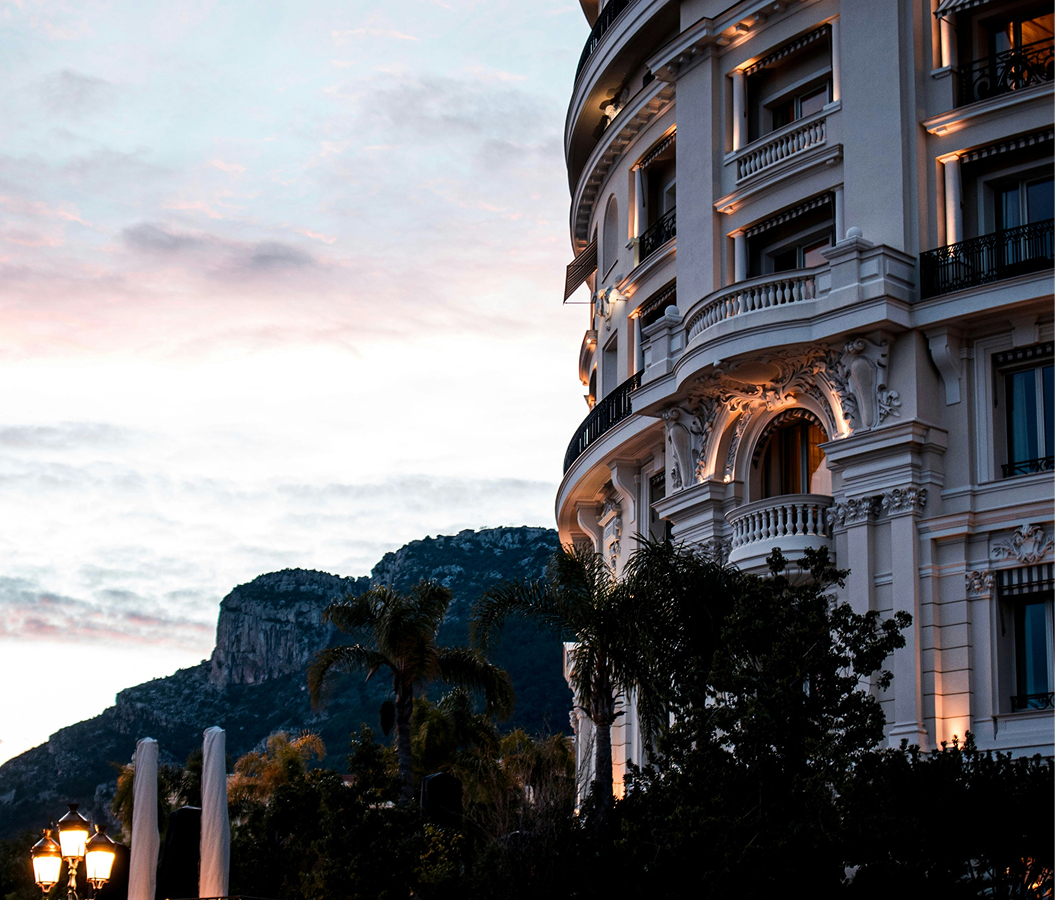
Why Palazzo Arcivescovile matters.
Palazzo Arcivescovile is a formidable ecclesiastical palace where Duomo's ceremonial character meets the centuries-old seat of Ambrosian authority, Pellegrino Tibaldi's Counter-Reformation architecture and a Neoclassical front reshaped by Giuseppe Piermarini.
Set along Piazza Fontana near Via Arcivescovado and just steps from Piazza del Duomo, the palace occupies an immense block where the cathedral precinct, the open paving around Piermarini's fountain and the narrow streets of the former Verziere converge along the eastern side of Milan's historic center. The long Piazza Fontana elevation establishes a restrained architectural wall whose repetitive windows and horizontal cornices contrast with the dense Gothic verticality of the cathedral rising immediately beyond the adjoining blocks. Passage through Tibaldi's grand portal reveals a succession of internal courts that withdraw from the surrounding public squares into the enclosed world of the episcopal complex. Piazza Fontana opens broadly before the principal elevation as Via delle Ore and the passages toward Piazza Duomo compress again along the palace perimeter, preserving the contrast between ceremonial frontage and the older street fabric behind it. The result is an imposing episcopal compound whose scale, courtyards and successive architectural fronts make the institutional history of Central Milan physically legible beside the cathedral.
What defines Palazzo Arcivescovile.
Palazzo Arcivescovile is best known for the reconstruction promoted by Carlo Borromeo, who converted an older episcopal residence into the architectural center of his reorganization of the Ambrosian church. An archiepiscopal seat occupied this territory during the Middle Ages, and the complex was rebuilt after Federico Barbarossa's destruction of Milan before substantial enlargement during the fourteenth and fifteenth centuries. Borromeo's appointment as archbishop in 1564 transformed the palace from an inherited residence into an active component of his reform program. Pellegrino Tibaldi surveyed the existing buildings during the opening phase and subsequently assumed responsibility for a reconstruction encompassing the palace, adjoining stables and the new Canonica degli Ordinari. Tibaldi had entered Borromeo's circle after receiving the Collegio Borromeo commission in Pavia in 1563, and his Milanese work expanded into San Fedele, the Duomo, San Sebastiano and other projects connected with the cardinal's reorganization of sacred architecture. The Palazzo Arcivescovile campaign produced the Cortile della Canonica, where two levels of round arches rest within a severe rusticated composition, establishing one of the complex's strongest surviving sixteenth-century spaces. Tibaldi also designed the grand entrance portal and reorganized the archbishop's apartment, curial rooms and chapel around the older fabric. His work proceeded alongside his tenure as architect-engineer of the Veneranda Fabbrica del Duomo from 1567 to 1585, physically connecting the reconstruction of the episcopal residence with the broader transformation of the adjoining cathedral precinct. The palace became one of the principal architectural instruments through which Borromeo concentrated residence, administration and ecclesiastical government beside the Duomo during the decades following the Council of Trent.
The eighteenth century gave the palace its principal public face when Archbishop Filippo Visconti commissioned Giuseppe Piermarini to reconstruct the elevation toward Piazza Fontana in 1784. Piermarini imposed a disciplined Neoclassical composition across the inherited building, using regularly spaced rectangular openings and restrained horizontal divisions to unify a complex created through several earlier construction phases. His intervention coincided with the remaking of Piazza Fontana itself, whose new fountain and paving converted the former Verziere territory into a formal urban space. Domenico Aspari captured the relationship in his 1788 engraved view, showing the new piazza, fountain and episcopal frontage as components of the same late eighteenth-century cityscape. Cesare Nava later intervened on the Piazza Fontana body, adding another architectural phase to a building whose irregular organization still turns around two principal courtyards. Earlier fabric survives away from Piermarini's front through Gothic traces, terracotta windows and portions of the older episcopal construction visible toward Piazza Duomo and Via delle Ore. The palace also retains fourteenth-century painted fragments from the former upper hall and an archiepiscopal collection containing works associated with Bergognone, Tintoretto, Morazzone, Cerano, Giulio Cesare Procaccini, Jusepe de Ribera and Guido Reni. These surviving elements turn the complex into an architectural sequence extending from medieval episcopal Milan through the eighteenth-century remaking of Piazza Fontana without erasing the earlier building concealed behind Piermarini's ordered exterior.
How Palazzo Arcivescovile fits.
Palazzo Arcivescovile works as the anchor for a daytime exploration through the eastern historic center using three nearby sites that move from Milan's medieval seat of government through a basilica connected with a Sforza assassination and Caravaggio's baptism into an eighteenth-century aristocratic residence shaped by leading architects of its period.
Begin at Palazzo Reale, whose earliest role as the Broletto Vecchio placed civic assemblies and justice beside the cathedral before Visconti and Sforza rule converted the complex into an increasingly elaborate seat of government. French rulers established their court there during the opening decades of the sixteenth century, and Spanish governors added Milan's first court theater in 1594. Austrian rule initiated another architectural chapter after Governor Karl Joseph Firmian approached Luigi Vanvitelli in 1769; Vienna rejected Vanvitelli's proposal for total reconstruction, and Giuseppe Piermarini developed the less costly scheme executed from 1770 to 1778. Piermarini removed the entrance wing, opened the principal court into Piazzetta Reale, rebuilt the exterior and created the Scalone d'Onore, working with Martino Knoller, Giuliano Traballesi, Giocondo Albertolli and Giuseppe Maggiolini on the interiors. Continue to Santo Stefano Maggiore, whose foundation is traditionally placed in 417 under the dedication to Zaccaria before Santo Stefano became its prevailing title. Fire destroyed the early building in 1070 and reconstruction followed in Romanesque form, yet one of its most consequential episodes occurred on December 26, 1476 when Gianandrea Lampugnani, Girolamo Olgiati and Carlo Visconti assassinated Duke Galeazzo Maria Sforza at the church entrance. Another connection emerged on September 30, 1571 when Michelangelo Merisi, later Caravaggio, was baptized there, a fact settled through discovery of his baptismal act in 2007. The medieval campanile collapsed in 1642, prompting a replacement designed by Carlo Buzzi and completed in 1696 under Giuseppe Maria Quadrio. Conclude at Palazzo Sormani, where Francesco Croce developed the principal eighteenth-century residence in 1736 before Benedetto Alfieri supplied the garden facade in 1756. Biagio Bellotti painted the ballroom ceiling during the same year, and Agostino Gerli later contributed interior stucco decoration as the palace accumulated work from successive Milanese designers. Bombing in 1943 destroyed significant portions of the complex, and Arrigo Arrighetti subsequently directed reconstruction before the Biblioteca Comunale Centrale opened there in 1956. The progression moves from a medieval governmental palace remade for Habsburg court life through Santo Stefano's convergence of Sforza politics, Caravaggio and seventeenth-century rebuilding into Croce and Alfieri's aristocratic residence, extending the episcopal precinct through three institutions that preserve separate chapters of Central Milanese history.
Where your story begins.
Foresyte Travel reveals places that feel extraordinary long before you arrive.
Enjoy editorial crafted for luxury travelers.
Foresyte may earn a commission when you book.