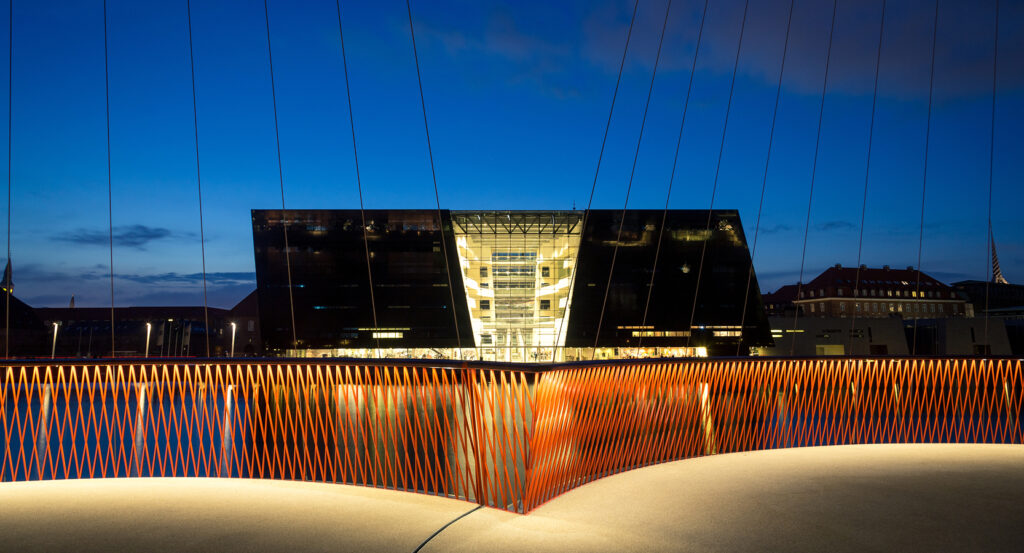
Why Radisson Collection Royal Hotel matters.
Radisson Collection Royal Hotel is where modernist legacy, architectural intention, and quietly powerful design converge, offering a stay that feels intellectually rich, spatially deliberate, and inseparable from Copenhagen's design identity.
This is not just a hotel in Copenhagen. It is part of Copenhagen. Designed by Arne Jacobsen in 1960, the Radisson Collection Royal Hotel stands as a foundational moment in Danish modernism, a place where architecture, furniture, materials, and philosophy were conceived as a single, unified vision. Arrival here carries weight, not through grandeur, but through clarity. The exterior rises with purpose, clean-lined and resolute, announcing a confidence that doesn't require ornament or persuasion. Step inside and the atmosphere immediately shifts into something precise and composed. Interiors feel intentional in every dimension, proportion, material, light, and flow are all calibrated. Public spaces are not theatrical; they are architectural. Seating arrangements feel deliberate. Sightlines are clean. Surfaces carry texture. You don't move through the space casually, you become aware of how you are moving, sitting, pausing. Guest rooms continue this discussion between function and form. Layouts feel rational yet human, shaped to support rest, clarity, and presence. Beds are comfortable and purposeful, dressed in linens that favor rest over display. Furnishings, many inspired by Jacobsen's original designs, feel iconic. Chairs, lamps, and tables are not accents; they are arguments for how design should serve daily life. Color palettes remain calm and disciplined, allowing material and light to define mood. Windows frame Copenhagen's urban grid, rail lines, and sky, reinforcing the hotel's relationship with the city as infrastructure. Bathrooms echo this same modernist restraint: clean geometry, strong lighting, and fixtures that prioritize use and clarity. Everything here was designed to work. What defines Radisson Collection Royal Hotel is its intellectual gravity. This is a hotel for people who notice structure, who appreciate restraint, who feel energized. Public areas feel composed rather than social, calm rather than cozy. Mornings feel precise and purposeful. Evenings feel reflective. Dining and bar spaces align with this sensibility, environments where conversation feels focused, where atmosphere emerges from proportion and light. Service throughout the hotel mirrors this quiet confidence. Interactions are professional, informed, and respectful of autonomy. Staff understand that guests here value competence over ceremony. Recommendations tend to focus on context and understanding, how Copenhagen's design language evolved, which neighborhoods express modern Danish thinking most clearly, how to read the city through architecture. Step outside and Copenhagen reveals itself through lines, systems, and movement. Tivoli Gardens sits nearby as a counterpoint of ornament and pleasure. Central Station hums with transit energy. Pedestrian corridors and urban infrastructure converge around the hotel, reinforcing its role as a node. Returning to the Radisson Collection Royal Hotel never feels like escaping the city. It feels like re-entering its conceptual core. This hotel is ideal for travelers who want Copenhagen to feel designed, deliberate, and intellectually alive, a stay shaped by clarity, legacy, and architectural integrity.
What defines Radisson Collection Royal Hotel.
Radisson Collection Royal Hotel is the world's first design hotel, conceived not as accommodation alone but as a total work of modernist philosophy.
When Arne Jacobsen designed the building, he didn't stop at the architecture. He designed the furniture, the lighting, the textiles, the cutlery, and even the door handles. The hotel was intended as a complete environment, an argument for how modern life should be lived with elegance, efficiency, and intention. Two of Jacobsen's most iconic creations, the Egg Chair and the Swan Chair, were designed specifically for this hotel before becoming global design classics. This origin story is not marketing trivia; it shapes how the hotel feels. Spaces are not layered with decoration. They are composed. Transitions are logical. Nothing is accidental. A lesser-known aspect of the hotel's character lies in how it manages discipline. Modernist spaces can often feel severe or distant. The Radisson Collection Royal avoids this by allowing material warmth, wood, fabric, soft light, to balance geometry. This creates an environment that feels focused rather than rigid, calm rather than sterile. Another overlooked dimension is how the hotel frames time. Unlike hotels that attempt to choreograph experience through events or ambiance shifts, this hotel allows time to pass cleanly. Mornings feel sharp and defined. Afternoons feel productive or exploratory. Evenings feel contemplative. This temporal clarity mirrors modernist ideals: life structured not by performance, but by intention. The service philosophy reinforces this approach. Staff interactions are efficient, knowledgeable, and respectful of independence. There is an understanding that guests here often prefer to move through experience. Recommendations are framed with depth rather than enthusiasm, pointing toward design landmarks, architectural walks, and places where Copenhagen's functional beauty is most legible. The hotel attracts a particular kind of guest. Architects, designers, thinkers, and travelers who value structure over softness often find this place deeply satisfying. Public spaces feel composed. Private rooms feel purposeful. Staying here doesn't overwhelm the senses, it sharpens them. The hotel subtly teaches you how to see Copenhagen differently: not as a postcard city, but as a system of ideas expressed through space.
How Radisson Collection Royal Hotel fits.
Radisson Collection Royal Hotel works best when you approach Copenhagen through design, movement, and observation.
Begin your mornings with intention. Walk toward the Central Station area and observe how infrastructure shapes the city's flow. Notice how signage, materials, and space are organized. Copenhagen reveals itself through function as much as beauty. Breakfast can be purposeful rather than lingering, fuel for a day of seeing clearly. Late mornings are ideal for architectural exploration. Visit design museums, modern neighborhoods, and public spaces where Danish thinking about form and use is most evident. Walk. Let buildings speak. Return to the hotel midday for recalibration. Sit in a lounge chair, observe light and proportion, let your thoughts settle. This pause is not rest, it is alignment. In the afternoon, explore outward again. Walk toward Tivoli Gardens to experience contrast, ornament against discipline, pleasure against order. This contrast deepens your understanding of Copenhagen's balance. Each return to the hotel feels like returning to a center of logic. As evening approaches, choose dinner with intention. Seek places where design, craft, and clarity intersect. After dinner, return to the hotel and let the quiet structure of the space slow you down. On your final morning, take one last moment to observe how the hotel holds space, how nothing begs for attention, yet nothing is absent.
Where your story begins.
Foresyte Travel reveals places that feel extraordinary long before you arrive.
Enjoy editorial crafted for luxury travelers.
Foresyte may earn a commission when you book.