Why Restaurant Savotta matters.
Restaurant Savotta is a traditional Finnish restaurant where Kruununhaka's imperial architectural heritage meets the forest-working traditions of rural Finland, the preservation of regional Finnish cooking and the cultural significance of the country's northern landscapes.
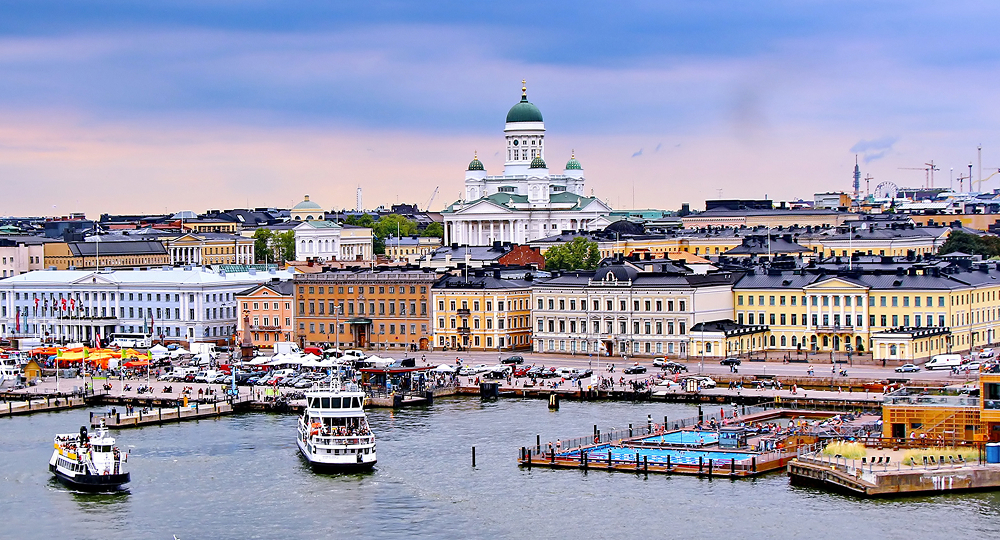
Occupying a historic commercial building along the southern edge of Senate Square, the restaurant stands opposite Helsinki Cathedral, near the Government Palace, Helsinki City Museum and the narrow streets connecting the capital's historic center to Market Square. Its street-level dining rooms overlook the cathedral's expansive white façade, with wooden furnishings, patterned textiles, traditional household objects and warm lighting establishing the character of an early-twentieth-century Finnish home. The lower dining room incorporates century-old wooden floorboards, substantial timber furniture and agricultural implements collected from different regions of Finland. Vintage clocks, woven wall hangings, enamelware and carefully arranged domestic artifacts create a series of intimate dining spaces connected by narrow passages and timber-framed openings. The result is a distinctive heritage restaurant whose collected furnishings, rural domestic interiors and prominent position beside Helsinki's principal civic square establish a tangible connection between Finland's national food traditions and its historic capital.
What defines Restaurant Savotta.
Restaurant Savotta is best known for transforming Finland's logging-camp heritage into a sustained culinary and cultural program, preserving the food, furnishings and social customs associated with the country's forests and rural communities. Its origins belong to A&S Ravintolat, the privately owned Finnish hospitality company established by Anne and Sakari Tainio in 1994. The company's development began through the acquisition of Restaurant Saslik, a Helsinki institution founded in 1972 by restaurateur Timo T. Kaukonen. Saslik specialized in Russian-inspired cuisine, establishing a hospitality model built around historically recognizable interiors, traditional preparations and theatrical service. The Tainios subsequently expanded their restaurant portfolio through Saari, a seasonal maritime establishment that joined the company in summer 2000. Their next acquisition arrived in April 2002 with Restaurant Bulevardia, a Helsinki dining institution whose origins dated to 1938. The company transformed Bulevardia into Saaga in early 2004, introducing a restaurant concept associated with Lapland's northern landscapes, ingredients and culinary traditions. This development established an important foundation for the company's growing interest in presenting regional Finnish food through carefully constructed restaurant environments. Anne and Sakari Tainio subsequently developed Savotta as a separate interpretation of Finnish heritage, concentrating on the historical relationship between logging communities, domestic cooking and the country's forest economy. The restaurant opened in November 2005, introducing a culinary institution whose name refers directly to a logging site or organized timber-harvesting operation. Its concept drew on the working environments of Finland's forest laborers, whose seasonal employment shaped rural settlement patterns, transportation networks and the development of the national timber industry. During the nineteenth century, forestry became increasingly important to Finland's economy as sawmills, timber exports and expanding European demand transformed the commercial value of the country's extensive woodlands. Logging operations depended on substantial seasonal workforces that traveled into forest districts to fell trees, transport timber and prepare logs for delivery to industrial processing centers. Workers frequently lived in temporary accommodation near harvesting areas, creating distinctive communities organized around physically demanding labor and shared domestic routines. The development of logging camps introduced practical systems for feeding large groups of workers, establishing culinary traditions based on substantial portions, preserved ingredients and cooking methods suited to limited facilities. Rye bread, potatoes, porridge, salted fish and slow-cooked meat became important components of this food culture, providing nourishment during prolonged periods of outdoor work. Finland's extensive river networks also contributed to the development of timber floating, allowing harvested logs to travel from inland forests toward sawmills and coastal export facilities. The occupation produced a recognizable cultural figure in the Finnish lumberjack, or tukkijätkä, whose working life became associated with traditional songs, literature, films and popular representations of rural independence. Savotta incorporated these historical associations into its founding concept through the collection of authentic furnishings and working implements from Finnish homes and former logging sites. The owners assembled antique tables, chairs, household utensils and decorative objects from different parts of the country, creating an interior grounded in the material culture of earlier generations. The restaurant's downstairs room became known as the Logging Camp, establishing a dedicated environment for private gatherings and larger communal meals. Its furnishings incorporated reclaimed timber and century-old floorboards, preserving materials whose original use preceded the restaurant's establishment by several generations. The dining program developed around Finnish ingredients supplied by domestic producers, establishing a commercial relationship with small agricultural businesses and suppliers specializing in regional food products. Traditional game meats became an important component of the menu, connecting the restaurant's cooking to the hunting practices and food resources of Finland's forested regions. Reindeer introduced a separate northern dimension through its association with Sámi reindeer husbandry and the agricultural economy of Finnish Lapland. Freshwater fish contributed another substantial element, preserving the importance of Finland's lakes and rivers within the national diet. The restaurant also incorporated dishes associated with Karelia, the historical region divided between Finland and Russia whose culinary traditions became an important component of Finnish national food culture. These preparations established a connection between regional cooking and the historical movement of populations across Finland's eastern territories. Savotta's presentation extended beyond the kitchen through the use of Finnish-made tableware, including pieces manufactured by Arabia, the ceramics company established in Helsinki in 1873. Arabia's domestic ceramics became closely associated with Finnish households during the twentieth century, introducing recognizable industrial design into the restaurant's historically furnished dining rooms. The service program incorporated clothing inspired by traditional Finnish working and domestic dress, strengthening the relationship between the staff's presentation and the surrounding historical environment. The restaurant's culinary approach subsequently developed through seasonal menus, allowing ingredients associated with Finland's agricultural calendar to influence the selection of fish, game, vegetables and berries. Its continued operation also contributed to A&S Ravintolat's expansion into additional Helsinki neighborhoods, including the development of contemporary dining concepts alongside the company's established heritage restaurants. The business celebrated its twentieth anniversary in 2025, marking the occasion through a special menu and a week of traditional moose-hunting feast preparations known as Hirvipeijaiset. The anniversary program took place from October 6 through October 12, connecting the restaurant's established culinary direction to the communal food traditions associated with Finland's autumn hunting season. Its anniversary menu also introduced preparations reflecting the development of Finnish gastronomy over the preceding two decades, preserving the restaurant's central commitment to domestic ingredients and regional food culture. The company's contemporary environmental initiatives introduced additional commitments to reducing unnecessary single-use plastics, recycling beverage containers and expanding plant-based dining options. Savotta's significance emerges from its sustained interpretation of Finland's forestry heritage through authentic historical furnishings, regional culinary traditions, domestic agricultural suppliers and the preservation of communal dining practices associated with the country's rural past.
Savotta's Finnish cooking develops through the culinary traditions of the country's forests, lakes and agricultural regions, establishing a sequence of flavors shaped by seasonal preservation, slow cooking and the distinctive ingredients of northern Europe. The kitchen's approach begins with carefully selected domestic products whose natural characteristics determine the construction of individual preparations. Its Supreme Savotta appetizer assortment introduces the relationship between land and water through a collection of traditional Finnish ingredients presented in smaller portions. Fish preparations establish the importance of Finland's freshwater and coastal resources, with curing, smoking and careful seasoning contributing to the preservation and concentration of delicate marine flavors. Gin-cured trout develops this approach through the interaction of lightly salted fish, rosemary-pickled cucumber, sour cream and cranberries. The trout's rich texture provides a foundation for the cucumber's acidity, and the cranberries contribute a sharp fruit character associated with Finland's northern forests. Sour cream introduces a familiar element of Finnish cooking, connecting the preparation to the country's extensive traditions of cultured dairy products. The progression continues through Karelian stew, or karjalanpaisti, whose slow-braised combination of beef and pork represents one of the country's most recognizable regional meat preparations. Its development depends on prolonged cooking that gradually softens the meat and concentrates the flavors of the accompanying stock. Butter-enriched mashed potatoes provide a substantial accompaniment, and pickled pumpkin and cucumber introduce acidity that balances the richness of the completed dish. The preparation's importance derives from its association with domestic cooking in Karelia, where substantial oven-braised meat dishes became an established component of family celebrations and communal meals. Savotta's reindeer preparations introduce another regional tradition through meat associated with the northern territories of Finland. Reindeer roast develops a concentrated game flavor whose natural richness responds to the acidity of lingonberries, a fruit widely used in Finnish meat cookery. The restaurant's anniversary menu pairs the roast with reindeer groat sausage, root vegetables and mashed potatoes seasoned with spruce-shoot butter. The sausage introduces a substantial grain component, connecting the preparation to traditional methods of extending and seasoning meat through the addition of cereals. Spruce shoots contribute a fresh resinous aroma, establishing a direct botanical relationship with the coniferous forests central to the restaurant's culinary concept. Lingonberry sauce completes the preparation through its characteristic balance of acidity and restrained sweetness, providing a counterpoint to the concentrated flavors of the meat. The kitchen's treatment of game extends into preparations involving deer, whose lean meat benefits from carefully controlled seasoning and accompaniments that preserve its natural character. Venison tartare introduces this relationship through wholegrain mustard, pine mayonnaise and seasonal squash, combining the meat's delicate texture with aromatic ingredients associated with forest environments. Pine contributes a distinctive resinous quality, allowing the preparation's seasoning to develop through a botanical ingredient connected to Finland's woodland landscapes. The restaurant also serves bear meat when available, introducing a less common game preparation through prolonged braising in a concentrated cooking liquid. Its slow-cooked texture and substantial flavor demonstrate the importance of extended cooking methods in traditional preparations of large game animals. Savotta's vegetarian program develops the same regional approach through root vegetables, mushrooms and cultivated agricultural products. Crispy carrot pancakes incorporate the natural sweetness of carrots, with beetroot, pickled wild mushrooms and an oat-based cheese-style sauce providing contrasting textures and acidity. The use of oats establishes a relationship with one of Finland's important cereal crops, extending the restaurant's traditional ingredient selection into contemporary plant-based cooking. Jerusalem artichoke introduces another expression of the country's agricultural produce through a pastry preparation incorporating smoked garlic, cashew cream and autumn apples. The artichoke's earthy sweetness develops alongside the fruit's acidity, establishing a balance suited to the restaurant's seasonal culinary direction. Traditional Finnish dairy preparations contribute another important component through leipäjuusto, a lightly baked fresh cheese recognized for its firm, elastic texture. Savotta serves the cheese warm with cloudberry and rosemary compote, connecting the richness of the dairy product to the concentrated sweetness of a berry associated with Finland's northern wetlands. Cloudberries possess a distinctive combination of floral aroma and gentle acidity, allowing their flavor to complement the cheese's mild character. The dessert program continues through warm blueberry tart, whose fruit filling preserves the importance of bilberries and related woodland berries within Finnish domestic baking. Vanilla ice cream introduces a contrasting temperature and creamy texture, allowing the warm fruit preparation to develop through a familiar combination of baked pastry and dairy. Baked apple crumble with cinnamon-bun ice cream establishes another relationship with Finnish baking traditions, connecting the aromatic character of cinnamon to the country's established coffee-and-pastry culture. The restaurant's service extends these culinary associations through traditional Finnish tableware, substantial bread selections and carefully presented seasonal preparations. Savotta's defining culinary experience emerges from the relationship between forest ingredients, regional meat and fish traditions, domestic preservation methods and the continuing importance of communal meals within Finnish cultural life.
How Restaurant Savotta fits.
Restaurant Savotta works as the culminating dining destination for an exploration connecting Helsinki's imperial religious architecture, its eighteenth-century mercantile heritage and the development of public cultural institutions within the historic city center.
Begin at Helsinki Cathedral, the expansive Neoclassical Lutheran church occupying the elevated northern edge of Senate Square. Architect Carl Ludvig Engel developed the original design during Helsinki's transformation into the administrative capital of the Grand Duchy of Finland, establishing a substantial ecclesiastical counterpart to the surrounding imperial institutions. Construction began in 1830 and continued after Engel's death under architect Ernst Bernhard Lohrmann, who introduced four smaller towers surrounding the principal dome. The building was consecrated in 1852 under the name Nicholas Church, honoring Emperor Nicholas I and Saint Nicholas. Its expansive staircase, Corinthian porticoes and twelve zinc statues of the Apostles establish one of the most recognizable architectural compositions in the Finnish capital. Continue to Sederholm House, the eighteenth-century merchant residence occupying the southeastern corner of Senate Square. Completed in 1757 for merchant Johan Sederholm, the building is the oldest surviving stone house in Helsinki and preserves an important architectural connection to the city's commercial development under Swedish rule. Sederholm became one of Helsinki's wealthiest merchants through activities that included shipping and international trade, contributing to the city's growing commercial importance within the Baltic region. The building's restrained stone façade and compact proportions preserve the character of an urban merchant residence from the period preceding Helsinki's imperial reconstruction. Its contemporary function as Children's Town, part of Helsinki City Museum, introduces exhibitions and interactive environments interpreting the domestic and commercial life of earlier generations. Conclude at Helsinki City Museum, the municipal institution occupying a complex of interconnected historic buildings within the Tori Quarters. The museum opened its renewed premises on May 13, 2016, establishing a substantial cultural destination dedicated to the history and development of Finland's capital. Its architectural complex incorporates buildings from different periods, including eighteenth-century merchant residences, nineteenth-century urban structures and contemporary exhibition facilities. The institution's collections and exhibitions investigate Helsinki's changing neighborhoods, domestic life, social customs and urban development through historical objects, photographs and interactive installations. Its courtyard connections preserve the relationship between the city's historic commercial architecture and contemporary public cultural activity. The progression moves from Helsinki Cathedral's imperial religious architecture through Sederholm House's eighteenth-century mercantile heritage and culminates in Helsinki City Museum's interpretation of urban life, establishing the historical context for Savotta's preservation of Finnish culinary and domestic traditions.
Where your story begins.
Foresyte Travel reveals places that feel extraordinary long before you arrive.
Enjoy editorial crafted for luxury travelers.
Foresyte may earn a commission when you book.