Why Campo Erberia matters.
Campo Erberia is Venice's morning pulse, a stretch of stone and sunlight where the city exhales before the day begins.
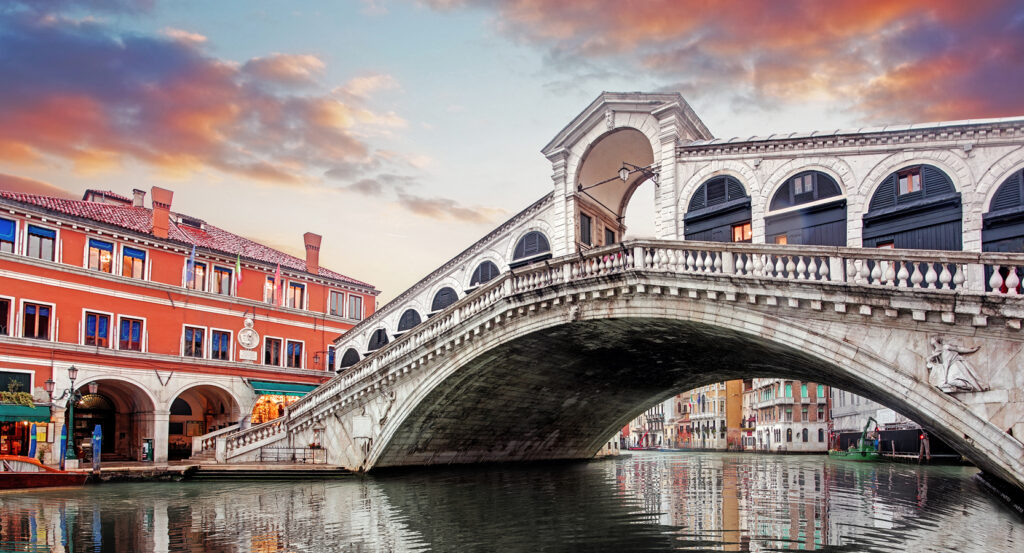
Lining the western bank of the Grand Canal beside the Rialto Bridge, this open quay once served as the unloading dock for fruit and vegetables ferried in from the islands of the lagoon. Even now, when the market winds down and the tourists disperse, the Erberia feels alive, a mosaic of damp stones, wooden mooring posts, and the scent of citrus carried on the tide. In the soft light of dawn, you can almost see it as it was centuries ago: barges heavy with artichokes from Sant'Erasmo, crates of oranges from Sicily, men shouting prices over the water while gondoliers drift past like witnesses. The Erberia isn't a viewpoint; it's a heartbeat, the place where commerce met the lagoon, and the Republic learned to speak in color and motion.
What defines Campo Erberia.
The name Erberia comes from “erbe”, herbs, a nod to the produce once stacked high along these stones.
By the 14th century, the Rialto district was already the commercial soul of Venice, but the Erberia gave it breath. Every morning, small boats from Murano, Burano, and the fertile island of Sant'Erasmo moored here to sell vegetables, fruits, and flowers. The area's design was deliberately open, paved wide enough to accommodate the bustle of vendors while keeping the canal accessible for larger trading vessels. The Rialto's wealth wasn't built solely on gold and silk; it was sustained by what arrived here, the simple goods that fed the city. Over time, the Erberia evolved from a practical quay to a social space, a threshold between work and leisure. During the Republic's height, nearby warehouses stored imported spices and wines, their façades still visible in the surrounding buildings that now hold cafés and bars. The paving stones trace the same layout used for centuries, their edges smoothed by the footsteps of merchants, sailors, and market women who built the city's daily rhythm. The Erberia, though quieter now, carries the memory of that exchange, not as a ruin, but as a living corridor between Venice's past and present.
How Campo Erberia fits.
Arrive just after sunrise, when the air is cool and the canal glows pale gold.
Stand at the base of the Rialto Bridge and follow the steps down toward the water, the hum of the waking city rising behind you. From the edge of the Erberia, look east along the curve of the Grand Canal: façades reflecting light like glass, boats sliding beneath arches, the water rippling against stone. If you visit during market hours, weave through the vendors still setting up, baskets of figs, tomatoes, and cut flowers spilling color onto the pavement. Later in the day, as the stalls close and the crowds shift elsewhere, the waterfront transforms again, tables appear, glasses clink, and the scent of wine drifts through the air. Take a seat at one of the canal-side cafés; watch the sunlight fade into the water as the façades turn honeyed and soft. At night, the Erberia glows with a quiet hum, a gathering of locals, gondoliers, and the occasional musician playing softly under the bridge. It's here, more than anywhere else, that you feel Venice as it truly is: alive, reflective, perpetually in motion. Campo Erberia isn't just a space beside the canal, it's where the city breathes between tide and twilight.
Where your story begins.
Foresyte Travel reveals places that feel extraordinary long before you arrive.
Enjoy editorial crafted for luxury travelers.
Foresyte may earn a commission when you book.