
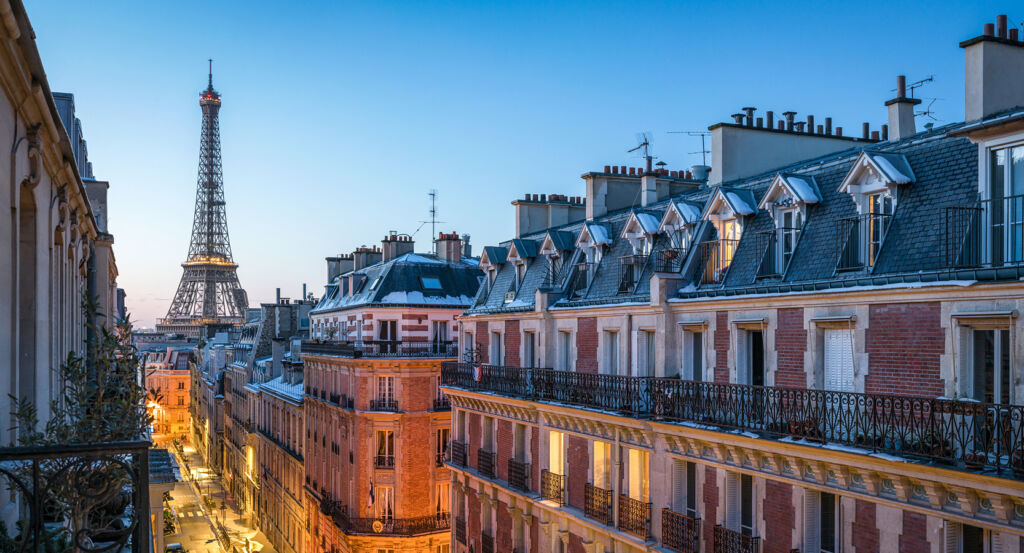
Why you should experience Rue Amelot in Paris, France.
Rue Amelot is a spirited Enfants-Rouges corridor where aristocratic heritage, revolutionary history, creative energy, and contemporary Marais culture converge along one of eastern Paris' most engaging historic streets.
Running through Enfants-Rouges between Boulevard des Filles-du-Calvaire and Boulevard Richard-Lenoir, this lively corridor unfolds through elegant eighteenth century townhouses, independent galleries, neighborhood cafés, artisan boutiques, creative studios, and beautifully preserved architecture that reflects centuries of urban transformation. Tree-lined sidewalks, intimate courtyards, thriving local businesses, and a distinctly residential atmosphere create a streetscape where historic character and contemporary Parisian life blend effortlessly. Every section of the corridor reveals another layer of the Marais' remarkable evolution from aristocratic suburb to one of the capital's most creative neighborhoods. The result is a corridor defined by historical depth, cultural vitality, and one of Paris' most rewarding local streets.
What you should know about Rue Amelot.
Rue Amelot is best known for tracing the line of the former Charles V city walls while preserving the legacy of Antoine Jean Amelot de Chaillou, the influential eighteenth century statesman whose family gave the corridor its name during the redevelopment of the former fortifications. Created in the late eighteenth century after the medieval defenses lost their military purpose, the avenue became part of the elegant expansion of the Faubourg Saint-Antoine and the northern Marais, attracting refined residences, workshops, and civic institutions that reshaped eastern Paris before the French Revolution. During the Second World War, Rue Amelot acquired profound historical significance through the Centre Amelot, where Jewish social organizations and members of the French Resistance coordinated relief efforts, forged character papers, sheltered children, and organized escape networks that saved hundreds of lives during the Nazi occupation. The corridor also stands near the historic Cirque d'Hiver, inaugurated in 1852 by architect Jacques Ignace Hittorff for Napoleon III, whose innovative twenty-sided polygonal design represented a landmark in nineteenth century entertainment architecture and continues hosting performances more than 170 years later. Together, these layers of military history, Enlightenment urban planning, wartime resistance, and architectural innovation establish Rue Amelot as one of the most historically resonant streets in the eastern Marais.
Historic residential buildings, commemorative plaques, cultural institutions, and surviving eighteenth century streetscapes preserve the memory of both aristocratic expansion and extraordinary acts of civilian courage during the occupation of Paris. The avenue's proximity to landmark institutions, creative businesses, and neighborhood cultural venues reflects the continuing evolution of the district while honoring the individuals whose humanitarian efforts left an enduring mark on French history. Few Parisian streets combine urban redevelopment, resistance history, architectural innovation, and neighborhood life with such remarkable continuity.
How to fold Rue Amelot into your trip.
Rue Amelot works as an exploration through Enfants-Rouges' celebrated cultural landmarks and historic neighborhoods.
Begin at Cirque d'Hiver Bouglione, where Jacques Ignace Hittorff's extraordinary nineteenth century circus introduces the architectural ambition of the district before following Rue Amelot through one of the Marais' most character-rich corridors. Continue to Musée Carnavalet, whose exceptional collections illuminate the evolution of Paris from its medieval origins through the modern era only a short walk from the avenue. Conclude at Place des Vosges, where France's first planned royal square provides a memorable finale celebrating the aristocratic heritage and architectural refinement that continue defining the historic Marais. The progression moves naturally from engineering innovation to the history of Paris before culminating in one of Europe's greatest urban spaces, revealing why Rue Amelot remains one of the capital's most compelling historic corridors.
Where your story begins.
Foresyte Travel reveals places that feel extraordinary long before you arrive.
Experience premium editorial crafted for luxury travelers.














































































































