Why The Westin Fort Lauderdale Beach Resort matters.
The Westin Fort Lauderdale Beach Resort is a historic beachfront hotel where Central Beach's midcentury resort heritage meets the evolution of South Florida's hospitality industry, coastal recreation, and contemporary oceanfront dining.
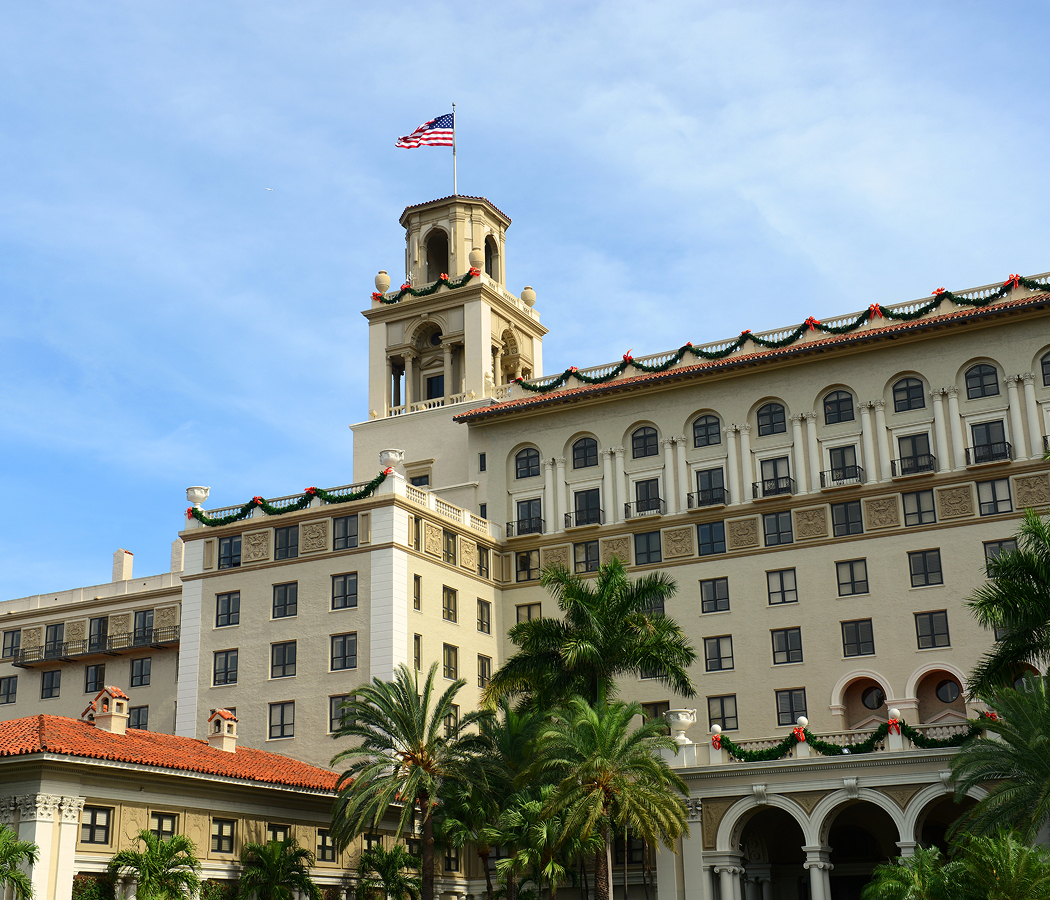
Occupying a substantial section of North Fort Lauderdale Beach Boulevard, the hotel stands directly across from the Atlantic Ocean, with the beachfront promenade extending along the shoreline and the Intracoastal Waterway defining the inland landscape. Its interconnected buildings present a combination of rectilinear tower elevations, horizontal balconies, and broad windows overlooking the surrounding coastline. The principal entrance leads into a contemporary lobby with polished surfaces, upholstered seating, and open circulation areas connecting the property's separate hospitality facilities. A pedestrian skywalk crosses the coastal boulevard, establishing direct access between the hotel and the public beach. The elevated swimming pool and surrounding sundeck provide a second perspective across the Atlantic, with outdoor seating areas extending toward the ocean-facing elevations. The hotel's beachfront restaurant terrace introduces another physical connection with the coastline through open-air dining overlooking the promenade. Upper-floor accommodations face the Atlantic or the inland waterways, connecting the building's contrasting elevations with Fort Lauderdale's distinctive maritime geography. The result is an established oceanfront resort whose interconnected architecture and direct beachfront access preserve the physical character of an important chapter in Fort Lauderdale's hospitality development.
What defines The Westin Fort Lauderdale Beach Resort.
The Westin Fort Lauderdale Beach Resort is best known for evolving from the Sheraton Yankee Trader, among Fort Lauderdale's formative beachfront hotels, into a Westin property through a major redevelopment that transformed its architecture and international hospitality identity. Hotelier George “Bob” Gill Jr. developed the original Yankee Trader during the expansion of Fort Lauderdale's postwar tourism economy, establishing a companion property to his earlier Yankee Clipper hotel. The Yankee Trader opened in 1964, becoming part of a growing beachfront hospitality industry supported by domestic air travel, automobile tourism, and the city's expanding reputation as a winter destination. Gill's hotels helped establish Fort Lauderdale as a substantial resort market, accommodating the seasonal visitors and spring-break crowds that contributed to the city's national recognition. The Gill family's ownership continued through successive decades of commercial development, preserving the property's relationship with one of Broward County's influential hospitality entrepreneurs. In 2005, the family sold the Yankee Trader and Yankee Clipper to Starwood Capital Group, the private investment organization founded by Barry Sternlicht. The acquisition established the foundation for extensive redevelopment of both properties under separate international hospitality brands. Starwood Capital announced the Yankee Trader's transformation in April 2008, establishing a comprehensive renovation program intended to reposition the established beachfront hotel within the Westin portfolio. The property closed on June 1, 2008, beginning a substantial reconstruction involving its accommodations, public interiors, restaurants, conference facilities, and recreational spaces. The undertaking represented an investment of $86 million, incorporating a newly constructed conference center and substantial improvements to the existing buildings. The hotel reopened in 2009 under the Westin name, introducing the brand's wellness-oriented hospitality program to the former Sheraton property. DiamondRock Hospitality Company acquired the resort from Starwood Capital on December 4, 2014, for $149 million, establishing another consequential ownership transition. The transaction replaced Starwood Hotels & Resorts with HEI Hotels & Resorts as the property's management company, separating the hotel's ownership and operating arrangements from its continuing Westin brand affiliation. DiamondRock subsequently undertook an operational restructuring that improved the property's financial performance, increasing annual hotel EBITDA from $9.6 million in 2014 to $16.1 million in 2017. The property's history connects Fort Lauderdale's postwar hotel development, the expansion of international hospitality brands, and substantial institutional investment in the modernization of its beachfront accommodation industry.
How The Westin Fort Lauderdale Beach Resort fits.
The Westin Fort Lauderdale Beach Resort works as the starting point for exploring Fort Lauderdale's early artistic community, the preservation of its coastal ecosystems, and the commercial settlement that preceded its development as an international resort destination.
Begin at Bonnet House Museum & Gardens, the historic beachfront estate developed through the artistic interests of Frederic Clay Bartlett and his family. Chicago attorney Hugh Taylor Birch acquired the property in 1911, subsequently supporting the construction of a winter residence for his daughter Helen and her husband, Frederic, following their marriage in 1919. Bartlett designed the house around architectural references to Caribbean plantation residences, incorporating open-air circulation spaces, decorative murals, and collections of paintings and sculpture. Following Helen's death in 1925, Frederic married Evelyn Fortune Lilly in 1931, beginning another chapter in the estate's artistic development. Evelyn donated the property to the Florida Trust for Historic Preservation in 1983, securing the preservation of its buildings, collections, and surrounding tropical landscape. The estate entered the National Register of Historic Places in 1984, protecting an important example of South Florida's early artistic and residential history. Continue to Hugh Taylor Birch State Park, a substantial coastal preserve established through the landholdings of the Chicago attorney whose investments shaped the surrounding beachfront district. Birch arrived in South Florida in 1893 and subsequently acquired extensive property along the Atlantic coast, preserving substantial areas of subtropical vegetation during the settlement's early expansion. In 1940, he constructed Terramar, an Art Deco residence within his remaining coastal estate. Florida acquired the property on December 31, 1941, following Birch's decision to preserve the land for public use. The park opened in 1949, protecting maritime hammock, mangrove vegetation, and freshwater coastal habitats between the Atlantic Ocean and the Intracoastal Waterway. Terramar became an interpretive center, preserving the history of the estate and its contribution to the conservation of Fort Lauderdale's coastal environment. Conclude at Historic Stranahan House Museum, the oldest surviving building in Broward County and a substantial connection to Fort Lauderdale's original commercial settlement. Frank Stranahan arrived along the New River in January 1893, establishing a trading business with Seminole communities before expanding his commercial activities. His future wife, Ivy Julia Cromartie, arrived in 1899 to teach at the settlement's first school, and the couple married in August 1900. Frank constructed the two-story timber building in 1901, incorporating a trading post on the ground floor and a community gathering area above. The structure subsequently became the family's residence, preserving its association with the city's early educational and commercial institutions. Ivy continued her civic and charitable activities following Frank's death in 1929, contributing to the development of Fort Lauderdale's community organizations. Restoration concluded in 1984, establishing the property as a historic house museum devoted to the city's founding period. The progression moves from Bonnet House's artistic and residential heritage through Hugh Taylor Birch State Park's coastal conservation history and culminates at Stranahan House's pioneering commercial settlement, connecting three institutions central to Fort Lauderdale's early development.
Where your story begins.
Foresyte Travel reveals places that feel extraordinary long before you arrive.
Enjoy editorial crafted for luxury travelers.