Why Tulum Ruins matters.
Tulum is a fortified Maya archaeological site where Tulum's Caribbean coastline meets the maritime commerce of the Postclassic Maya world, the religious authority of a walled coastal settlement and the architectural achievements of a civilization whose trading networks connected the Yucatán Peninsula with Central America.
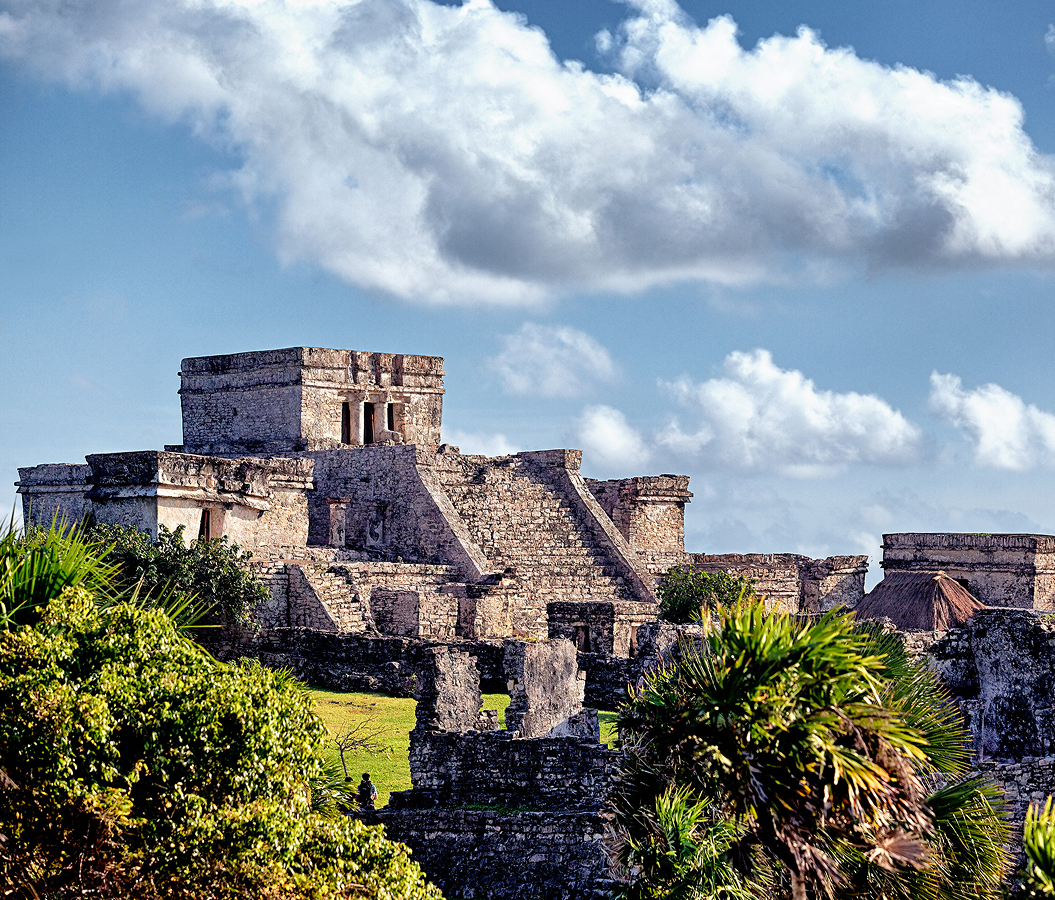
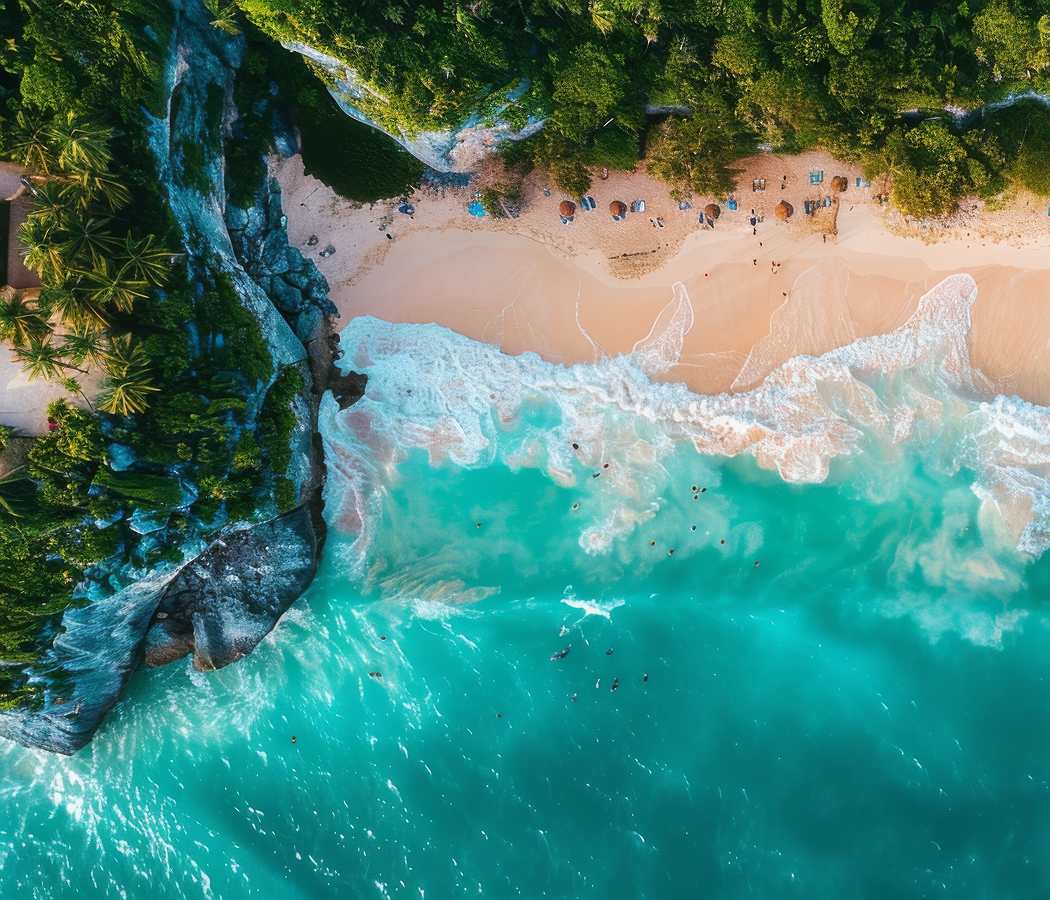
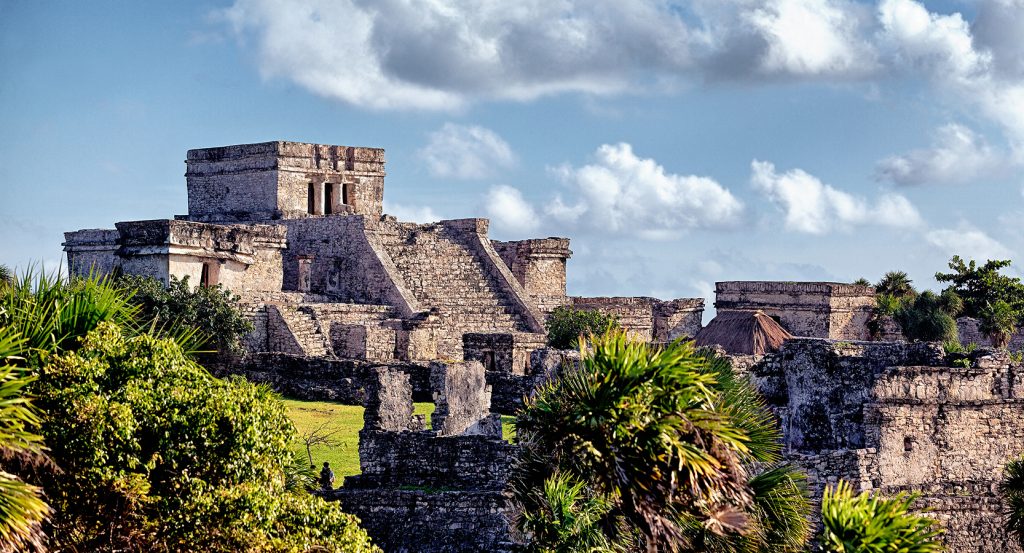
Perched on limestone cliffs above the Caribbean Sea northeast of Central Tulum, the archaeological site occupies a compact coastal plateau between the Riviera Maya's tropical forest and the turquoise waters of the eastern Yucatán Peninsula, with its surviving structures arranged around open plazas and narrow ceremonial passages. Weathered limestone temples, stepped platforms and rectangular buildings stand within a substantial defensive enclosure, their pale masonry contrasting with the surrounding vegetation and exposed coastal rock. The eastern boundary follows the natural cliff edge, where elevated terraces overlook a small sandy cove enclosed by rugged headlands. Low stone walls, carved architectural details and carefully positioned entrances preserve the spatial organization of a settlement designed for religious ceremonies, administration and maritime activity. The result is an exceptionally distinctive archaeological landscape whose surviving architecture, fortified boundaries and dramatic coastal position preserve the material achievements of the late Maya civilization.
What defines Tulum Ruins.
Tulum is best known for its commanding coastal position, its unusually well-preserved defensive walls and its importance as a maritime trading center during the Late Postclassic period of Maya civilization. The settlement flourished principally between the thirteenth and fifteenth centuries, although archaeological remains indicate earlier occupation and architectural activity. Its inhabitants participated in commercial networks connecting the eastern Yucatán Peninsula with communities across the Caribbean coast and Central America. Maritime traders transported commodities including salt, cotton textiles, honey, jade, obsidian and valuable marine materials, using coastal navigation routes that linked settlements along the peninsula. The city's position above a natural landing area facilitated the movement of goods between seaborne merchants and inland communities. Its Maya name, Zamá, meaning dawn or morning, expressed the settlement's eastern orientation toward the rising sun. The modern name Tulum derives from a Maya word associated with a wall or enclosure, referring to the defensive structures surrounding the principal ceremonial precinct. The surviving fortifications extend along three landward sides, with substantial masonry walls enclosing an rectangular area. Five principal entrances controlled access through the enclosure, establishing defined routes into the settlement's central precinct. The coastal cliffs provided a natural defensive boundary along the eastern side, reducing the need for extensive artificial fortifications facing the sea. The city developed during a period of political fragmentation following the decline of major Classic Maya centers, when smaller regional polities exercised authority over trade and religious institutions. Architectural similarities with sites such as Mayapán indicate participation in broader cultural developments across the northern Yucatán Peninsula. Spanish explorers encountered the settlement during the early sixteenth century, when substantial coastal communities continued to occupy the region. Juan Díaz, a member of Juan de Grijalva's expedition, described an impressive coastal city in 1518, providing an early European account of the settlement's architecture and maritime setting. European conquest, introduced diseases and the disruption of established political and commercial networks subsequently contributed to the decline of the settlement's population and economic importance. Religious activities continued at the site for generations after its principal urban functions diminished, preserving elements of Maya ceremonial tradition. Modern archaeological investigation and conservation established Tulum as one of Mexico's most significant surviving examples of Postclassic coastal urbanism.
El Castillo dominates the archaeological precinct from its elevated position above the Caribbean, serving as the settlement's principal architectural and ceremonial structure. The building rises from a substantial stepped platform, with a broad staircase ascending toward an upper temple framed by columns and carefully arranged doorways. Its placement above the coastal landing area established a prominent visual reference for maritime travelers approaching the shoreline. The structure incorporates multiple construction phases, with later architectural elements built over earlier foundations as the ceremonial complex developed. The Temple of the Descending God preserves a distinctive sculptural figure positioned above its entrance, depicting a humanlike form descending headfirst with bent limbs. Similar imagery appears elsewhere in the Maya world and has generated interpretations connecting the figure with religious symbolism, celestial phenomena and agricultural fertility. The Temple of the Frescoes contains surviving painted decoration and sculptural ornamentation associated with the religious practices of the settlement. Its interior murals depict supernatural figures and symbolic compositions characteristic of the Postclassic Maya artistic tradition. Decorative niches and carved architectural elements incorporate representations of divine beings, establishing connections between ritual activity and the surrounding built environment. The House of the Columns preserves a substantial interior arrangement supported by masonry columns, indicating a building associated with important communal or administrative functions. The House of the Halach Uinic, traditionally associated with a high-ranking ruler or political authority, occupies a prominent position within the ceremonial precinct. Its carefully organized entrance and interior spaces distinguish it from smaller residential structures. The site's architecture employs limestone masonry finished with stucco surfaces that originally supported painted decoration, creating buildings considerably more colorful than their surviving stone exteriors suggest. Narrow passages and elevated platforms organized movement through the precinct, directing access toward structures associated with religious and political authority. The coastal environment influenced building orientation, drainage and the arrangement of ceremonial spaces, establishing a close relationship between architecture and natural topography. Tulum' continuing importance rests in its preservation of Postclassic Maya architecture, its evidence of extensive maritime commerce and its commanding position within the historical geography of the Caribbean coast.
How Tulum fits.
Tulum works as the historical anchor for a Riviera Maya outing connecting the ancient settlement's surrounding coastal environment, the geological formations of the Yucatán Peninsula and the extensive protected ecosystems that preserve the region's natural heritage.
Begin at Parque Nacional Tulum, the protected coastal landscape established in 1981 to preserve natural environments surrounding the archaeological zone. The park encompasses tropical vegetation, coastal dunes, limestone formations and stretches of Caribbean shoreline associated with the northern portion of the Tulum coast. Its protected habitats support native birds, reptiles and plant communities adapted to the peninsula's porous limestone terrain and seasonal rainfall. Coastal vegetation helps stabilize sandy areas and maintain ecological connections between inland forest and the marine environment. The park's conservation role has become increasingly important as tourism development places pressure on the surrounding coastline. Continue to Gran Cenote, the freshwater sinkhole system situated inland along the road connecting Tulum with Cobá. The cenote forms part of the extensive underground drainage network created through the dissolution of the Yucatán Peninsula's limestone bedrock. Its clear freshwater pools occupy partially open chambers surrounded by tropical vegetation, with submerged passages extending into a larger cavern system. Stalactites, exposed rock surfaces and underwater formations preserve evidence of prolonged geological processes involving groundwater movement and mineral deposition. The cenote's accessible swimming areas provide a direct introduction to the freshwater environments that supported Maya settlement across the peninsula. Conclude at Reserva de la Biosfera Sian Ka'an, the extensive protected landscape south of Tulum recognized as a UNESCO World Heritage Site in 1987. The reserve encompasses tropical forests, mangrove wetlands, coastal lagoons, freshwater systems and marine habitats extending along the Caribbean shoreline. Its diverse ecosystems support jaguars, crocodiles, manatees and numerous resident and migratory bird species. The reserve also preserves archaeological remains associated with Maya occupation, including historic waterways and settlements connected with the region's earlier commercial networks. Its designation recognizes the exceptional ecological importance of maintaining connected terrestrial and marine habitats across the eastern Yucatán Peninsula. The progression moves from Parque Nacional Tulum's protected coastal habitats through Gran Cenote's limestone freshwater system and culminates at Reserva de la Biosfera Sian Ka'an's extensive tropical ecosystems, connecting Tulum with the natural environments that sustained Maya civilization along the Caribbean coast.
Where your story begins.
Foresyte Travel reveals places that feel extraordinary long before you arrive.
Enjoy editorial crafted for luxury travelers.
Foresyte may earn a commission when you book.