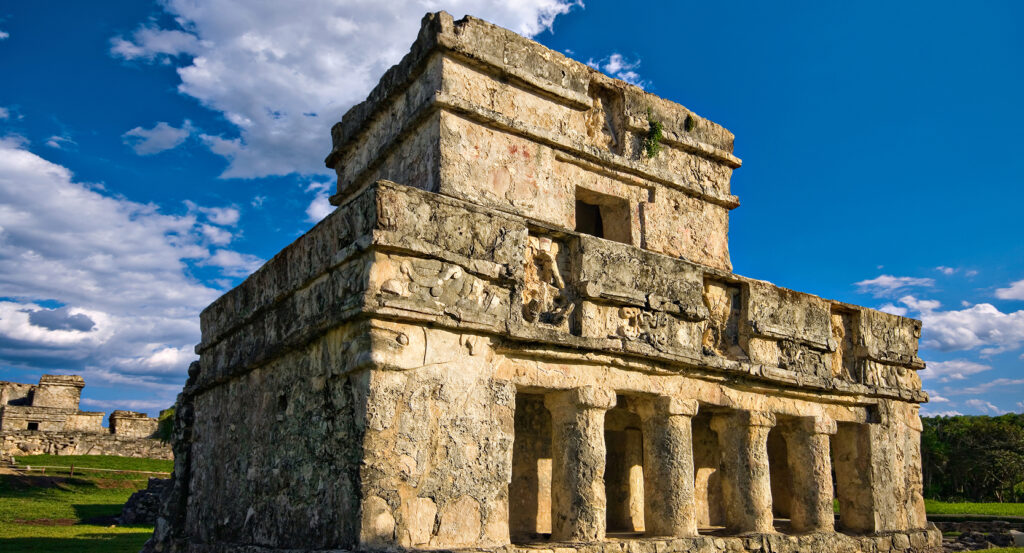
Why Temple of the Frescoes matters.
The Temple of the Frescoes isn't just another ruin along the Caribbean coast, it's Tulum's most intimate discussion between art, faith, and the sea.
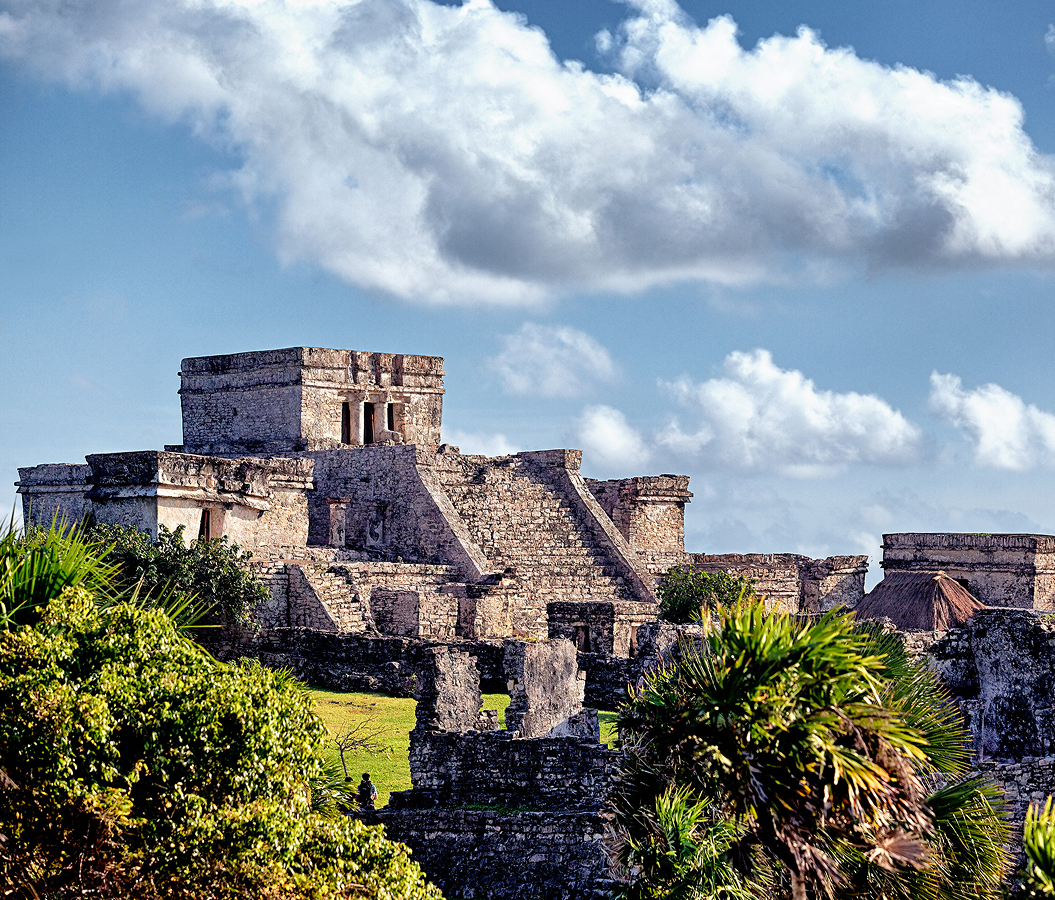
Standing within the Tulum Archaeological Zone, overlooking turquoise waters that blur into the horizon, this temple feels like a heartbeat frozen in limestone. It's smaller than the nearby El Castillo, yet infinitely more human, a structure designed not to intimidate but to enlighten. Built during the Late Postclassic period (1450 CE), the Temple of the Frescoes was dedicated to observing celestial events and depicting the Maya worldview through painted storytelling. The building's faded yet enduring murals, shades of red, blue, and black, are fragments of cosmic imagination, portraying gods descending from the heavens, ancestors guiding from below, and serpents winding through dimensions of light. Though centuries of salt, wind, and time have softened the pigments, the spirit behind them still radiates with clarity: the Maya saw no divide between earth and sky, art and ritual, human and divine. The temple's two levels embody this philosophy, the lower devoted to earthly ceremonies and the upper used for sacred astronomical observation. When you stand beneath its crumbling archways, the scent of salt and copal in the air, you can feel the pulse of that ancient logic: that the heavens weren't above us, but all around.
What defines Temple of the Frescoes.
Behind its quiet ruin lies a masterpiece of astronomical precision and cultural resilience.
The Temple of the Frescoes was one of Tulum's key observatories, designed to mark solstices and equinoxes with remarkable accuracy. Its upper level once framed the movement of the sun as it rose and fell across the Caribbean, turning ritual into architecture. Scholars believe the temple's priests would interpret these patterns to forecast agricultural cycles, rituals, and divine favor. Inside, the frescoes themselves tell a layered story: beneath the surface paintings visible today lie traces of older works, revealing that the temple evolved over multiple generations. The primary scenes depict the Descending God, an iconic deity unique to Tulum and neighboring coastal cities, shown plunging headfirst from the heavens, a symbol of fertility, rain, and renewal. This god's presence connects the temple directly to the Maya calendar's agricultural rhythm, binding the cosmic to the practical. Alongside him appear underworld creatures, skeletal forms, and mythic serpents, suggesting the Maya belief that creation and destruction are cyclical forces, forever entwined. The stucco masks that once adorned the façade, though weathered, still hint at the grandeur of Tulum's artistry, stylized faces with wide eyes and open mouths meant to bridge mortals and gods. Unlike the sprawling temples of Chichén Itzá or Palenque, the Temple of the Frescoes was intimate, local, and deeply human, a reflection of how the Maya built meaning into even their smallest spaces. Its survival, despite hurricanes, colonial neglect, and centuries of erosion, speaks to the reverence carved into every inch of its limestone walls.
How Temple of the Frescoes fits.
To truly experience the Temple of the Frescoes, you need to approach it with patience, and a willingness to slow your breathing to match the rhythm of the sea.
Visit early in the morning, before the crowds fill the paths of the Tulum Archaeological Site. Walk past the towering El Castillo and you'll find the Temple of the Frescoes tucked just beyond, humbler, but more mysterious. As you approach, notice how the building aligns with the coastline: the same sun that guided Maya priests now paints the façade in gold. Step close enough to trace the shadows in the stone, where faint outlines of murals whisper stories of creation and chaos. You can't enter the structure, but standing before it is enough, the wind carries the salt of the Caribbean across your skin, and suddenly you're part of the same continuum of time and nature that the Maya once worshipped. Pair your visit with a quiet walk along the coastal path, the sound of waves against the cliffs becomes a natural soundtrack to the temple's mythology. Nearby, the small Temple of the Descending God complements the story begun here, offering a broader glimpse into how the Maya blended astronomy, religion, and art into one seamless philosophy. When you step back and take in the temple against the endless horizon, you'll understand why Tulum was never meant to dominate, it was built to harmonize. The Temple of the Frescoes isn't a relic of decay; it's proof that belief, when carved in rhythm with the earth, can outlast empires. The Temple of the Frescoes is more than a ruin, it's a preserved fragment of Maya consciousness, where the divine met the everyday in color and stone. It doesn't just tell history; it breathes it, in every flake of pigment and gust of coastal wind.
Where your story begins.
Foresyte Travel reveals places that feel extraordinary long before you arrive.
Enjoy editorial crafted for luxury travelers.
Foresyte may earn a commission when you book.