Why you should experience University Club of Chicago in Chicago, Illinois.
University Club of Chicago is where Gothic grandeur meets scholarly prestige, where soaring stone vaults and stained-glass windows turn every moment into living history, and where the elegance of a private club unfolds with a quiet, old-world confidence that feels both timeless and deeply, irresistibly Chicago.
Standing directly on Michigan Avenue, overlooking the vast openness of Millennium Park and the shimmering blue horizon of Lake Michigan, the University Club occupies one of the most extraordinary architectural treasures in the city, a towering neo-Gothic landmark completed in 1909 and inspired by the collegiate architecture of Oxford and Cambridge. Its façade rises in limestone and carved ornament, its pointed arches and tracery echo stories of scholarship, tradition, and refined society. This is not merely a building; it is a cathedral of intellect and culture, carved into the very spine of Chicago's historic boulevard. Step inside and the transformation is immediate. The air carries the warmth of dark wood, the glow of chandeliers, the hush of tradition, and the distinct feeling that you have entered a world where history matters. The lobby, framed in carved paneling and accented with old-world detailing, sets the tone for the atmosphere to come, quiet, dignified, and intimately connected to the club's century-long story. Rooms are exquisite in their restraint, pairing classical warmth with contemporary comfort. Expect plush bedding wrapped in crisp white linens; elegant furnishings crafted from rich woods; soft carpets underfoot; curated art nodding to academia, poetry, and Chicago's cultural legacy; and windows that frame Millennium Park, the lakefront, or the intricately carved stonework of the building itself. There is a gentle, monastic serenity to the guestrooms, an aesthetic that prioritizes calm, contemplation, and refinement. Bathrooms blend timeless character with modern polish: marble vanities, glass showers, gleaming fixtures, classic tiling, and amenities designed to make each morning feel composed and unhurried. Suites elevate the experience with generous layouts, libraries of leather-bound books, curated antiques, deep seating areas, and architectural details, from vaulted ceilings to carved stone borders, that reflect the building's Gothic lineage. Dining at the University Club is nothing short of breathtaking. The renowned Cathedral Hall is one of America's most grand dining spaces, a soaring, multi-story room adorned with stained-glass windows depicting great universities and historical figures, carved timber beams stretching overhead, warm lighting casting golden hues on stone pillars, and long tables that feel straight out of a European great hall. Here, breakfast and dinner unfold with an air of ceremony: crisp table linens, attentive service, beautifully plated cuisine, and a sense that every meal is part of an ongoing tradition. The club's restaurants and lounges offer additional spaces, more intimate, more contemporary, and equally refined, each one shaped by rich materials, warm tones, and the unmistakable dignity of a private club with more than a century of cultural importance. Wellness at the University Club is exceptional and one of its best-kept secrets. The athletic facilities span multiple floors and feature everything from state-of-the-art fitness equipment to squash courts, golf simulators, an indoor pool with vaulted ceilings, and spa amenities designed for restoration and calm.
What you should know about University Club of Chicago.
University Club of Chicago stands on land that reflects the evolution of Chicago from a city of rail yards and brownstone residences into a cultural metropolis anchored by its parks, museums, and world-famous architectural heritage.
Originally founded in 1887 by a group of college alumni seeking an intellectual and social haven in the rapidly growing city, the club became a beacon of academic prestige and architectural ambition. The current clubhouse, completed in 1909, was designed by Martin Roche of Holabird & Roche, the same architectural firm behind many of Chicago's early skyscrapers. The design drew heavily from the Gothic libraries and halls of Oxford and Cambridge, embracing pointed arches, vertical stone ribs, and symmetrical tracery that turned the building into an homage to European collegiate architecture. A lesser-known fact: the University Club was among the first private buildings in Chicago to directly embrace Michigan Avenue as a cultural boulevard. At the time of construction, the avenue was undergoing a transformation from an industrial corridor into the elegant, park-facing street we know today. The club's façade helped establish the architectural language that would define the avenue in the years to come. During excavation, builders encountered remnants of early 19th-century fill used to expand the shoreline. Much of Downtown east of Michigan Avenue, including the land where the club stands, was built on carefully layered materials that extended into what was once marshy lakefront. Foundations had to be engineered specifically to withstand soft soil conditions while supporting heavy Gothic stonework. The stained-glass windows in Cathedral Hall are among the most historically significant in any private club in America. Each window honors a different university, academic discipline, or historical figure. Many were crafted by notable artisans of the early 20th century and restored during major preservation efforts in recent decades. Another hidden detail: the club was among the earliest in the nation to incorporate an extensive athletic program into its design. At the turn of the century, this was nearly unheard of, private clubs emphasized dining, reading, and social gatherings, not comprehensive wellness. The inclusion of squash courts, gymnasiums, and swimming facilities in the original design reflects a uniquely progressive vision for its time. The rooftop terraces were originally conceived as open-air reading rooms, a place where members could sit above the city, overlooking the lake, while reading newspapers, novels, and academic journals. Today, these terraces remain some of the club's most enchanting spaces, offering unparalleled views of Millennium Park and the downtown skyline. The building's interior contains countless architectural Easter eggs: carved stone grotesques tucked beneath staircases, Latin inscriptions referencing the pursuit of knowledge, hand-carved timbers hidden high in the rafters, and old brass fixtures that survived multiple renovations. Over time, the club became a meeting place for scholars, artists, judges, authors, professors, and civic leaders. It played host to literary gatherings, classical music performances, academic discussions, and charitable initiatives. Its walls hold more than a century of intellectual and cultural history, an invisible archive that adds resonance to every hallway and every vaulted room.
How to fold University Club of Chicago into your trip.
University Club of Chicago becomes your Gothic sanctuary, where mornings begin with soft sunlight filtering through stained glass, afternoons unfold into art and architecture, and evenings settle into quiet elegance beneath carved timber beams and the glow of Millennium Park.
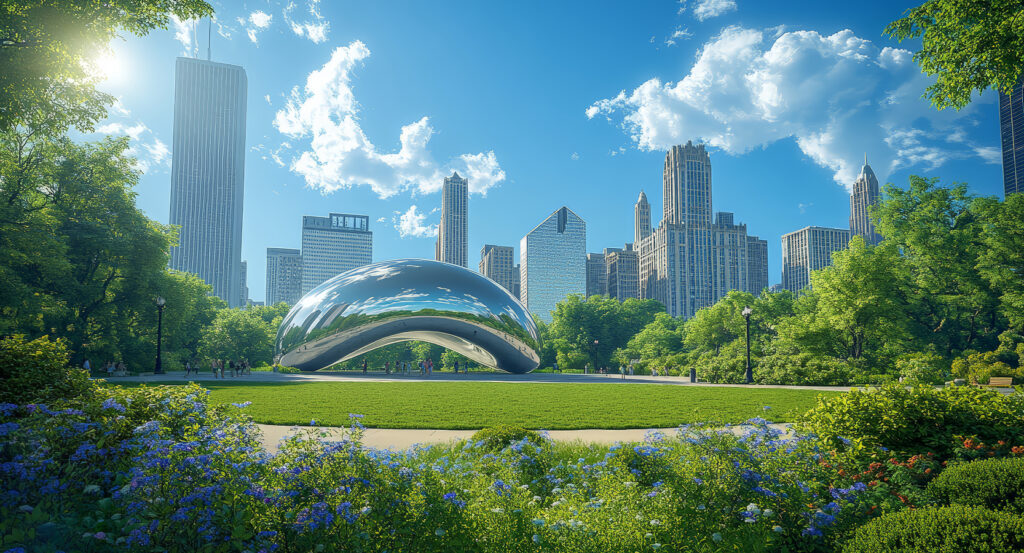
Start the morning with breakfast in Cathedral Hall, where warm light pours through stained-glass windows and the space feels like a European great hall suspended above the park. Step outside onto Michigan Avenue and cross into Millennium Park, wander through Lurie Garden, pause at Cloud Gate, and feel the energy of Chicago waking up around you. Continue to the Art Institute of Chicago, just steps away, for an immersion into centuries of artistic mastery. Midday, stroll toward the lakefront for expansive views and breezy walking paths, or wander into the Loop for architectural icons, theaters, historic buildings, and the cultural hum of downtown. For lunch, choose from nearby cafés, bistros, or riverside restaurants. Spend the afternoon exploring the Chicago Cultural Center, taking an architectural tour, or wandering through the shops and galleries of Michigan Avenue. Return to the club for a serene reset, relax in the library, enjoy the quiet elegance of the lounges, or visit the athletic floor for a swim or workout with views stretching across the city. As evening arrives, savor dinner inside the club or venture out to the Theater District or River North for fine dining. Afterward, take a nighttime walk through Millennium Park, where lights shimmer across the lawn and the skyline glows above the trees. Return to your room and let the building's historic calm wrap around you, soft lighting reflecting off carved wood, the quiet hum of the city just beyond the window, and a sense of inhabiting a space where history and elegance converge.
Where your story begins.
Foresyte Travel reveals places that feel extraordinary long before you arrive.
Experience premium editorial crafted for luxury travelers.