Why Villa Romeo Faccanoni matters.
Villa Romeo Faccanoni is an expressive Liberty villa where Buonarroti's early twentieth-century residential character meets Giuseppe Sommaruga's asymmetrical architecture, sculptural ornament and a rare collaboration among leading figures of Milanese decorative art.
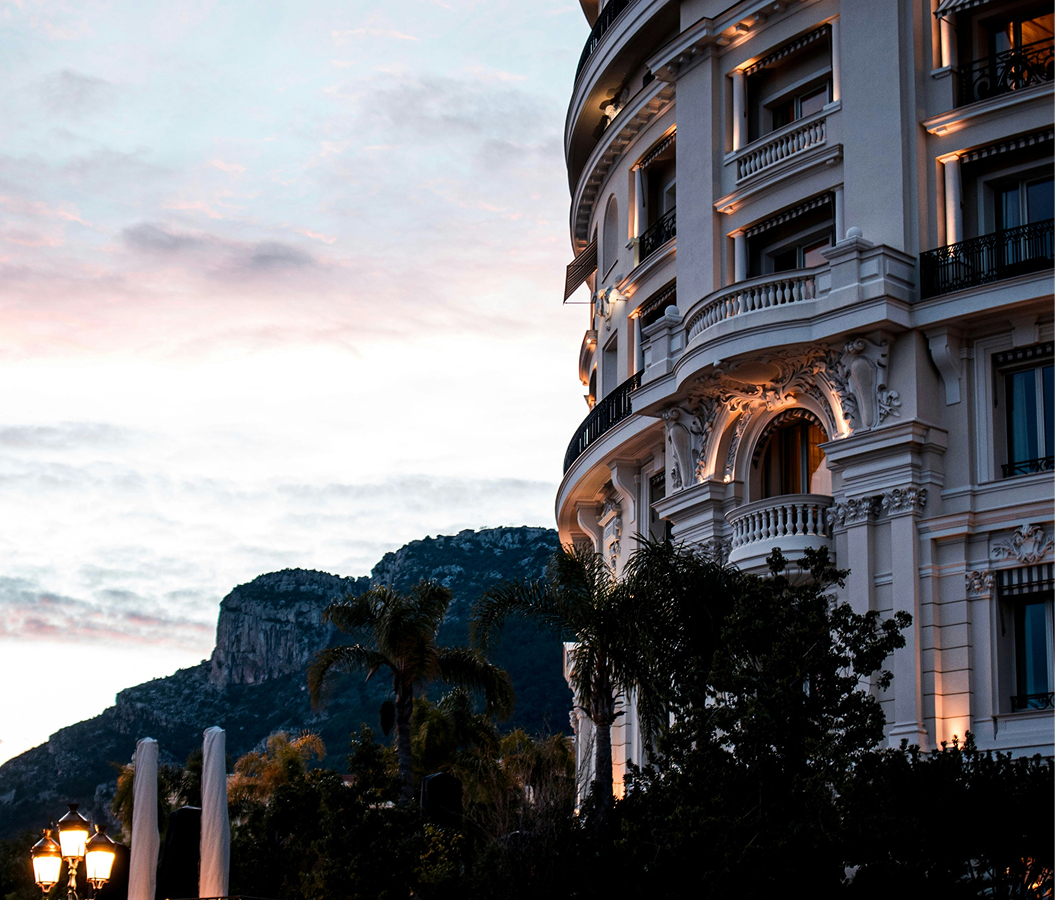
Set along Via Michelangelo Buonarroti near Via Tiziano and just steps from Piazza Piemonte, the villa occupies a garden plot within a western Milan district that shifted from peripheral development toward affluent residential construction during the city's early twentieth-century expansion. A three-storey composition rises through an asymmetrical arrangement of projecting volumes, balconies, varied openings and a four-storey tower that gives the residence a changing profile from the street. The primary encounter develops across Sommaruga's facade through alternating stone textures, floral reliefs and Alessandro Mazzucotelli's wrought iron, carrying ornament from balcony railings into smaller architectural fittings. Garden-facing elevations deepen the effect through Ernesto Bazzaro's two female sculptures, whose scale introduces figurative art directly into the villa's exterior composition. The result is a residence where architecture, metalwork, sculpture and garden space preserve the collaborative ambition that made Milanese Liberty one of the city's most distinctive episodes of domestic design.
What defines Villa Romeo Faccanoni.
Villa Romeo Faccanoni is best known for being one of Giuseppe Sommaruga's principal Milanese Liberty residences, built between 1912 and 1914 for engineer Luigi Faccanoni after the architect had already developed related commissions for the same family around Sarnico. Sommaruga conceived the three-storey residence across 337 square meters with a garden exceeding 2,000 square meters, using deliberate asymmetry to multiply viewpoints across the house and grounds. The commission brought two of his closest decorative collaborators into the project. Eugenio Quarti developed the interior woodwork, extending the cabinetmaker's long association with Sommaruga into the villa's rooms. Alessandro Mazzucotelli handled the wrought-iron ornament, carrying floral forms through railings, lamps and exterior fittings that made metalwork integral to the architecture. Ernesto Bazzaro supplied the villa with an unusual connection to Sommaruga's earlier Palazzo Castiglioni through two female sculptures originally created as allegories of Peace and Industry for its Corso Venezia entrance. Their nudity provoked controversy after Palazzo Castiglioni's unveiling in 1903, leading to their removal before Sommaruga reused them on Villa Faccanoni in 1914. The transfer turned sculptures rejected from his earlier Milanese commission into permanent components of the later villa, physically connecting two major phases of his work. Industrialist Nicola Romeo acquired the property in 1919, adding the name of the automobile entrepreneur associated with Alfa Romeo to a residence already shaped by Sommaruga, Quarti, Mazzucotelli and Bazzaro.
A second architectural chapter began in 1938 when the former residence entered a conversion into Clinica Columbus under Gio Ponti, Antonio Fornaroli and Eugenio Soncini. Surgeon Mario Donati worked with Ponti on a medical design conceived around a domestic character, turning the existing villa into the starting point for a larger complex in which patient rooms faced south and medical spaces maintained direct relationships with the garden. Studio Ponti, Fornaroli, Soncini expanded the property with new clinical wings yet retained Sommaruga's principal facade, side elevations and surviving decorative work. World War II interrupted construction before bombing in 1943 damaged the complex and prolonged completion into the postwar period. Clinica Columbus began activity in 1949, taking its name from the Columbus Hospital founded in New York in 1894 by missionary Francesca Cabrini for Italian emigrants. Ponti's intervention left Sommaruga's Liberty residence embedded within a twentieth-century medical complex, preserving the earlier architecture through a dramatic change in purpose. The coexistence of Sommaruga's villa and Ponti's clinical additions gives Villa Romeo Faccanoni two distinct periods of authored Milanese architecture within a single site.
How Villa Romeo Faccanoni fits.
Villa Romeo Faccanoni works as the anchor for a daytime route through Buonarroti and its adjoining streets, connecting musical philanthropy, neighborhood theater and a parish whose repeated reconstruction followed western Milan's growth.
Begin at Casa Verdi, conceived by Giuseppe Verdi for musicians facing financial hardship in old age after the composer acquired 3,000 square meters of land in 1889 and later entrusted Camillo Boito with the building. Construction began in 1896, and Verdi assigned income from the copyrights to his operas to support the home, which received its first musicians in 1902 after his death. Verdi and Giuseppina Strepponi rest in its crypt beneath mosaics designed by Ludovico Pogliaghi, joining the composer's philanthropy directly to Boito's architecture. Continue to Teatro Nazionale, commissioned by cinema operator Mauro Rota and designed by Mario Borgato when Piazza Piemonte still stood beside fields on Milan's expanding western edge. The theater opened on December 20, 1924 with Sem Benelli's La cena delle beffe, later shifted toward cinema and returned to theatrical performance during the late 1970s. Its subsequent stage history included Rudolf Nureyev's return to an Italian theater after years away, extending a building born during neighborhood expansion into Milan's modern performance culture. Conclude at San Pietro in Sala, whose origins reach a chapel associated with Archbishop Ariberto da Intimiano in 1028 and a rebuilding by Eriberto da Pasilvano in 1141 before Carlo Borromeo established the parish in 1581. Population growth and industrial expansion eventually overwhelmed later incarnations of the church, leading Giuseppe Magnaghi to promote the present building by Antonio Casati and Oreste Benedetti, consecrated in 1924. Aldo Carpi designed the three facade mosaics, and Angelo Colombo sculpted the marble high altar consecrated by Cardinal Ildefonso Schuster in 1931. The progression moves from Verdi and Boito's purpose-built home for musicians through Mauro Rota and Mario Borgato's theater into a parish repeatedly rebuilt as western Milan expanded, placing Villa Romeo Faccanoni within a district shaped by philanthropy, performance, religious continuity and early twentieth-century architectural ambition.
Where your story begins.
Foresyte Travel reveals places that feel extraordinary long before you arrive.
Enjoy editorial crafted for luxury travelers.
Foresyte may earn a commission when you book.