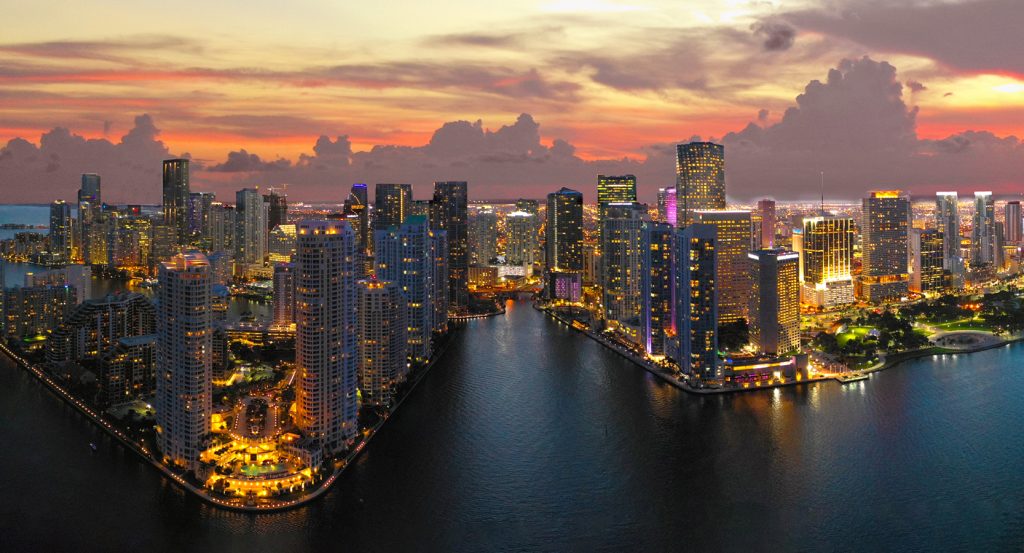
Why Washington Avenue matters.
Washington Avenue is a animated corridor where South Beach's Art Deco heritage, cultural diversity, nightlife, and enduring coastal energy converge along one of Miami Beach's defining thoroughfares.
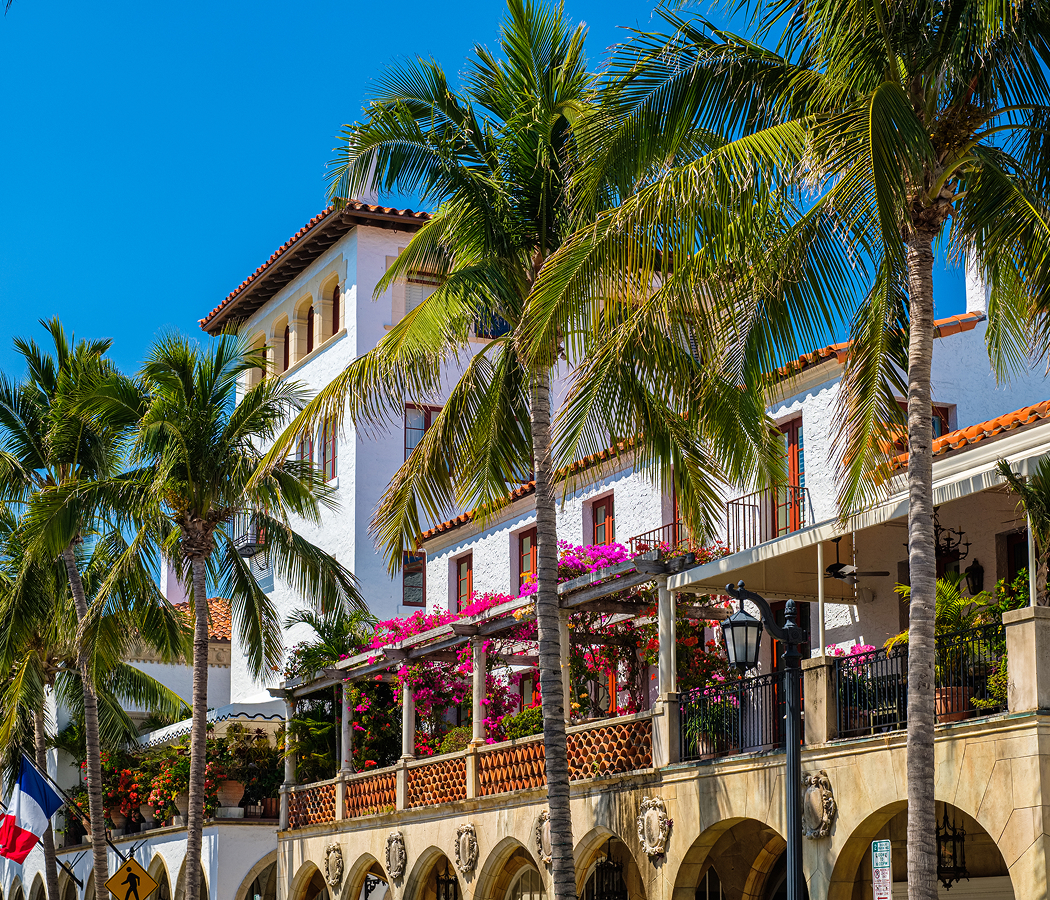
Running through South Beach between South of Fifth and Mid-Beach, the corridor links celebrated Art Deco hotels, independent restaurants, performance venues, neighborhood parks, historic synagogues, and palm-lined sidewalks that collectively reflect more than a century of architectural, cultural, and commercial evolution. Mediterranean Revival landmarks, Streamline Moderne façades, neon-lit storefronts, and mature royal palms establish a streetscape where preservation and contemporary urban life remain inseparably connected. Throughout the corridor, historic architecture, hospitality landmarks, cultural institutions, and locally rooted businesses reinforce a setting whose character continues evolving while remaining firmly anchored in Miami Beach's distinctive history. The result is an experience defined by vitality, architectural character, and one of South Florida's most recognizable urban corridors.
What defines Washington Avenue.
Washington Avenue is best known for forming one of the principal north-south corridors within Miami Beach's Art Deco Historic District, which was listed on the National Register of Historic Places in 1979 as the nation's first twentieth-century historic district recognized primarily for its architectural significance. The corridor developed rapidly following Carl G. Fisher's transformation of Miami Beach during the 1910s and 1920s before becoming a showcase for more than 800 surviving Art Deco, Streamline Moderne, and Mediterranean Revival buildings constructed largely between 1923 and 1943. Architects including Henry Hohauser, L. Murray Dixon, Albert Anis, Anton Skislewicz, and Lawrence Murray designed many of the hotels, apartments, and commercial buildings lining or adjoining Washington Avenue, introducing rounded corners, glass block, porthole windows, terrazzo floors, decorative reliefs, and pastel façades that became synonymous with Miami Beach architecture. During the postwar decades, the corridor evolved from a seasonal resort destination into an internationally recognized entertainment district while preservation efforts led by the Miami Design Preservation League helped reverse widespread demolition during the late twentieth century. Royal palms, live oaks, gumbo limbo trees, and tropical landscaping continue softening the urban streetscape while reinforcing the subtropical setting that has shaped Washington Avenue since its earliest development.
Temple Emanu-El, dedicated in 1948 and designed by Morris Lapidus, introduced one of South Florida's most distinguished postwar religious landmarks, demonstrating how Modernist architecture expanded the corridor's architectural narrative beyond the Art Deco era. The Wolfsonian-FIU, occupying the restored 1927 Washington Storage Company building designed by Robertson & Patterson, preserves more than 200,000 objects spanning architecture, industrial design, propaganda, furniture, and decorative arts, connecting Washington Avenue to one of the world's leading collections devoted to the modern age. Original terrazzo entrances, etched glass, cast-stone ornamentation, and restored neon signage surviving along adjoining façades demonstrate the craftsmanship that distinguished Miami Beach's resort architecture while preserving authentic material details from the city's principal building boom. Together, these cultural institutions, architectural landmarks, and preserved design elements deepen the historical narrative established by the corridor's celebrated streetscape, demonstrating why Washington Avenue remains central to Miami Beach's architectural and cultural identity.
How Washington Avenue fits.
Washington Avenue works as an immersive walk through Miami Beach's architectural heritage, cultural institutions, and coastal atmosphere.
Begin at Flamingo Park, where mature tropical landscaping, recreational facilities, and expansive green space provide an inviting introduction before following Washington Avenue toward the heart of South Beach. Continue to Española Way, whose Mediterranean-inspired architecture, intimate pedestrian setting, and longstanding dining culture reveal another chapter of Miami Beach's early development. Conclude at Lummus Park, where the Atlantic shoreline, iconic lifeguard towers, and uninterrupted views of Ocean Drive provide a memorable finale celebrating the coastal landscape that shaped Washington Avenue's enduring identity. The progression moves naturally from neighborhood life through historic architecture before concluding beside the shoreline that transformed Miami Beach into one of the world's most recognizable coastal destinations.
Where your story begins.
Foresyte Travel reveals places that feel extraordinary long before you arrive.
Enjoy editorial crafted for luxury travelers.
Foresyte may earn a commission when you book.