Why you should experience Canal House in Amsterdam, Netherlands.
Canal House is where seductive contemporary design meets centuries-old canal-house majesty, where bold purples, blacks, and velvety textures soften into a deeply intimate atmosphere, and where stepping inside feels like entering a private world of modern glamour wrapped inside a 17th-century shell. It's chic, moody, artistic, and unmistakably luxurious, crafted for travelers who love boutique drama, rich history, and the elegance of the Keizersgracht distilled into a sensual, design-forward refuge.
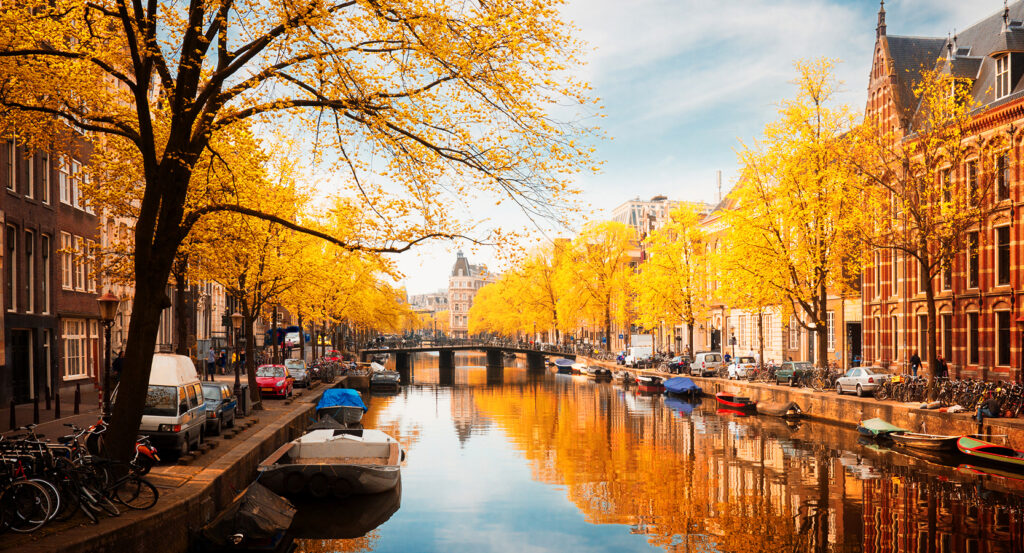
Set along the prestigious Keizersgracht, Canal House is housed within three beautifully preserved 17th-century canal mansions whose facades, tall, narrow, elegantly gabled, speak to the wealth of Amsterdam's Golden Age. Yet the moment you walk through the doors, the aesthetic shifts into something bold and contemporary. The interiors are drenched in a palette of deep purples, blacks, coppers, and charcoals; shimmering wallpapers catch the light; high ceilings reveal ornate moldings; dramatic mirrors and sculptural lighting play against polished woods and velvet seating. It's stylish without being cold, glamorous without being flashy, and sensual in a way that feels both modern and rooted in Dutch artistic heritage. Rooms continue this beautifully moody aesthetic with plush king beds wrapped in crisp linens, dark lacquered cabinetry, mirrored accents, soft lighting, rich textiles, curated art pieces, and windows overlooking either the shimmering Keizersgracht or the quiet private gardens behind the hotel. Some rooms include striking open baths, intricate beamwork, or large contemporary headboards that anchor the design. Bathrooms are sleek and indulgent, walk-in rain showers or freestanding bathtubs, polished black stone, rich tiling, illuminated mirrors, and luxury bath amenities that match the hotel's elegant, sensual mood. Suites heighten the experience with spacious living areas, garden-facing retreats, or canal-view windows that turn the Keizersgracht into part of your room's ambience. The Great Room, Canal House's iconic lounge, is a moody, glamorous oasis lined with dramatic floral arrangements, velvet sofas, black-lacquered walls, shimmering accents, and a fireplace that adds a soft glow to evenings. Breakfast, afternoon drinks, and evening conversations all unfold in this atmospheric space, where the design alone makes you slow down, breathe deeper, and enjoy the moment. The hotel's private garden, rare for canal houses, is another hidden delight: a long, elegant courtyard with manicured paths, lush greenery, and polished outdoor seating where you can sip morning coffee or savor a quiet glass of wine in the evening. Service at Canal House is warm, contemporary, and quietly attentive. Staff members move with a relaxed elegance, friendly, helpful, and deeply knowledgeable about the surrounding canal belt. They recommend intimate restaurants, hidden wine bars, art galleries, and boutique shops that match the hotel's cultivated, design-focused identity. And the location could not be better. Set directly on the Keizersgracht at the edge of the Jordaan, the hotel sits steps from Anne Frank House, Westerkerk, boutique shopping, cozy cafés, local markets, and some of Amsterdam's most picturesque bridges. The Nine Streets, Dam Square, and the western canal belt's romantic walking paths lie just minutes away. Canal House is moody, modern, glamorous, intimate, artistic, atmospheric, and ideal for travelers who want a sensual, design-led boutique stay tucked inside the historic beauty of the Keizersgracht.
What you should know about Canal House.
Canal House stands on land that once represented the heart of Amsterdam's wealthy merchant class, three canal mansions originally owned by families tied to trade, civic power, and the artistic life of the Golden Age.
The Keizersgracht, constructed in the early 17th century, was part of the city's massive expansion designed to support Amsterdam's booming maritime empire. Properties along this canal were among the most coveted in the city, attracting merchants whose fortunes were tied to shipping, spices, textiles, finance, and the VOC (Dutch East India Company). The buildings that now make up Canal House were constructed between the mid-1600s and early 1700s. Each served as both a family home and a center of business, formal parlors facing the canal, merchant offices on the ground floor, storage or counting rooms behind the house, and long gardens stretching to the rear alleyways. Historical records show that one of the homes was once owned by a wealthy trader connected to the Baltic timber trade; another belonged to a prestigious family whose members held civic offices in Amsterdam's governing councils. In the 18th century, as artistic culture flourished, these homes became gathering places for intellectuals and artists. Surviving documents refer to salons held in one of the canal mansions, involving poetry readings, music recitals, and discussions tied to Amsterdam's burgeoning Enlightenment culture. Over the centuries, the buildings underwent various transformations. In the 19th century, they became multi-family residences and small boarding houses; in the early 20th century, parts of the buildings were used as workshops or offices. During the hotel's restoration, preservationists uncovered remarkable details: original ceiling beams, sections of decorative plasterwork, antique Delft tiles hidden behind later walls, and traces of early wallpapers characteristic of 18th-century Dutch design. A particularly intriguing discovery was the remnants of an old garden pavilion, once used for summer gatherings and connected to the merchant's original rear garden layout, evidence of the kind of private outdoor space that only the wealthiest canal residents possessed. Today, Canal House preserves these layers of history within its contemporary, dramatic design, blending the canal houses' original bones with a bold modern aesthetic that honors the past while reimagining it in a striking new form.
How to fold Canal House into your trip.
Canal House becomes your glamorous, intimate canal-side sanctuary, where mornings begin with Keizersgracht light drifting across the water, afternoons unfold into boutique wandering and cultural discovery, and evenings settle into velvet-lined calm with a drink in the Great Room.
Start the morning with breakfast in the hotel's atmospheric lounge, then step outside for a peaceful stroll along the Keizersgracht, watching the sun rise over bridges and water. Wander into the Jordaan for cozy cafés, local bakeries, vintage stores, and charming streets full of everyday Amsterdam life. Continue toward the Anne Frank House or Westerkerk for a morning steeped in history. Midday, return to the hotel for a quiet pause, sip coffee in the Great Room, rest in your moody, elegant room, or sit in the garden for a moment of stillness. In the afternoon, explore the Nine Streets for boutique shopping, artisan studios, and photography, or walk toward Dam Square for historical architecture and cultural landmarks. You're also within easy reach of Museumplein if you want to dive into the Rijksmuseum or Van Gogh Museum. As evening approaches, have a cocktail in the Great Room before heading into the Jordaan for dinner, romantic bistros, Dutch brasseries, modern spots, or candlelit brown cafés. After dinner, take a nighttime canal walk along the Keizersgracht, letting the soft glow of bridge lights guide you back to your room.
Where your story begins.
Foresyte Travel reveals places that feel extraordinary long before you arrive.
Experience premium editorial crafted for luxury travelers.