Why Banana Cafe matters.
Banana Cafe is a French bistro where Upper Duval Street's independent restaurant culture meets traditional crêpe making, Florida Keys seafood, and the culinary influences of France and the Caribbean.
Occupying a two-story building along the southern stretch of Duval Street, Banana Cafe stands near the intersection with Louisa Street, surrounded by historic wooden residences, independent galleries, neighborhood restaurants, and the pedestrian-oriented commercial blocks extending toward the Atlantic shoreline. Its street-facing exterior introduces a compact French café setting, with colorful architectural details and outdoor seating connecting the restaurant to the movement of pedestrians along the corridor. The ground-floor dining room combines closely arranged tables, decorative artwork, and traditional bistro furnishings, establishing an intimate setting for breakfast, lunch, and dinner. Upstairs, an open-air balcony provides an elevated perspective over Duval Street, with shaded tables and coastal breezes extending the dining area beyond the enclosed restaurant. The result is a distinctive neighborhood bistro whose traditional French cooking, intimate dining rooms, and elevated outdoor seating connect the culinary character of a European café with the tropical surroundings of Key West.
What defines Banana Cafe.
Banana Cafe is best known for establishing a French bistro tradition along Upper Duval Street, developing an extensive crêpe-centered menu that incorporates classical European preparations and the seafood, citrus, and tropical fruit associated with the Florida Keys. The restaurant had become an established part of the neighborhood's dining community by 2013, when its French cooking, substantial breakfast program, and combination of indoor and outdoor seating were attracting attention from regional travel publications. Its location belongs to the southern portion of Duval Street, a commercial corridor whose development followed the expansion of Key West beyond its nineteenth-century maritime waterfront. The street's name commemorates William Pope DuVal, Florida's first territorial governor, whose administration began in 1822 during the establishment of American civil government in the former Spanish territory. Duval Street subsequently developed as a principal commercial thoroughfare, connecting the island's harbor district with residential neighborhoods farther south. Its southern blocks acquired a concentration of galleries, restaurants, and independently operated businesses, providing a commercial environment suited to Banana Cafe's European bistro format. The restaurant's culinary foundation rests on the French crêpe, a preparation associated with Brittany whose development belongs to the agricultural and culinary history of northwestern France. Buckwheat cultivation became important in Brittany during the medieval period, supporting the production of savory galettes prepared on broad heated cooking surfaces. Wheat-flour crêpes subsequently developed into a complementary tradition, producing thin pancakes suitable for sweet fillings and more delicate preparations. French crêperies established a recognizable restaurant format built around freshly cooked pancakes, prepared fillings, and a combination of savory and sweet courses. Banana Cafe adapts that tradition through a menu whose principal categories retain the distinction between breakfast crêpes, savory crêpes, and dessert crêpes. Its breakfast preparations incorporate eggs, Black Forest ham, Swiss cheese, caramelized onions, and béchamel, connecting the crêperie tradition with familiar French café ingredients. The restaurant's Inside Out French Benedict develops this relationship through a combination of crêpe, egg, ham, cheese, and Key lime hollandaise. Its seafood preparations introduce another regional connection through Florida lobster, local mahi-mahi, shrimp, scallops, and yellowtail snapper. The incorporation of Key lime into sauces and desserts extends the French foundation into the agricultural and culinary traditions of the Florida Keys. Banana Cafe also maintains a substantial breakfast program built around pasture-raised eggs, omelets, waffles, breakfast sandwiches, and variations of eggs Benedict. Its morning service preserves the accessibility of a neighborhood café, accommodating traditional American breakfast combinations alongside more elaborate French preparations. Lunch extends the restaurant's culinary range through quiche Lorraine, croque monsieur, croque madame, seafood sandwiches, and composed salads. These preparations connect the restaurant with the cooking of French cafés and brasseries, where eggs, cheese, bread, and carefully prepared sauces support substantial midday meals. The dinner program develops a more formal bistro character through French onion soup, baked escargot, mussels, roasted duck, steak frites, and seafood prepared with classical butter-based sauces. Prince Edward Island mussels introduce an Atlantic shellfish tradition through white wine, garlic, herbs, and butter, establishing a recognizable French preparation within the island restaurant. The kitchen's treatment of local yellowtail snapper through beurre blanc extends that culinary relationship into the waters surrounding Key West. Its broader menu incorporates Italian and Asian influences through mushroom ravioli, seafood risotto, pesto, and selected preparations involving sweet chili sauce. The combination supports a restaurant whose Central French character accommodates the international food traditions associated with contemporary Key West. Banana Cafe's continued operation across breakfast, lunch, and dinner preserves a distinctive place within Upper Duval Street's restaurant community, connecting traditional crêpe making with regional seafood and the practical versatility of an established neighborhood bistro.
Banana Cafe's culinary program develops the relationship between delicate French batters, emulsified sauces, and the contrasting flavors of seafood, cheese, fruit, and citrus through preparations suited to successive dining periods. The crêpe provides the foundation through a thin batter spread across a heated surface, where controlled cooking produces a flexible pancake with lightly browned edges and a tender interior. Its restrained flavor supports savory ingredients through the absorption of cooking juices and sauces, allowing the filling to determine the character of the finished preparation. Béchamel contributes a creamy foundation through the gradual incorporation of milk into a cooked butter-and-flour mixture, creating a sauce whose smooth consistency supports ham, mushrooms, and melted cheese. Swiss cheese develops a complementary richness through its gentle melting properties, and caramelized onions contribute sweetness produced by prolonged cooking. The restaurant's treatment of eggs extends the same attention to texture through poaching and hollandaise, where warm butter and egg yolks form a delicate emulsion sharpened by citrus. Key lime introduces a particularly distinctive acidity, connecting the richness of the French sauce with the sharper fruit character associated with South Florida. Florida lobster develops this combination through gentle butter poaching, preserving the shellfish's sweetness and tenderness beneath the sauce. The kitchen's savory seafood crêpes extend the approach through shrimp and scallops cooked with mushrooms and tomatoes, allowing a creamy lime sauce to connect the marine ingredients with the delicate pancake. Mahi-mahi receives a contrasting treatment through blackening, which develops a seasoned exterior before capers, spinach, tomatoes, and white wine garlic butter introduce acidity and aromatic depth. The fish's substantial texture supports the stronger seasoning, and avocado contributes creaminess against the sharpness of the capers. Lemon-basil pesto develops another relationship through fresh herbs, citrus, and a cream base, giving shrimp a more aromatic preparation supported by spinach and tomato. Classical French sauces become particularly important during dinner, when beurre blanc accompanies pan-roasted yellowtail. The sauce develops through the incorporation of butter into a reduced acidic liquid, producing a smooth consistency that coats the fish and connects its delicate flesh with the accompanying vegetables. Tarragon-mustard cream supports roasted salmon through the herb's anise character and the sharper flavor of mustard, creating a more substantial sauce suited to the fish's natural richness. The kitchen's roasted duck develops another traditional French preparation through a brandy-cherry demi-glace, combining the concentrated savoriness of a reduced sauce with the fruit's sweetness and acidity. Mushrooms contribute depth to the restaurant's meat and pasta preparations, particularly through cream sauces whose texture supports ravioli and grilled beef. The relationship between French cooking and tropical fruit becomes especially pronounced in the dessert program. Banana and rum form a natural combination through the fruit's concentrated sweetness and the aromatic character of the spirit, producing a warm filling suited to the delicate texture of a dessert crêpe. Key lime sauce creates a contrasting finish through acidity and sweetness, extending the restaurant's regional culinary character into its pastry preparations. Nutella, strawberries, caramelized apples, honey, and toasted almonds develop additional combinations through contrasting fruit textures, roasted nuts, and chocolate. Tahitian vanilla ice cream introduces a chilled element that softens against a warm crêpe, creating a temperature contrast supported by chocolate sauce and toasted almonds. Banana Cafe's cooking rests on the versatility of French preparations, connecting crêpes, classical sauces, regional seafood, and tropical fruit through a consistent emphasis on texture, acidity, and carefully developed richness.
How Banana Cafe fits.
Banana Cafe works as the culinary starting point for an exploration connecting Key West's southern maritime geography, the development of American coastal navigation, and the preservation of one of the island's most important literary residences.
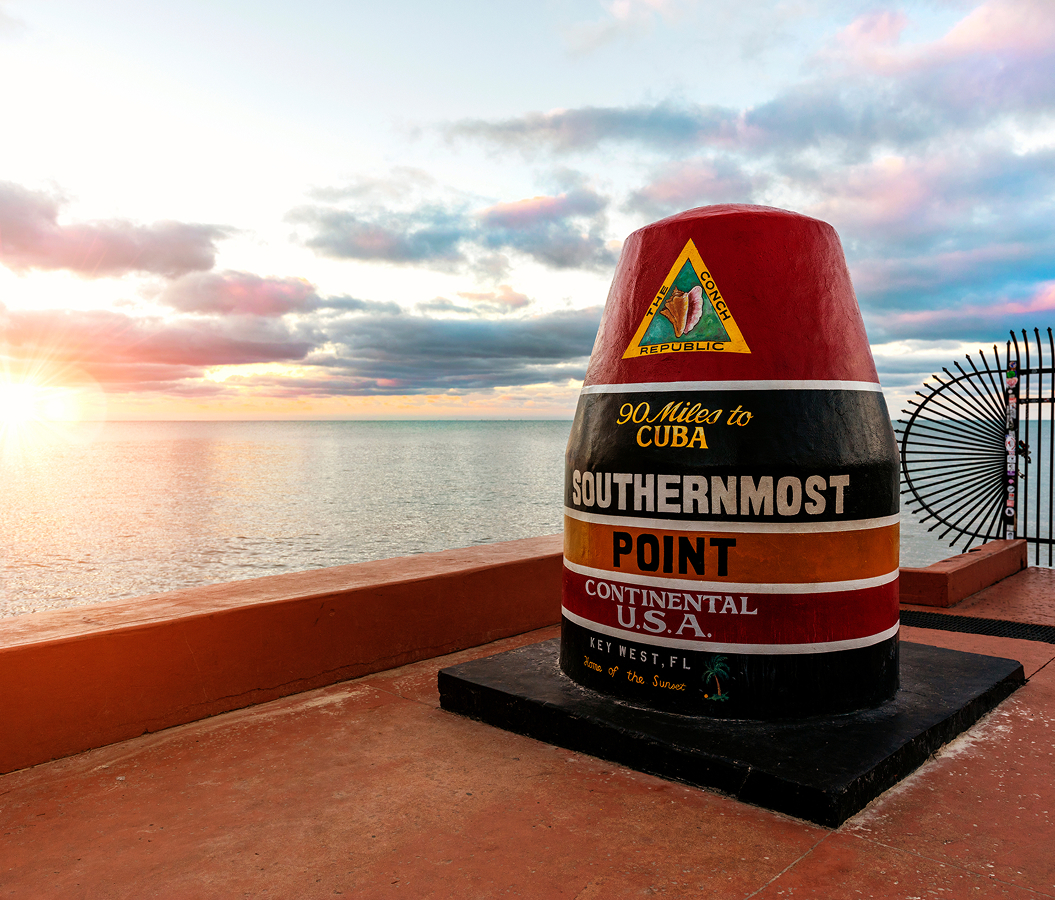
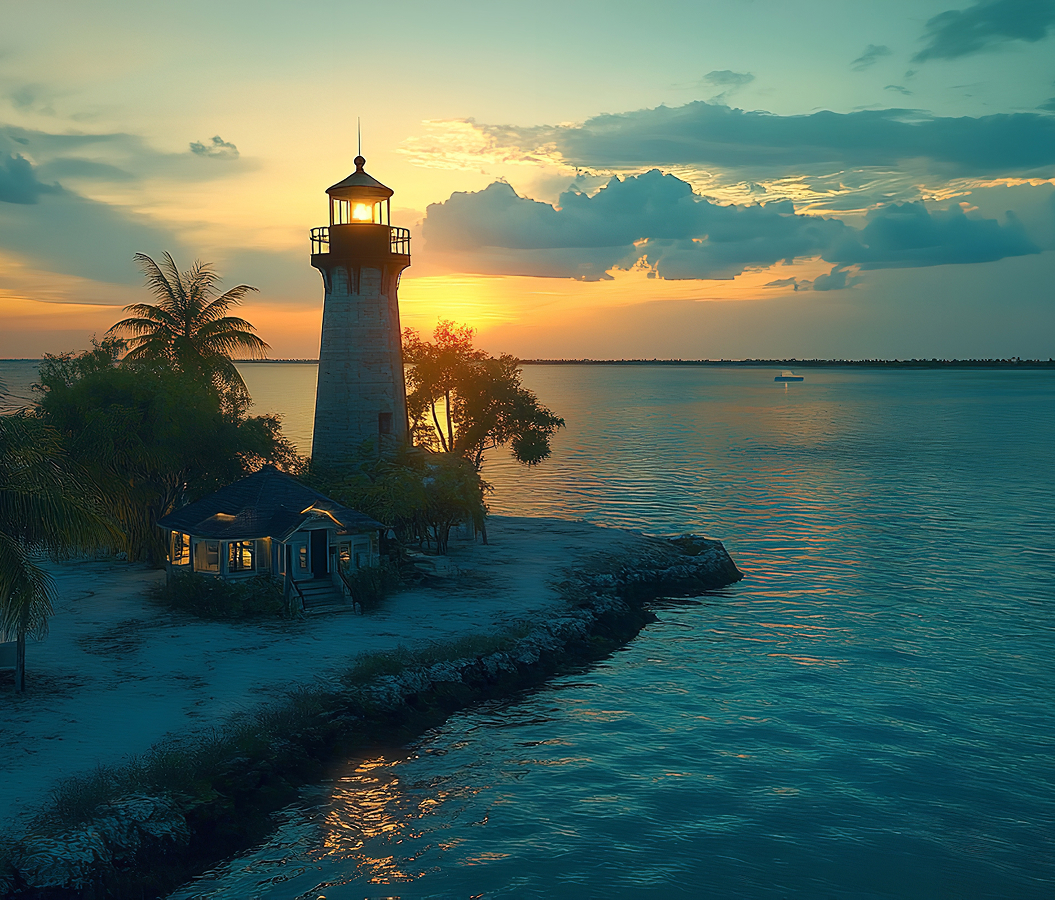
Begin at Southernmost Point Buoy, the brightly painted concrete monument associated with Key West's position near the southern extremity of the continental United States. The original marker was installed in 1983, replacing a smaller sign that had previously commemorated the location. Its distinctive red, black, and yellow bands surround lettering celebrating the island's proximity to Cuba, ninety miles across the Florida Straits. The monument occupies a coastal position near the former military installations that protected the island's southern approaches during the twentieth century. The surrounding waters form part of the maritime passage connecting the Gulf of Mexico with the Atlantic Ocean, a geographic relationship that shaped Key West's development as a naval and commercial port. The buoy's placement also connects the southern shoreline with the island's historical dependence on navigation, shipping, and international maritime exchange. Continue to Key West Lighthouse and Keeper's Quarters Museum, the historic navigational station whose development accompanied the expansion of American maritime activity in the Florida Keys. The original lighthouse entered service in 1825, guiding vessels through the dangerous reefs and channels surrounding the island. The Great Havana Hurricane of 1846 destroyed that structure, prompting construction of a replacement farther inland that entered service in 1848. Barbara Mabrity assumed responsibility for the original light following her husband's death in 1832 and continued her service through the rebuilding period, becoming an important figure in the history of American lighthouse keeping. The tower received a third-order Fresnel view in 1858 and underwent a substantial height increase in 1894 to preserve visibility above the surrounding buildings and trees. The station ceased operating as an active lighthouse in 1969, and its preserved keeper's residence subsequently became part of a museum devoted to the island's maritime heritage. Conclude at Ernest Hemingway Home and Museum, the historic residence associated with the American novelist's productive years in Key West during the 1930s. The limestone house was constructed in 1851 by maritime salvage operator Asa F. Tift, whose commercial activities belonged to the wrecking industry that supported the island's nineteenth-century economy. Hemingway and his second wife, Pauline Pfeiffer, acquired the property through a purchase arranged by Pauline's uncle Gus Pfeiffer in 1931. The writer established a working studio above a detached carriage house, completing substantial literary projects during his years on the island. His Key West period included the publication of Death in the Afternoon in 1932, Green Hills of Africa in 1935, and To Have and Have Not in 1937. The property subsequently became a public museum in 1964, preserving the writer's domestic surroundings, personal possessions, and the colony of polydactyl cats associated with his household. The progression moves from Southernmost Point Buoy's coastal geography through Key West Lighthouse and Keeper's Quarters Museum's navigational history and culminates at Ernest Hemingway Home and Museum, connecting the island's maritime position with the literary culture that developed along its historic residential streets.
Where your story begins.
Foresyte Travel reveals places that feel extraordinary long before you arrive.
Enjoy editorial crafted for luxury travelers.
Foresyte may earn a commission when you book.