Why Blue Heaven matters.
Blue Heaven is a historic Caribbean-American restaurant where Bahama Village's multicultural heritage meets Key West's independent culinary tradition, tropical courtyard dining, and a century of unconventional island entertainment.
Occupying the corner of Thomas and Petronia streets in the southwestern residential quarter of Old Town, Blue Heaven stands among the wooden cottages, neighborhood businesses, and narrow streets that connect Bahama Village with the southern end of Duval Street. Its weathered blue building opens onto a sprawling outdoor courtyard shaded by tropical trees, flowering vegetation, and suspended canvas sails, with painted wooden furniture, improvised artwork, and freestanding structures arranged across the grounds. Dining begins beneath the tree canopy, where roaming chickens and roosters move between picnic tables as breakfast service, conversation, and live music fill the open-air restaurant. A series of adjoining dining areas creates distinct pockets of activity, with the historic wooden building providing sheltered seating and the surrounding garden supporting a relaxed atmosphere throughout the day. The result is an unmistakably Key West restaurant whose historic architecture, unconventional outdoor arrangement, and close relationship with the surrounding neighborhood give its Caribbean-influenced cooking a distinctive cultural setting.
What defines Blue Heaven.
Blue Heaven is best known for transforming a historic Bahama Village entertainment property into a family-operated restaurant whose unusual past, culinary ambitions, and independent character have made it one of Key West's most recognizable dining institutions. The property's history reaches into the late nineteenth century, when its Dade County pine building housed a business selling alcoholic beverages to island residents. The surrounding neighborhood developed through the settlement of Bahamian immigrants, whose maritime occupations, religious institutions, domestic architecture, and cultural traditions became integral to the social history of Key West. During subsequent decades, the property accommodated gambling, cockfighting, billiards, and other forms of neighborhood entertainment. Its downstairs rooms operated as a billiard hall and ice cream parlor, and slate surfaces recovered from the former pool tables eventually became paving within the outdoor courtyard. The second floor supported a succession of uses that included a dance hall, art gallery, theatrical performance venue, and bordello. Sliding peepholes survive in several upstairs rooms, preserving physical evidence of the building's former commercial arrangements. During the 1930s, the grounds operated as the Blue Goose boxing arena, hosting Friday evening fights associated with the island's sporting and entertainment culture. Ernest Hemingway refereed matches at the arena during his years in Key West, connecting the property with the writer's enthusiasm for boxing and his participation in the island's social life. The building subsequently passed through additional periods of commercial use before artist Suanne and writer Richard established Blue Heaven on September 19, 1992. Their first service consisted of black beans, rice, and fish prepared in a rudimentary kitchen and served at painted picnic tables beneath a Spanish lime tree. The couple lived aboard a houseboat near Christmas Tree Island and traveled across the water with their young son Ricky to operate the restaurant. Their limited financial resources shaped an improvised business whose early equipment included an old cooking range, a stainless steel sink, gardening tools, and recipes drawn from a family church cookbook. The addition of breakfast service and an inexpensive daily special gradually increased revenue, allowing the enterprise to develop beyond its initial lunch operation. Richard subsequently recruited his brother Dan, a professionally trained chef working at the Carolina Inn in Chapel Hill, North Carolina, to expand the restaurant's culinary ambitions. Dan had entered professional kitchens at fourteen and brought a more elaborate approach to seafood preparation, sauces, and dinner service. His treatment of black grouper with dried herbs, lime-honey glaze, and warm cucumber salad demonstrated the kitchen's growing emphasis on carefully developed flavor combinations. Journalist Charles Kuralt became an admirer of Dan's cooking, giving the restaurant national attention through his enthusiasm for its scallop sauce. Dan eventually assumed responsibility for Salute! On the Beach, the family's sister restaurant beside Casa Marina at Higgs Beach. The original Blue Heaven enterprise continued developing under the involvement of Richard and Suanne's children, preserving the family's direct connection with its daily operations. Their younger son Andy contributed to the development of Andy's Cabana across the street in 2014, extending the business into another neighborhood gathering place. Ricky completed culinary training in Los Angeles and subsequently assumed management responsibilities within Blue Heaven's evening operation. The family also expanded its agricultural interests in 2007 through the purchase of Three Falls Farm in Hampshire, Tennessee, where the enterprise developed herb cultivation, apple production, cattle raising, and spring-water bottling. A later acquisition of a fruit grove in Homestead, Florida, extended its agricultural connections into South Florida. Chef David Dorsty brought another dimension to the restaurant's development through his professional work in the Florida Keys and subsequent farm-centered cooking experience in New York. After serving as Blue Heaven's sous chef, Dorsty left in 2012 to work at the North Branch Inn, Cornell University, and a rural gastropub before returning as head chef. His leadership strengthened the kitchen's attention to fermentation, spice, seasonal produce, and the relationship between Caribbean cooking and the agricultural resources available to the restaurant. Wilson Chery assumed responsibility for the breakfast kitchen, maintaining the substantial morning program that had helped establish the business during its earliest years. Blue Heaven received further national recognition through its inclusion in the MICHELIN Guide's Florida restaurant selection, acknowledging the culinary significance of an independent enterprise whose character developed through decades of family stewardship. The restaurant's evolution connects the social history of Bahama Village with a distinctive entrepreneurial tradition, transforming an unconventional entertainment property into an enduring institution of Key West dining.
David Dorsty's cooking develops the relationship between Caribbean seasoning, fresh Florida seafood, and the careful transformation of familiar ingredients through acidity, fermentation, and controlled heat. The kitchen builds its seafood preparations around the natural sweetness and delicate texture of fish and shellfish, using citrus, herbs, and concentrated sauces to sharpen their character. Yellowtail snapper receives a pan-sautéed treatment that develops a lightly caramelized exterior before citrus beurre blanc introduces buttery richness and a clean acidic finish. The sauce depends on the gradual incorporation of butter into a reduced acidic base, creating an emulsion whose texture complements the fish's tender flesh. Caribbean barbecue shrimp follows a different preparation, using Red Stripe beer to deglaze the cooking pan and release concentrated flavors developed during the initial application of heat. The beer's malt character joins the spices and shellfish juices, creating a sauce whose savory depth complements the shrimp's natural sweetness. Atlantic sea scallops develop another dimension through Provençal influences, with garlic, herbs, and careful sautéing emphasizing their delicate texture. The kitchen's treatment of vegetables extends the same attention to concentrated flavors and contrasting textures, particularly through the incorporation of curry spices, fermented ingredients, and roasted produce. Carrot and curry soup develops sweetness through the cooking of the vegetables before aromatic spices introduce warmth and complexity. Miso-baked eggplant draws upon Japanese fermentation, allowing the concentrated savory character of soybean paste to penetrate the softened flesh during roasting. Jamaican jerk chicken connects the restaurant's cooking with Caribbean traditions built around allspice, chili, herbs, and the development of aromatic seasoning through heat. The preparation combines spice and roasted meat juices, producing a substantial savory character balanced by the accompanying vegetables. Blue Heaven's breakfast kitchen follows a complementary approach through the preparation of eggs, seafood, baked goods, and sauces that require careful coordination during the morning service. Eggs Benedict develops its character through the contrast between soft poached eggs, toasted bread, and hollandaise, whose butter-and-egg emulsion supplies richness beneath the acidity of lemon. Lobster variations extend that foundation through the sweetness of shellfish, giving the preparation a direct connection with the marine ingredients associated with the Florida Keys. Shrimp and grits introduces another regional tradition, pairing tender seafood with the creamy texture of slowly cooked corn and a savory sauce developed through the cooking process. House-made banana bread and pancakes extend the morning program into baking, where fruit sweetness and carefully controlled browning contribute to the restaurant's established breakfast character. The pastry kitchen's most recognizable creation is Key lime pie crowned with an exceptionally tall layer of baked meringue. Its filling develops the concentrated acidity of Key lime juice through a custard preparation supported by sweetened condensed milk and egg yolks. The meringue introduces a contrasting texture through whipped egg whites and sugar, forming a substantial airy topping whose lightly browned surface adds a delicate toasted character. The relationship between the tart filling, sweet meringue, and firm crust creates a balanced dessert whose proportions have become closely associated with Blue Heaven. Dorsty's broader approach connects these preparations through careful attention to seafood, spice, acidity, and texture, preserving the restaurant's Caribbean influences within a culinary program shaped by decades of independent Key West cooking.
How Blue Heaven fits.
Blue Heaven works as the culinary centerpiece for an exploration connecting Key West's maritime salvage economy, nineteenth-century navigational infrastructure, and the preservation of African American history in the Florida Keys.
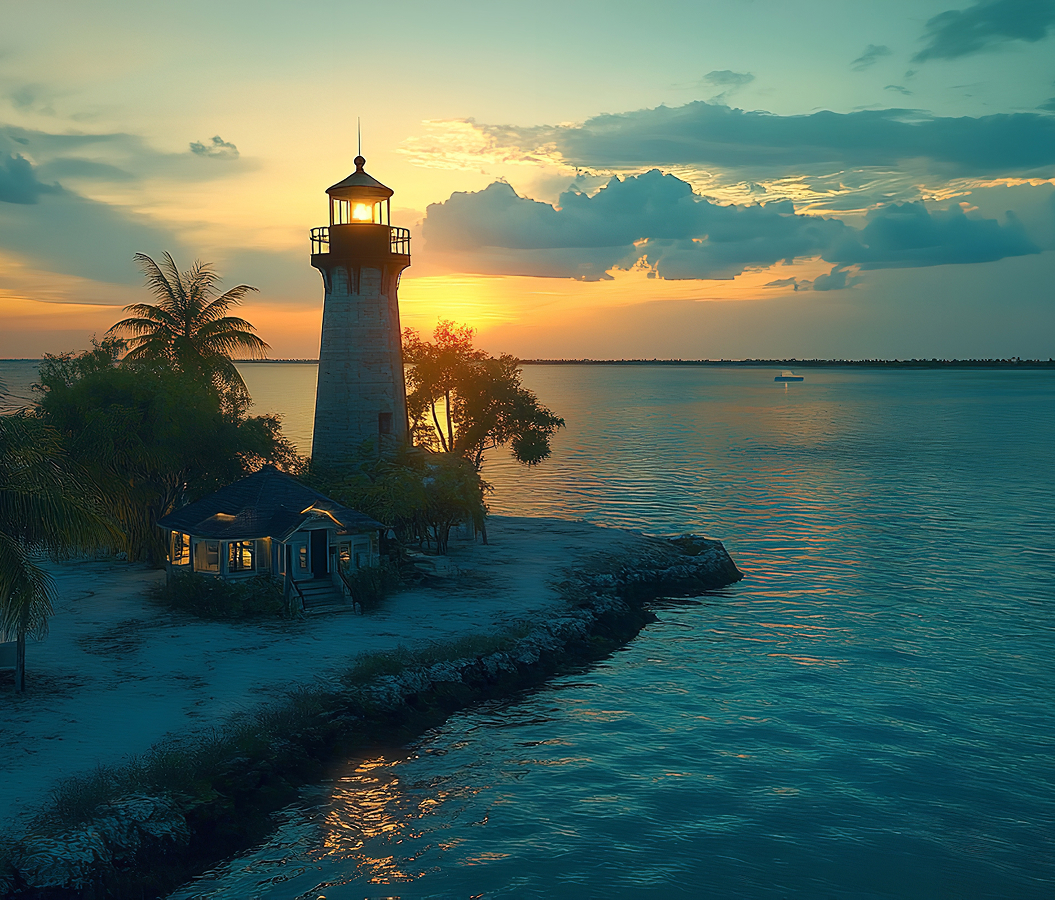
Begin at Mel Fisher Maritime Museum, the historic institution devoted to the shipwrecks, maritime commerce, and underwater archaeology of the Florida Straits. The museum occupies a former naval storehouse constructed in 1910, preserving a substantial collection of artifacts recovered from Spanish colonial shipwrecks. Its principal exhibits concern the Nuestra Señora de Atocha, a Spanish landmark galleon that sank during a hurricane in September 1622 while transporting precious metals and commercial cargo toward Spain. Treasure hunter Mel Fisher and his team located the vessel's principal wreck site in July 1985 after a prolonged search involving extensive underwater excavation. The recovered collection includes silver bars, gold coins, emeralds, navigational instruments, and other objects associated with seventeenth-century Atlantic commerce. The museum's conservation laboratories preserve these artifacts through specialized treatment of objects recovered after centuries beneath seawater. Continue to Key West Lighthouse and Keeper's Quarters Museum, the historic navigational station whose development accompanied the expansion of American shipping through the Florida Keys. The original lighthouse entered service in 1825, guiding vessels through the reefs and channels surrounding the island. The Great Havana Hurricane of 1846 destroyed the first structure, prompting construction of a replacement farther inland that entered service in 1848. Barbara Mabrity became lighthouse keeper following her husband's death in 1832 and continued her responsibilities through the rebuilding period, becoming an important figure in the history of American maritime navigation. The tower received a third-order Fresnel view in 1858 and underwent a substantial height increase in 1894 as surrounding development obstructed its visibility. The station ceased operating as an active lighthouse in 1969, and its preserved keeper's residence became part of a museum devoted to the island's maritime heritage. Conclude at the African Cemetery at Higgs Beach, the memorial landscape preserving the burial place of Africans who died following their rescue from illegal slave-trading vessels in 1860. The United States Navy intercepted three ships carrying captive Africans toward Cuba, bringing more than 1,400 survivors to Key West during an international effort to suppress the transatlantic slave trade. Local residents and federal officials established temporary facilities to care for the survivors, whose physical condition had deteriorated severely during their confinement aboard the vessels. Disease and exhaustion claimed the lives of 294 Africans, who were buried near the southern shoreline before the surviving captives were transported to Liberia. Archaeological investigations during the early twenty-first century located the burial ground through historical research and ground-penetrating radar, leading to the creation of a permanent memorial. The site received recognition on the National Register of Historic Places in 2012, preserving an important chapter of African American and Atlantic history. The progression moves from Mel Fisher Maritime Museum's Spanish colonial shipwreck collections through Key West Lighthouse and Keeper's Quarters Museum's navigational history and culminates at the African Cemetery at Higgs Beach, connecting the island's maritime commerce with the human consequences of Atlantic transportation and the preservation of African American heritage.
Where your story begins.
Foresyte Travel reveals places that feel extraordinary long before you arrive.
Enjoy editorial crafted for luxury travelers.
Foresyte may earn a commission when you book.