
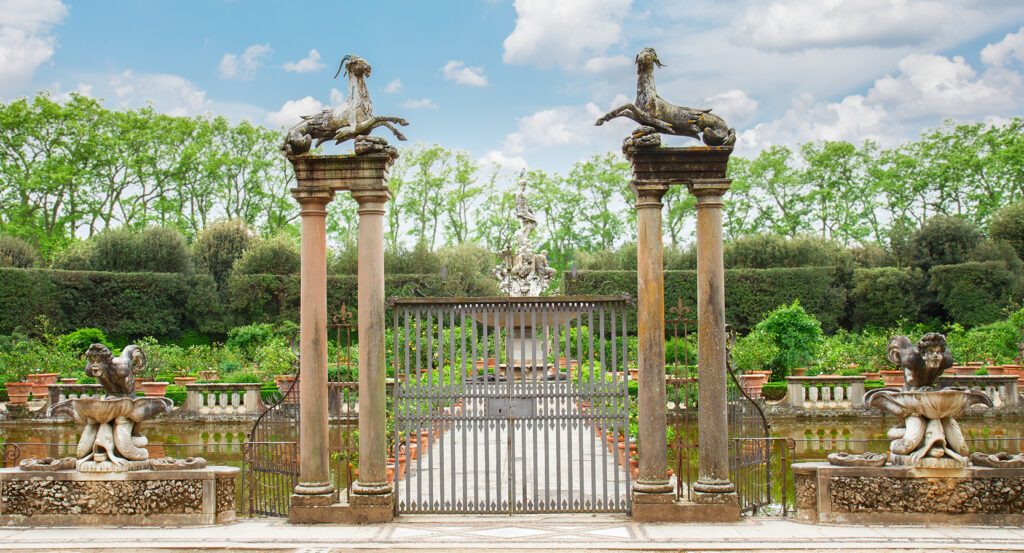
Why you should experience Grotta del Buontalenti in Florence, Italy.
Grotta del Buontalenti at Boboli Gardens in Florence is among the most astonishing creations of the late Renaissance, a surreal fusion of architecture, sculpture, and illusion that transforms stone into dream.
Hidden near the entrance from Palazzo Pitti, this artificial grotto feels like stepping inside a myth, a world where marble drips like wax, stalactites twist into figures, and the boundaries between nature and art dissolve. Designed between 1583 and 1593 by the visionary Bernardo Buontalenti for the Medici family, the grotto was conceived as both a refuge from the heat and a theatrical space of wonder. Inside, the air cools and the walls come alive with fantastical details, sponges, shells, corals, and sculpted creatures frozen in motion. At its heart once stood Michelangelo's Slaves, their tormented bodies emerging from unfinished stone, symbolizing the eternal struggle between raw matter and divine creation. Today, replicas occupy their place, but the energy remains: a living metaphor for transformation, mystery, and the Medici obsession with blurring the line between nature and artifice.
What you should know about Grotta del Buontalenti.
Grotta del Buontalenti was more than an ornamental folly, it was a scientific and philosophical statement, reflecting the Renaissance fascination with alchemy, illusion, and metamorphosis.
Commissioned by Francesco I de' Medici, a passionate patron of the sciences and the occult, the grotto was engineered to evoke the birth of the world itself, chaos giving way to order. Its three chambers represent stages of transformation: from the primordial and grotesque to the refined and harmonious. The first room, with its rough textures and dripping stalactites, symbolizes raw nature; the second, adorned with frescoes and figures of satyrs and nymphs, represents the awakening of life; and the third, luminous and serene, signifies the triumph of reason and beauty. Early visitors described mechanical marvels hidden within, water jets, shifting mirrors, even devices that mimicked rainfall or lightning to astonish guests. The grotto's mix of art, engineering, and esoteric symbolism made it one of the most daring artistic experiments of its age, influencing Baroque design across Europe and inspiring later architectural fantasies from Prague to Versailles.
How to fold Grotta del Buontalenti into your trip.
When exploring the Boboli Gardens, Grotta del Buontalenti is best visited early, when the air is cool and the crowds are thin, allowing you to feel its otherworldly stillness.
Enter through the main Palazzo Pitti gates and look for the modest stone archway that conceals its entrance just past the courtyard. Step inside slowly, giving your eyes time to adjust to the dim light; the textures and carvings reveal themselves layer by layer, like a slow exhale from the Renaissance imagination. Spend a few moments in silence, the sound of your breath against the stone amplifies the sense of intimacy. Afterward, emerge into the sunlight and climb toward the Knight's Garden or Neptune Fountain to feel the dramatic shift from darkness to light, a journey the Medici designed intentionally to mirror rebirth and enlightenment. For those who crave more depth, pair your visit with a stop at the Museo Galileo, where the same scientific curiosity that inspired Buontalenti finds its intellectual counterpart. Grotta del Buontalenti isn't just a structure, it's a portal into the Renaissance psyche, where art and alchemy dance in eternal dialogue.
Where your story begins.
Foresyte Travel reveals places that feel extraordinary long before you arrive.
Experience premium editorial crafted for luxury travelers.




















































































































