
Why Boboli Gardens matters.
Boboli Gardens is a breathtaking Renaissance garden where Oltrarno's Medici vision, landscape artistry, classical mythology, and Florentine grandeur unfold across one of Europe's most influential historic garden landscapes.
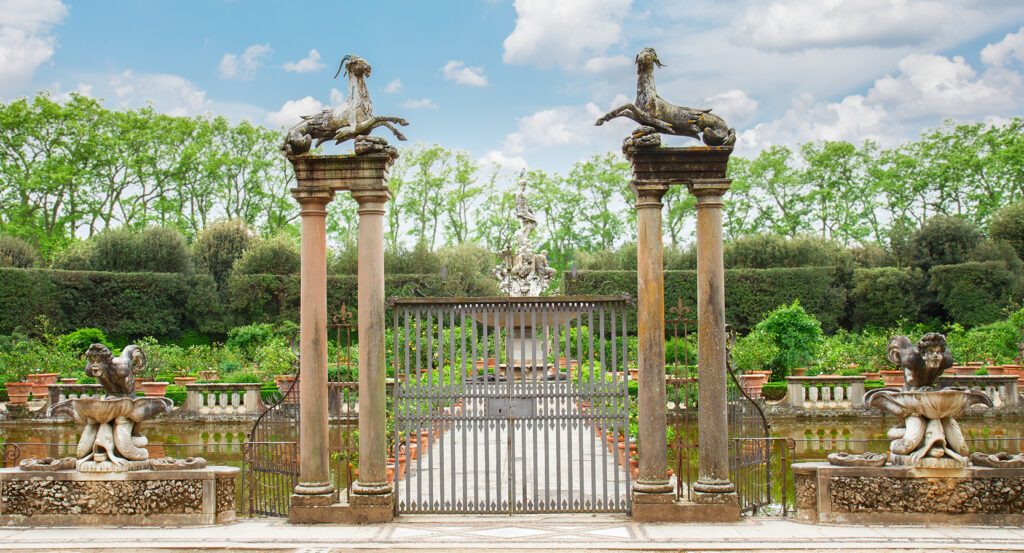
Set along Piazza de' Pitti near Costa San Giorgio and just steps from Palazzo Pitti, this expansive hillside retreat reveals sweeping cypress-lined avenues, sculpted terraces, elegant fountains, shaded groves, grand sculptures, and carefully orchestrated vistas that transformed a royal estate into the prototype for formal Italian garden design. Every pathway leads through a masterfully composed sequence of architecture, water, vegetation, and sculpture as panoramic views, hidden grottoes, and centuries of artistic patronage continually reshape the experience. Ornamental parterres, ancient oaks, citrus collections, and marble statuary reinforce the extraordinary discussion between nature and human creativity that has defined Florence for centuries. The experience ultimately combines landscape architecture, artistic achievement, and Medici patronage into one of Italy's most extraordinary open-air museums.
What defines Boboli Gardens.
Boboli Gardens is best known for establishing the definitive model of the Italian Renaissance garden after Eleonora di Toledo purchased Palazzo Pitti in 1549 for Cosimo I de' Medici, commissioning Niccolò Tribolo to transform the hillside behind the palace into an ambitious dynastic landscape whose successive expansion by Bartolomeo Ammannati, Giorgio Vasari, Bernardo Buontalenti, Alfonso Parigi the Elder, Giulio Parigi, and numerous artists and architects profoundly influenced royal gardens throughout Europe, including the designs later realized at Versailles. Following Tribolo's death in 1550, generations of Medici architects and engineers extended the gardens across 45 hectares, creating one of the earliest large-scale examples of a formal court garden where axial planning, sculptural programs, engineered water systems, theatrical spaces, and panoramic terraces merged into a unified artistic composition. The gardens preserve masterpieces including Buontalenti's celebrated Grotto, begun in 1583 with fantastical stalactites, sculptural illusions, and early works associated with Michelangelo's Prisoners; the grand Fountain of Neptune created by Stoldo Lorenzi beginning in 1565; the vast elliptical Amphitheater formed within a former quarry and later adorned with an ancient Egyptian obelisk transported from Luxor to Florence in 1789; the Isolotto, completed with Giambologna's celebrated Oceanus fountain group; and hundreds of Roman antiquities, Renaissance sculptures, decorative fountains, pavilions, temples, and architectural follies accumulated over nearly five centuries. Beyond functioning as the private pleasure grounds of the Medici, the gardens became an experimental landscape where hydraulic engineering, botany, theatrical performance, scientific curiosity, and artistic patronage intersected, hosting court festivals, diplomatic ceremonies, operatic performances, and botanical collections that reflected Florence's cultural leadership during the Renaissance and Baroque eras. Today the gardens form part of the Uffizi Galleries museum complex, preserving one of the world's most influential examples of Renaissance landscape architecture while continuing to inspire garden designers, historians, architects, and artists across the globe.
Landscape design achieves extraordinary harmony through carefully orchestrated changes in elevation, long visual axes, shaded woodland paths, geometrically ordered terraces, and intimate garden rooms that reveal new artistic compositions with every ascent. Monumental sculpture, rare botanical specimens, elegant fountains, and refined architectural interventions continually balance formal order with the natural contours of the hillside, creating an environment where engineering, horticulture, mythology, and artistic expression become inseparable. Carefully preserved sightlines frame Florence's skyline while seasonal plantings, centuries-old trees, ornamental hedges, and sophisticated hydraulic systems sustain the same immersive experience envisioned by Medici patrons nearly five hundred years ago. Every terrace, avenue, grotto, and sculpture demonstrates how landscape architecture, scientific innovation, artistic patronage, and dynastic ambition combined to create one of the most influential gardens in Western history.
How Boboli Gardens fits.
Boboli Gardens works as the centerpiece of an exploration through Oltrarno's celebrated palaces, artistic collections, and historic gardens.
Begin at Palazzo Pitti, where the Medici grand ducal residence establishes the extraordinary historical context before stepping directly into Boboli Gardens to experience one of Europe's greatest Renaissance landscapes. Continue to Museo delle Porcellane, whose refined decorative arts collection inside the Casino del Cavaliere enriches the artistic journey while remaining within the gardens themselves. Conclude at Forte di Belvedere, where commanding views across Florence provide a memorable finale celebrating the city's enduring relationship between art, architecture, and landscape. The progression moves naturally from royal palace to Renaissance garden before concluding atop one of Florence's finest panoramic viewpoints, revealing why Oltrarno remains the city's most complete expression of Medici cultural ambition.
Where your story begins.
Foresyte Travel reveals places that feel extraordinary long before you arrive.
Enjoy editorial crafted for luxury travelers.
Foresyte may earn a commission when you book.




















































































































