
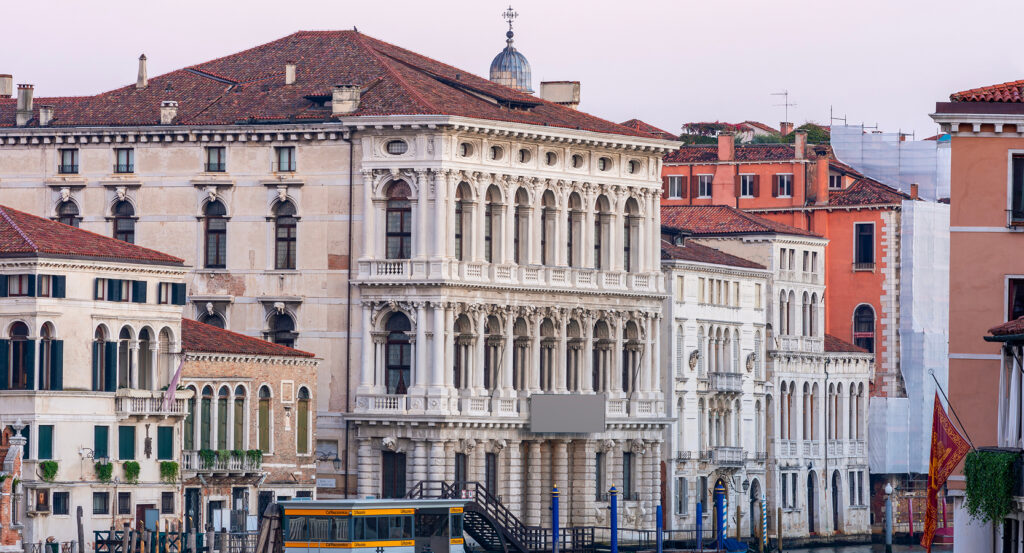
Why you should experience Museum of 18th-Century Venice in Venice, Italy.
Museum of 18th-Century Venice at Ca' Rezzonico is the city's memory reborn, a dazzling reconstruction of an era when beauty ruled and the world moved to the rhythm of masked laughter and candlelight.
Inside this palatial museum on the Grand Canal, Venice's final golden century unfolds room by room in a living tableau of art, music, and illusion. From Tiepolo's frescoes blazing across ceilings to Murano chandeliers trembling with light, every detail evokes the elegance and melancholy of a city at its height, aware of its own decadence, yet unwilling to fade. Here, history isn't recited, it performs. The scent of old wood and silk lingers in the air, and as you wander through drawing rooms, salons, and galleries, you feel what it meant to live in a city built for performance. Ca' Rezzonico doesn't just preserve the 18th century, it resurrects it.
What you should know about Museum of 18th-Century Venice.
The museum occupies the former palace of the Rezzonico family, merchants who rose to nobility and built one of Venice's most opulent homes as a monument to ambition.
Opened in 1936, the museum was conceived as a complete reimagining of the Venetian 1700s, curated not as an archive but as an experience. The rooms were refurnished with authentic period pieces gathered from noble palaces across the lagoon, ensuring that each salon feels as if its owners have only just stepped away. Among its treasures are paintings by Canaletto, Guardi, Longhi, and Tiepolo, the artists who defined the century's vision of light, leisure, and illusion. Rosalba Carriera's pastel portraits glow with the intimacy of a whisper, while Pietro Longhi's genre scenes reveal the wit and irony of everyday Venetian life. The upper floors house rare porcelain, Rococo furniture, silk wall hangings, and instruments that once played in candlelit salons. One of the most enchanting rooms is the reconstructed Farmacia ai Do San Marchi, an 18th-century pharmacy complete with original wooden cabinets and glass apothecary jars, a glimpse into the private world behind the splendor. Each gallery feels alive, not as a collection, but as a performance of time itself.
How to fold Museum of 18th-Century Venice into your trip.
To experience the museum properly, surrender to its rhythm, it rewards presence, not haste.
Take Vaporetto Line 1 and step directly off at the Ca' Rezzonico stop. Enter through the palace's marble water gate, just as the Venetian elite once did. Begin your visit on the grand staircase leading to the Piano Nobile, where sunlight filters through arched windows and gilded walls glow in soft reflection. Wander slowly from the reception rooms to the Grand Ballroom, the museum's centerpiece, then explore the intimate drawing rooms beyond. Visit late morning or early afternoon for the best light, when the chandeliers catch fire with color and the canal outside flickers in the mirrors. On the upper floors, don't miss the private quarters and the small portrait galleries that reveal Venice at its most personal. Finish your visit by stepping out onto the terrace overlooking the Grand Canal, gondolas drifting past, the water glimmering like glass. Museum of 18th-Century Venice isn't just a window into the past; it's an invitation to linger in the city's most poetic hour, when beauty was both a mask and a truth.
Where your story begins.
Foresyte Travel reveals places that feel extraordinary long before you arrive.
Experience premium editorial crafted for luxury travelers.




















































































































