Why Herengracht matters.
Herengracht in Amsterdam is where elegance and history meet on the water, a canal that captures the city's Golden Age grandeur and timeless charm.
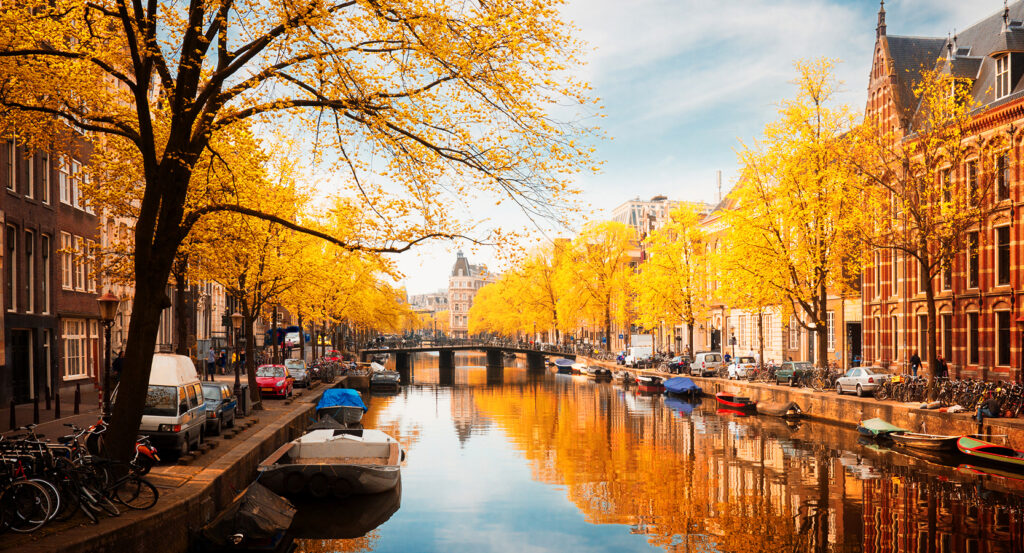
Often called the “Gentlemen's Canal,” it was the most prestigious of Amsterdam's 17th-century waterways, a showcase of wealth, artistry, and urban perfection. Walking along its curve feels like moving through a living museum: rows of stately mansions rise shoulder to shoulder, their tall windows reflecting sunlight that ripples off the water below. Each façade tells a story, of merchants who conquered the seas, of bankers who built empires, and of artists who captured it all in paint and ink. Yet despite its opulence, Herengracht never feels pretentious; it feels poetic. Its calm rhythm invites you to slow down, to watch boats drift past beneath arched bridges, and to imagine the city as it once was, a beacon of creativity and commerce. By dusk, when golden light melts into the canal and the air smells faintly of tulips and rain, Herengracht becomes a love letter to everything Amsterdam does best: beauty, balance, and belonging.
What defines Herengracht.
Herengracht, the first of Amsterdam's grand canal rings, was laid out in the early 1600s as part of a visionary city expansion that reflected the power and ambition of the Dutch Republic.
Its name, meaning “Gentlemen's Canal,” referred to the city's most influential citizens, who were invited to build their homes along its banks. The lots here were deeper and more expensive than anywhere else, designed to accommodate private gardens and elaborate warehouses hidden behind refined façades. Among the canal's most remarkable stretches is the “Golden Bend,” a cluster of richly ornamented mansions that belonged to the city's elite families. These weren't just homes, they were architectural manifestos, combining Dutch sobriety with quiet extravagance. Herengracht also played a vital civic role: its waterways controlled flooding, provided transport routes, and served as a cooling buffer for the densely packed city center. Today, many of these 17th-century houses still stand with their original interiors intact, housing embassies, museums, and design studios. If you know where to look, you can even spot carved keystones depicting ships, compasses, and mythological figures, subtle reminders of a world built on trade and imagination.
How Herengracht fits.
Experiencing Herengracht in Amsterdam is best done at a pace that lets the canal reveal its quiet grandeur.
Start the walk near the Golden Bend between Leidsestraat and Vijzelstraat, where the water widens and the façades reach their most ornate splendor. Pause at bridge 45 for one of the city's most cinematic perspectives, the curve of the canal framed by tree-lined reflections and gliding boats. Visit the Museum of the Canals (Het Grachtenhuis) to uncover the engineering marvel behind the city's layout, then step into one of the many galleries or antique shops tucked inside 17th-century townhouses. Around midday, stop for coffee or wine at a canal-side terrace, where the rhythm of bicycles and boats becomes background music. If time allows, book a private boat cruise that glides through Herengracht's most historic stretch at sunset, when the façades blush gold and the lanterns flicker to life. As you drift beneath its graceful arches, you'll feel what generations before you have felt: that Herengracht isn't just a canal, but a mirror, one reflecting both Amsterdam's history and your place within its enduring story.
Where your story begins.
Foresyte Travel reveals places that feel extraordinary long before you arrive.
Enjoy editorial crafted for luxury travelers.
Foresyte may earn a commission when you book.