Why Prinsengracht matters.
Prinsengracht, or Prince's Canal, in Amsterdam is the city's most soulful canal, a long, winding thread of life where art, history, and humanity converge.
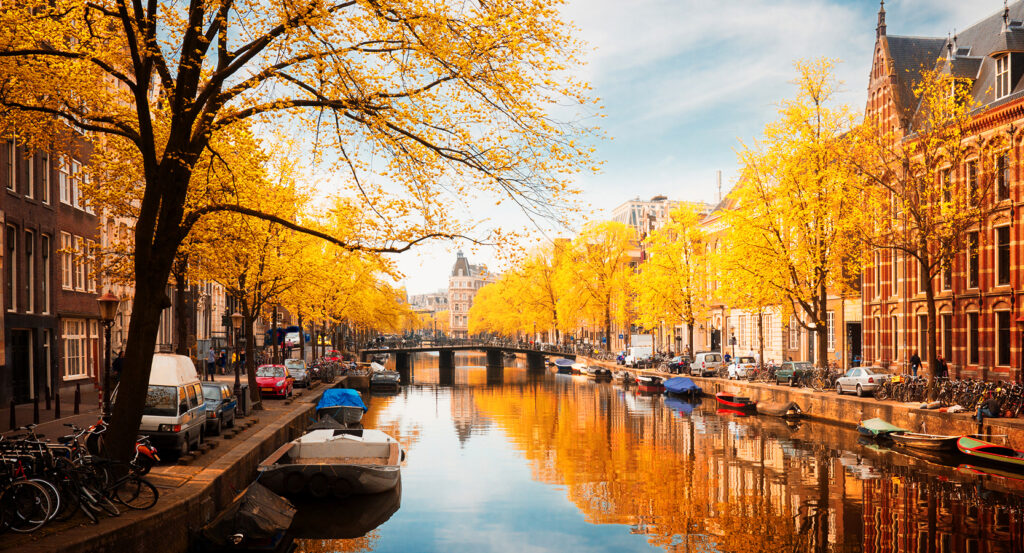
Known as the “Prince's Canal,” it's the outermost and liveliest of the city's great 17th-century waterways, wrapping around Amsterdam like a heartbeat. Unlike the stately Herengracht or the serene Keizersgracht, Prinsengracht hums with character. Houseboats sway gently along its edges, bicycles lean against iron railings, and music spills from cafés whose terraces kiss the water. It's here that the city feels most intimate, not curated, but alive. The Westerkerk's bell tower rises above it like a guardian, tolling softly as boats drift beneath its shadow. Every curve of the canal feels like a story unfolding, from the Anne Frank House, a symbol of resilience and hope, to quiet residential stretches where flower boxes overflow with tulips. Prinsengracht captures Amsterdam's heart not by grandeur, but by emotion, the quiet beauty of a city that has learned to balance its history with its humanity.
What defines Prinsengracht.
Prinsengracht, named after Prince William of Orange, was the final canal built during Amsterdam's 17th-century expansion, completed in 1612 alongside the Herengracht and Keizersgracht.
It became the canal of the people, broader, more democratic, and home to merchants, craftsmen, and families who made the city thrive. Over time, it grew into a mosaic of life: warehouses turned into artist studios, merchant homes became bohemian apartments, and churches and theaters rose along its banks. The Westerkerk, completed in 1631, became its spiritual centerpiece, Rembrandt himself was buried there in an unmarked grave. The canal was also a cradle for innovation, from shipbuilding workshops in the 18th century to modern design studios today. Even its houseboats tell a story, once an affordable solution after World War II, now a cherished piece of local identity. Few realize that Prinsengracht's water level and flow are meticulously managed through a centuries-old system of locks and sluices that still function as they did 400 years ago. It's not just a canal, it's a living organism, sustaining and reflecting the pulse of Amsterdam itself.
How Prinsengracht fits.
To feel the full rhythm of Prinsengracht in Amsterdam, let your day flow like the canal itself, unhurried and curious.
Start near the Jordaan district, where the air smells of coffee and fresh pastries from corner bakeries. Stroll past the Anne Frank House and pause by the Westerkerk, where the bells echo over the water with haunting grace. From there, wander south, stopping at boutiques, record stores, and vintage shops that spill warmth and creativity onto the cobblestones. Rent a bicycle to trace the canal's gentle curve toward De Pijp, or board a small open-air boat for a slow drift through its sunlit reflections. In the evening, as the bridges light up and the canal becomes a river of gold, find a waterside table for dinner or wine, Café Papeneiland near the northern end is a beloved choice. Prinsengracht isn't a sight to check off; it's a feeling to absorb. By the time you cross your last bridge, you'll understand why the canal remains the city's living diary, a place where every reflection, every sound, and every story still moves in perfect harmony with the water.
Where your story begins.
Foresyte Travel reveals places that feel extraordinary long before you arrive.
Enjoy editorial crafted for luxury travelers.
Foresyte may earn a commission when you book.