
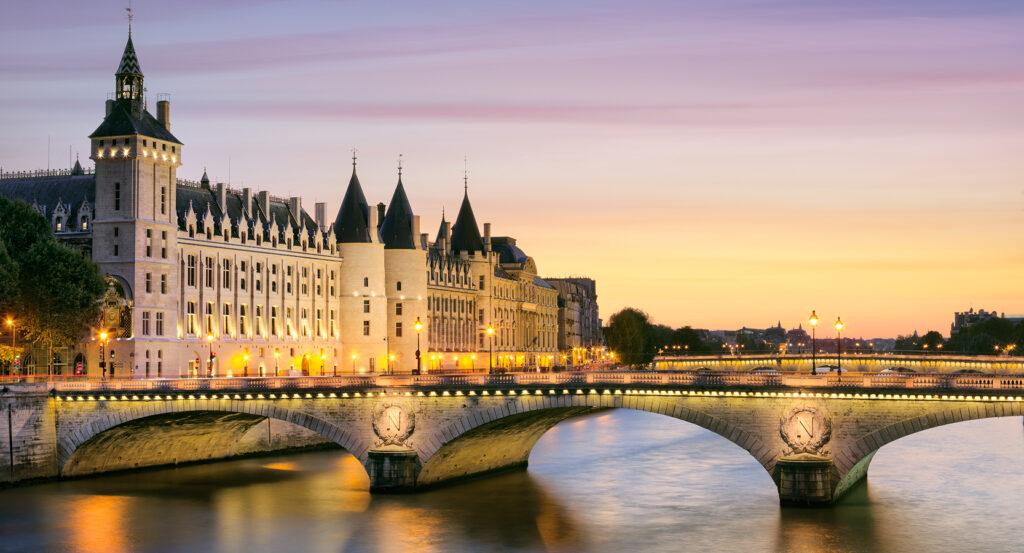
Why you should experience Tour de l'Horloge du Palais de la Cité in Paris, France.
Tour de l'Horloge du Palais de la Cité at Conciergerie in Paris commands your gaze long before you reach it, a sentinel of medieval authority standing proudly at the edge of the Île de la Cité. Its gilded clock face gleams against the stone façade, the oldest public timepiece in Paris and a symbol of the monarchy's dominion over both time and people. The tower's Gothic spire pierces the skyline, its pointed arches and carved gargoyles whispering of centuries when power was absolute and justice swift. Standing beneath it, you can feel its duality: beauty and brutality intertwined. This was, after all, part of the Palais de la Cité, a royal palace turned revolutionary prison. The clock that once marked the rhythms of royal life would later measure the final hours of the condemned. Visiting today feels like crossing a threshold between elegance and eternity, the Paris of kings merging with the Paris of revolutionaries in one arresting monument.
As the Seine glints below and the hum of modern traffic fades, the tower invites you to pause, look up, and consider all the generations who once did the same, waiting, watching, or praying as time slipped through their fingers.
What you should know about Tour de l'Horloge du Palais de la Cité.
What most visitors don't realize is that Tour de l'Horloge du Palais de la Cité has been keeping Paris on schedule since 1371, an extraordinary feat of preservation and continuity. Commissioned by Charles V, the clock was the first of its kind in France, designed not just to measure time but to proclaim royal magnificence. The sunburst and moon motifs you see today are later restorations from the 19th century, but the spirit remains medieval, symbolic of divine order and the king's right to rule under heaven. When the Revolution erupted, that gilded face bore witness to the fall of monarchy itself, its hands ticking away through chaos, blood, and rebirth. Even after the guillotine fell silent, the clock endured as a civic relic, outlasting every regime that sought to claim or erase it. Its presence is almost metaphysical, proof that time itself is the ultimate sovereign, unmoved by empires. Each chime that echoes from its mechanism feels like a heartbeat carried through history, reverberating from royal edict to republic.
To stand here is to understand how deeply Paris respects its scars, not by hiding them, but by adorning them in gold.
How to fold Tour de l'Horloge du Palais de la Cité into your trip.
When folding Tour de l'Horloge du Palais de la Cité into your trip, let it serve as your gateway to the island's layered soul.
Begin your visit in the morning, when the early light hits the clock's gilded face and the Seine below glows like liquid glass. Wander through the adjacent Conciergerie to immerse yourself in its chilling yet unique interiors, vaulted halls that once hosted kings and later, prisoners awaiting judgment. Then cross to Sainte-Chapelle just steps away, where stained glass replaces stone as the language of transcendence. By afternoon, stroll along the Quai de l'Horloge and pause beneath the tower again. Watch the clock hands move, almost imperceptibly, and remember that they've turned through plagues, coronations, revolutions, and rebirths. End the day at a café on the Left Bank, where the tower still glimmers across the river, a silent reminder that Paris doesn't erase its past, it lets it keep time.
Where your story begins.
Foresyte Travel reveals places that feel extraordinary long before you arrive.
Experience premium editorial crafted for luxury travelers.














































































































