Why The Chinese Pavilion matters.
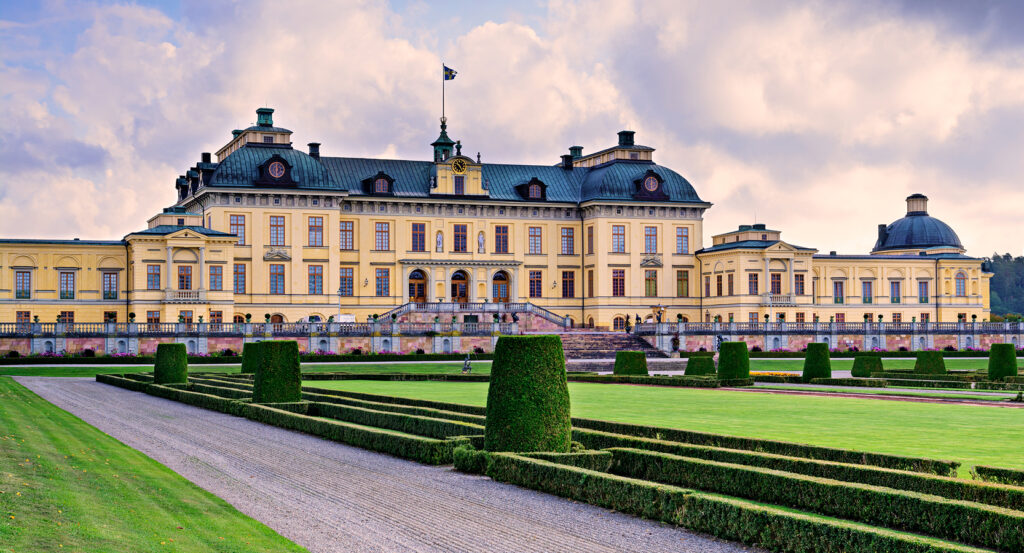
The Chinese Pavilion at the Royal Palace Complex in Stockholm is a rare landmark, a royal daydream sculpted in silk, lacquer, and gold.
Tucked away within the lush gardens of Drottningholm Palace, this 18th-century pavilion feels like stepping into another world entirely, where East meets West through the romantic view of European imagination. Its soft pink façade, delicate pagoda-style rooflines, and ornate carvings evoke an age when curiosity for distant cultures blossomed into artistic fascination. Inside, walls gleam with chinoiserie panels, porcelain vases rest on gilt pedestals, and painted silk screens shimmer with scenes of cranes, cherry blossoms, and rivers flowing toward unseen horizons. Yet, beyond its beauty lies a deeper intrigue, this was more than royal whimsy; it was a declaration of Sweden's participation in the global cultural exchange that defined the Enlightenment. Walking its corridors today, you feel the same sense of wonder that once captivated the royal family, a gentle conversation between continents, frozen in time yet alive with color and craft.
What defines The Chinese Pavilion.
Commissioned by Queen Lovisa Ulrika in 1753 as a surprise gift from King Adolf Fredrik, the Chinese Pavilion was conceived at the height of Europe's fascination with the Orient.
At that time, Chinese art and philosophy represented sophistication, mystery, and the promise of a world beyond imagination. The original structure, made of wood, deteriorated quickly in Sweden's harsh climate, prompting the construction of a more permanent version a decade later under architect Carl Fredrik Adelcrantz. Its interiors became a canvas for Sweden's finest artisans, combining imported Chinese materials with local craftsmanship to create a harmonious fantasy of East and West. The ceilings feature mythic creatures twined with floral motifs, while the furniture glows in hues of jade and crimson, echoing the palette of imperial China. Few realize that the pavilion also functioned as a stage for royal leisure, a setting for tea ceremonies, poetry readings, and musical performances designed to impress foreign dignitaries. In 1991, the entire complex was recognized as a UNESCO World Heritage Site, celebrated for preserving one of the most exquisite expressions of 18th-century chinoiserie in Europe.
How The Chinese Pavilion fits.
To reach the Chinese Pavilion, follow the serene path through Drottningholm's parklands, where manicured lawns give way to shaded groves and winding waterways.
As you approach, the pavilion seems to shimmer in the distance, part mirage, part masterpiece. Step inside slowly, allowing your eyes to adjust to the play of light on gold leaf and lacquer. Look closely at the delicate wall paintings, each stroke telling of a Europe fascinated by Asia's mystique, each object a relic of royal imagination. Visit the adjoining smaller pavilions and the Confidencen, a hidden dining chamber where meals were hoisted through the floor to preserve privacy. Try to arrive in the morning or late afternoon, when sunlight filters through the park and illuminates the pavilion's pink façade in warm, ethereal tones. Afterward, stroll back toward Drottningholm Palace, pausing by the lakeside for a view that blends Swedish calm with Eastern dreamscape. The Chinese Pavilion at the Royal Palace Complex isn't simply a relic of aesthetic fancy, it's a love letter to cross-cultural beauty, where art, nature, and imagination converge in timeless harmony.
Where your story begins.
Foresyte Travel reveals places that feel extraordinary long before you arrive.
Enjoy editorial crafted for luxury travelers.
Foresyte may earn a commission when you book.