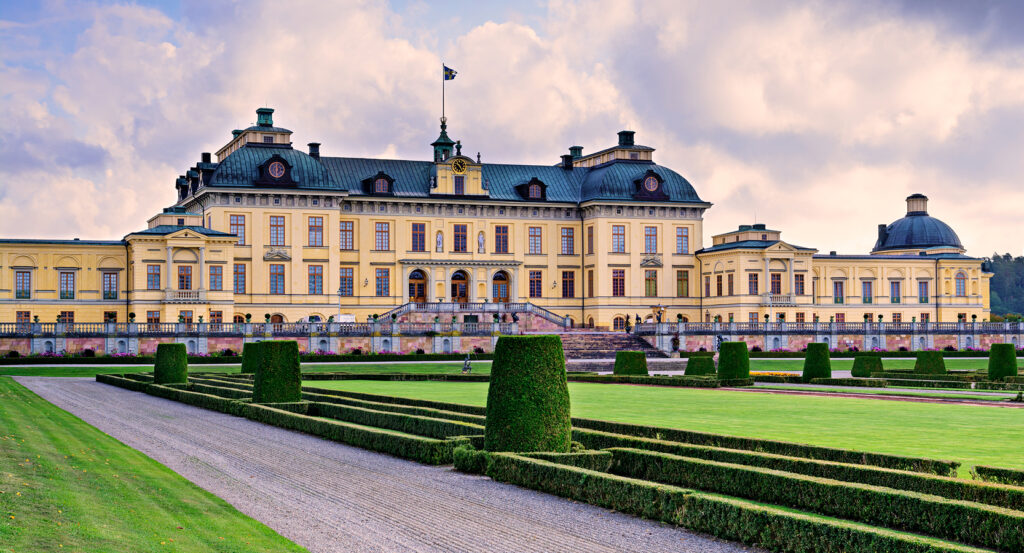
Why you should experience Drottningholm Palace Park in Stockholm, Sweden.
Drottningholm Park Island in Stockholm is where royal formality dissolves into wild serenity, a place that feels both curated and free, regal yet untouched.
Encircled by Lake Mälaren's shimmering waters, the island is a living canvas of Swedish landscape design, where sculpted gardens give way to forests, meadows, and reflective ponds. From the first step across the causeway, there's a quiet grandeur in the air, not from marble or monument, but from space and stillness. Here, nature and architecture exist in perfect dialogue: the palace glows like a dream above the water, the Baroque and English gardens unfold like verses of a poem, and winding pathways carry you from symmetry into solitude. Walking the park's trails feels like moving through time, every turn revealing another echo of royal leisure, artistic ambition, and spiritual calm. It's not merely a park; it's a portrait of balance, a living bridge between human intention and the untamed beauty that surrounds it.
What you should know about Drottningholm Palace Park.
Though today it feels eternal, Drottningholm Palace Park was shaped by centuries of design evolution that mirrors Europe's shifting ideals of beauty and power.
Queen Hedvig Eleonora's 17th-century vision gave birth to the formal Baroque core, a meticulously ordered masterpiece designed by Nicodemus Tessin the Elder. In the 18th century, Queen Lovisa Ulrika expanded the estate's cultural reach by commissioning the Chinese Pavilion and theaters that turned the island into a center for royal enlightenment and artistry. Later, under King Gustav III, the English Garden emerged, an intentional softening of formality, inspired by the Romantic movement's reverence for nature's unpredictability. The result is a landscape that reads like a discussion between order and freedom, with manicured axes dissolving into misty woodlands and lakeside vistas. Few visitors realize that this fusion of garden styles, Baroque, Rococo, and English, makes Drottningholm one of the most complete examples of European landscape evolution. In 1991, UNESCO recognized the island as a World Heritage Site, honoring its seamless blend of royal heritage, architectural harmony, and natural grace.
How to fold Drottningholm Palace Park into your trip.
Visiting Drottningholm Park Island is a chance to slow the pulse of your journey and move at the rhythm of the land itself.
Arrive early in the morning by ferry from Stockholm's city center, watching the palace rise from the mist as you approach across Lake Mälaren. Begin with a stroll through the Baroque Gardens, their geometric symmetry offering a striking contrast to the more natural English landscape beyond. Follow the paths that lead toward the Chinese Pavilion, where pink walls glow softly beneath the trees, and continue toward the secluded English Park, where bridges and streams create the illusion of untouched wilderness. Bring a picnic or find a bench overlooking the lake, the stillness is cathedral-like. In late afternoon, return along the tree-lined avenues toward the palace, where golden light reflects across the water and the entire island seems suspended between heaven and earth. Drottningholm Park Island isn't simply a royal estate; it's a living tribute to humanity's eternal pursuit of harmony, the point where civilization bows gently before nature and calls it home.
Where your story begins.
Foresyte Travel reveals places that feel extraordinary long before you arrive.
Experience premium editorial crafted for luxury travelers.