Why Dusit Palace matters.
Dusit Palace in Bangkok is a vision of Thailand's modern awakening, where European elegance meets Siamese grace beneath the tropical sun.
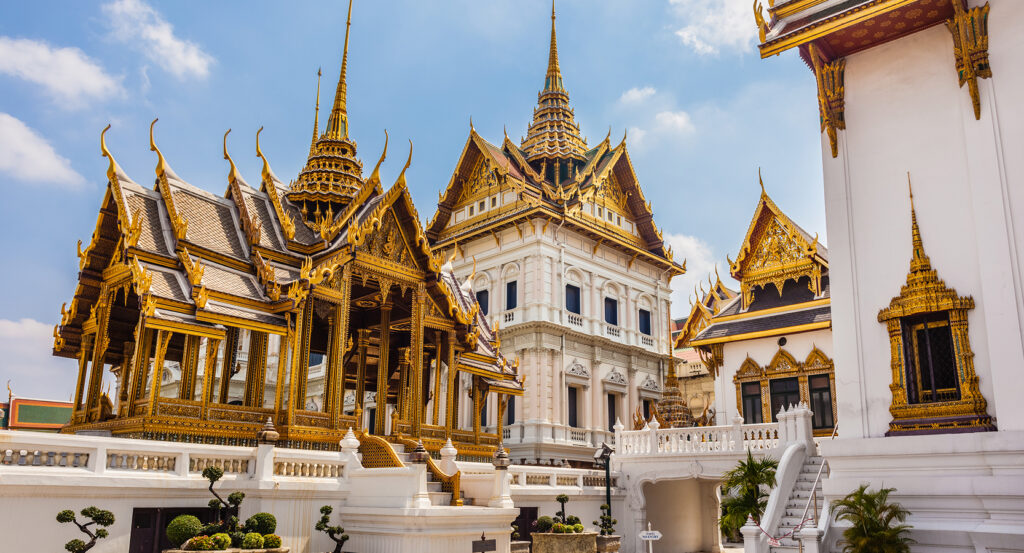
Commissioned by King Chulalongkorn (Rama V) at the turn of the 20th century, Dusit Palace was born from the King's travels through Europe, an architectural experiment that symbolized a nation stepping confidently into the modern age. Spread across lush gardens and leafy avenues, the palace complex blends neoclassical grandeur with Thai serenity. At its heart stands the Ananta Samakhom Throne Hall, a gleaming Italian Renaissance-style masterpiece crafted from Carrara marble, its domes, columns, and frescoes glowing in the Bangkok light. Surrounding it are graceful royal mansions, pavilions, and the teakwood splendor of Vimanmek Mansion, once the largest golden teak residence in the world. Together, they form a sanctuary of refinement, where East meets West not as opposites, but as perfect complements.
What defines Dusit Palace.
Dusit Palace was more than an architectural project, it was a cultural revolution in disguise.
When King Chulalongkorn envisioned Dusit, he sought to create a new model of royal life, one open to air, light, and the flow of modern ideas. The palace was Thailand's first to feature modern plumbing, electricity, and Western-style urban planning, with wide boulevards reminiscent of Paris. Its crown jewel, the Ananta Samakhom Throne Hall, was designed by Italian architects Annibale Rigotti and Mario Tamagno, who also designed many of Bangkok's civic landmarks. Inside, frescoes by Galileo Chini and Carlo Riguli depict the history of the Chakri Dynasty in vivid, dreamlike color. Though Dusit Palace no longer serves as the main royal residence, it remains a symbol of Thailand's transition from traditional monarchy to a modern constitutional nation. Few visitors realize that the palace grounds once stretched over 16 square kilometers, a city within a city, and many of its structures have since become museums and government halls, preserving the vision of a king who ruled through progress and compassion.
How Dusit Palace fits.
Visiting Dusit Palace offers a rare glimpse into the evolution of Thailand's royal heritage, an intersection of art, politics, and vision.
Start the visit at the Ananta Samakhom Throne Hall, now part of the Royal Dusit Museum complex, where marble gleams beneath domed ceilings painted in celestial detail. Step outside to admire the royal avenues lined with manicured lawns and fountains, a world apart from Bangkok's urban frenzy. If open, explore the nearby Vimanmek Mansion, where honey-colored teak glows in the filtered light, or visit Abhisek Dusit Throne Hall, an Art Nouveau gem that once hosted royal audiences. The surrounding district of Dusit is serene and tree-lined, perfect for a slow stroll past equestrian statues, leafy parks, and cafés frequented by locals and artists alike. As the sun sets over the palace dome, the marble takes on a rose-gold hue, a quiet reminder that Dusit Palace isn't just history preserved, but a dream that still breathes in the heart of modern Thailand.
Where your story begins.
Foresyte Travel reveals places that feel extraordinary long before you arrive.
Enjoy editorial crafted for luxury travelers.
Foresyte may earn a commission when you book.