Why Frederik's Church matters.
Frederik's Church is Copenhagen's crown of marble and sky, where art, faith, and architecture meet in a breathtaking symphony of light.
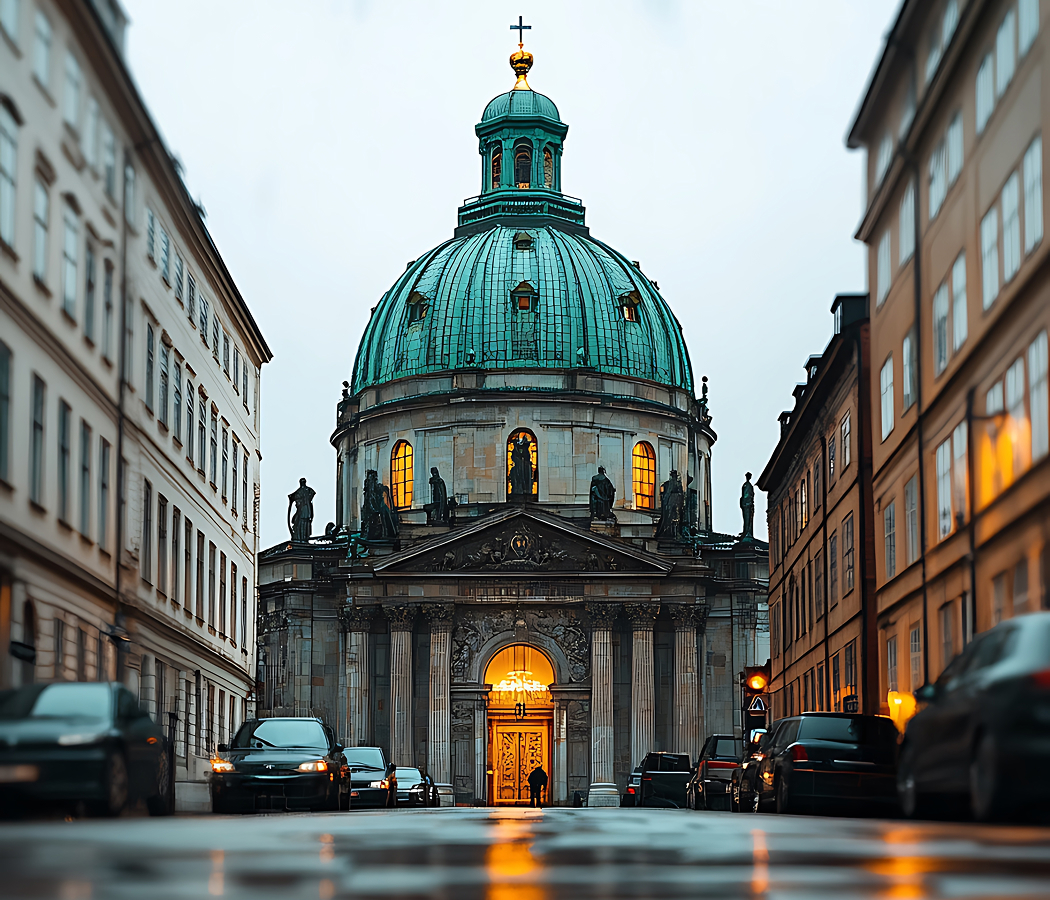
Known lovingly as The Marble Church (Marmorkirken), this Baroque masterpiece rises like a celestial drumbeat in the heart of the city, its grand dome echoing Rome's St. Peter's Basilica yet infused with unmistakably Danish grace. Standing before it, the green copper dome gleams against the northern sky, visible for miles, a beacon of serenity amid the city's rhythm of bicycles and bell towers. Step inside, and time seems to pause. The vast rotunda stretches overhead in a perfect circle, 95 feet wide and soaring 250 feet high, among the largest domes in all of Scandinavia. Light spills from clerestory windows, cascading across stone pillars and gilded accents, bathing the space in a quiet radiance that feels both grand and intimate. The faint murmur of footsteps reverberates softly through the nave, broken only by the organ's occasional hymn that seems to hover in the air long after it stops. Every inch of the church, from the marble altarpiece to the frescoed dome inscribed with “Lord, Thou art my refuge”, breathes a sense of timeless devotion. Though its beauty rivals the great basilicas of Europe, Frederik's Church carries a calm distinct to Denmark: modest, harmonious, deeply human. It's not just a symbol of faith, it's a sanctuary for reflection, stillness, and awe.
What defines Frederik's Church.
Behind its majestic façade lies a story of ambition, collapse, and resurrection, a saga that mirrors Denmark's own journey through centuries of change.
Commissioned by King Frederick V in 1749 as part of the grand Rococo plan for the Frederiksstaden district, the church was intended to celebrate 300 years of the House of Oldenburg's rule. Designed by architect Nicolai Eigtved, its construction was meant to showcase the nation's artistic prowess. Yet the project soon became one of Denmark's most notorious architectural trials. The lavish vision, a church made entirely of Norwegian marble, proved too costly for the kingdom to sustain. When Eigtved died and funds ran dry, work halted in 1770, leaving the structure an unfinished ruin for over a century. Locals called it “Frederik's Folly,” a cautionary tale of grandeur undone by excess. It wasn't until 1874 that financier C. F. Tietgen, a visionary Danish industrialist, revived the dream, hiring architect Ferdinand Meldahl to complete it. Meldahl preserved the spirit of the original design but replaced the pure marble plan with a more practical limestone core, cleverly faced with marble to honor its namesake. The church finally opened in 1894, 145 years after its foundation stone was laid. Today, few realize that Tietgen's role in completing the church marked a turning point in Danish cultural pride, a symbol that national perseverance could redeem even the grandest failures. The dome itself, supported by 12 massive columns representing the apostles, stands as both a technical marvel and a metaphor for faith's endurance. And most beautifully, Frederik's Church remains free to all visitors, a gesture of openness that captures the quiet inclusivity of Danish spirituality.
How Frederik's Church fits.
To truly experience Frederik's Church, approach it not just as a destination, but as a moment of stillness within the city's pulse.
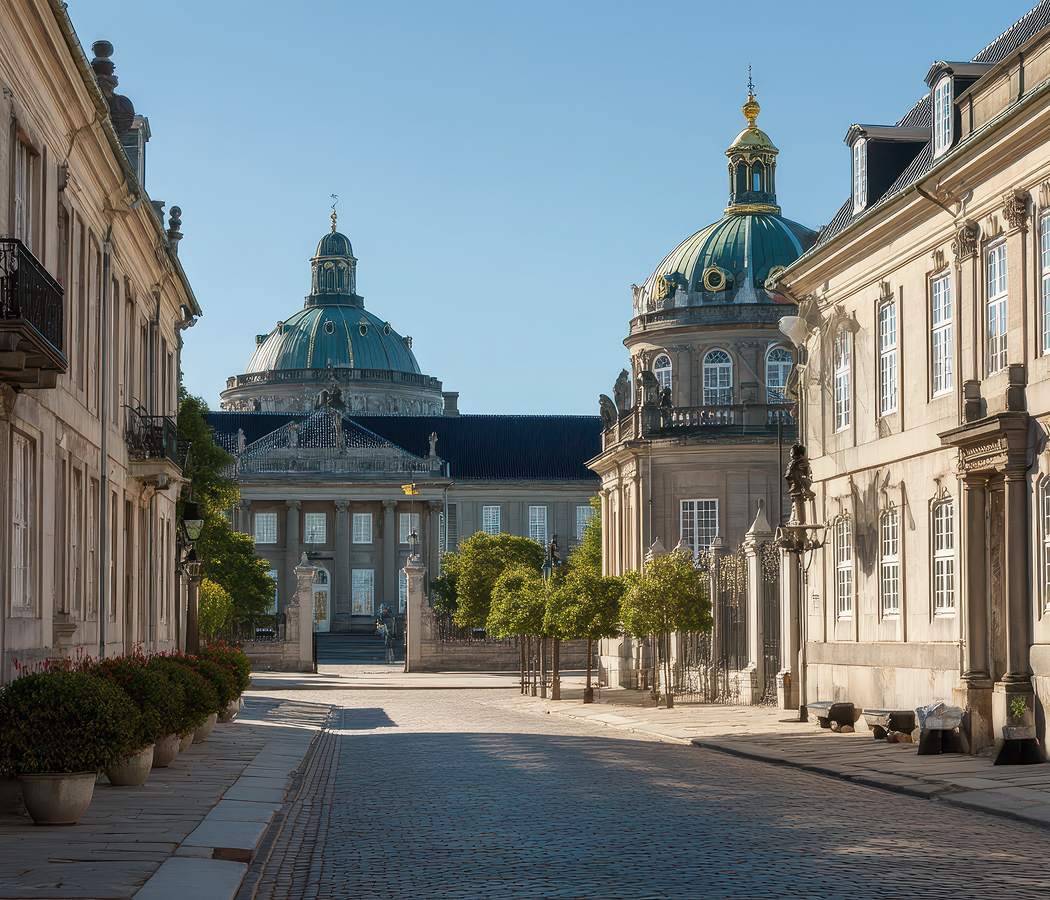
Begin your visit from the Amalienborg Palace courtyard, where the church's dome aligns perfectly down the axis of the royal square, a breathtaking view that feels orchestrated by both art and destiny. As you walk toward it, the marble gleams in shifting tones of cream and gray, the dome towering higher with every step. Step inside, and let your eyes adjust to the dim serenity. Take a slow walk around the circular nave, pausing to admire the statues of saints that guard the periphery and the golden details that glow in the soft light. Look up, the frescoed dome above seems almost infinite, like a painted sky suspended in eternity. If you time your visit for late morning, shafts of light pierce through the upper windows, illuminating the altar in a way that feels almost divine. Climb the narrow staircase to the dome's viewing gallery (open seasonally), where you'll emerge into open air with a 360-degree panorama of Copenhagen, from the royal rooftops of Amalienborg to the distant spires of the city. Outside, linger in the surrounding Frederiksstaden district: elegant 18th-century townhouses, embassies, and cobblestone lanes create a setting as refined as the church itself. If you visit in the evening, stay until the bells ring, the deep, resonant tones drift over the city, echoing through narrow streets and across the harbor like a heartbeat from the past. Frederik's Church isn't just one of Europe's most beautiful houses of worship, it's a triumph of patience, artistry, and redemption. Within its marble walls, Denmark's spirit finds voice: quiet yet unyielding, humble yet magnificent. To stand beneath its dome is to feel something both earthly and eternal, the meeting point between human imperfection and divine grace.
Where your story begins.
Foresyte Travel reveals places that feel extraordinary long before you arrive.
Enjoy editorial crafted for luxury travelers.
Foresyte may earn a commission when you book.