Why you should experience Pusher Street in Copenhagen, Denmark.
Pusher Street, the infamous artery of Freetown Christiania, isn't a postcard Copenhagen experience, it's something rawer, realer, and deeply human.
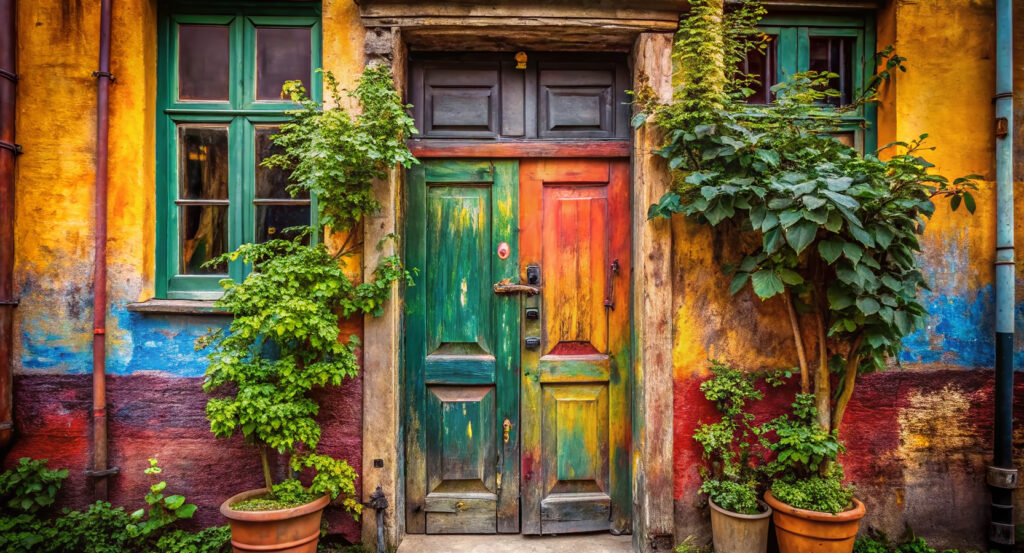
Here, the rules blur and the air hums with quiet defiance. Nestled within Christiania's self-governed enclave, Pusher Street has long stood as a symbol of Denmark's counterculture, a place that challenges convention while reflecting the city's complex relationship with freedom. The scent of hash lingers beneath murals of peace signs and painted dragons; the sound of reggae mingles with bicycle bells and laughter spilling from nearby cafés. The buildings, patched together from reclaimed wood and imagination, pulse with color and contradiction. For decades, this narrow lane was both market and meeting ground, a space where ideals of communal living met the realities of rebellion. Today, its energy feels more cautious but no less magnetic. Walking through, you sense the heartbeat of a community still negotiating its right to exist outside the mainstream, fiercely protective of its identity yet woven inseparably into Copenhagen's soul.
What you didn’t know about Pusher Street.
Pusher Street's story is inseparable from Christiania's, the 1971 social experiment that began when squatters occupied an abandoned military base and declared it a free town.
The movement was born from protest and idealism, a reaction to housing shortages, social inequality, and a yearning for artistic and political freedom. Over the decades, the cannabis trade that earned Pusher Street its name transformed the area into both a sanctuary and a lightning rod for debate. Despite its reputation, Christiania remains governed by consensus, its residents managing their own laws and infrastructure through democratic assemblies. Few visitors realize that beneath the surface of graffiti and stalls lies a tight-knit community of artists, architects, and craftspeople who built much of the neighborhood by hand, from the mosaic façades to the cobblestone lanes. Police raids and government pressure have reshaped the street many times, and though the open cannabis trade has been curtailed, the spirit of autonomy persists. What began as a protest has endured as a cultural experiment, an urban village still asking, half a century later, what freedom really means.
How to fold Pusher Street into your trip.
Pusher Street is best approached with openness and respect, not as spectacle, but as conversation.
When visiting, come during daylight hours and enter through the main gate on Prinsessegade, where Christiania's painted arch reads “You are now leaving the European Union.” Photography is discouraged in the central stretch, a rule that honors both privacy and the community's self-governance, so tuck your camera away and experience the atmosphere firsthand. Walk slowly past the murals, handmade stalls, and gardens blooming between brick walls. Stop for coffee or vegan pastries at one of the nearby cafés like Månefiskeren or Nemoland, where locals gather to talk art, politics, and the changing face of their free town. After exploring, follow the canal paths toward Refshaleøen, the contrast between anarchic Christiania and the city's modern skyline across the water is striking. Pusher Street isn't for everyone, but for those willing to see Copenhagen beyond its polished edges, it offers something unforgettable: a living question about the limits of freedom and the cost of holding on to it.
Where your story begins.
Start your planning journey with Foresyte Travel.
Experience immersive stories crafted for luxury travelers.