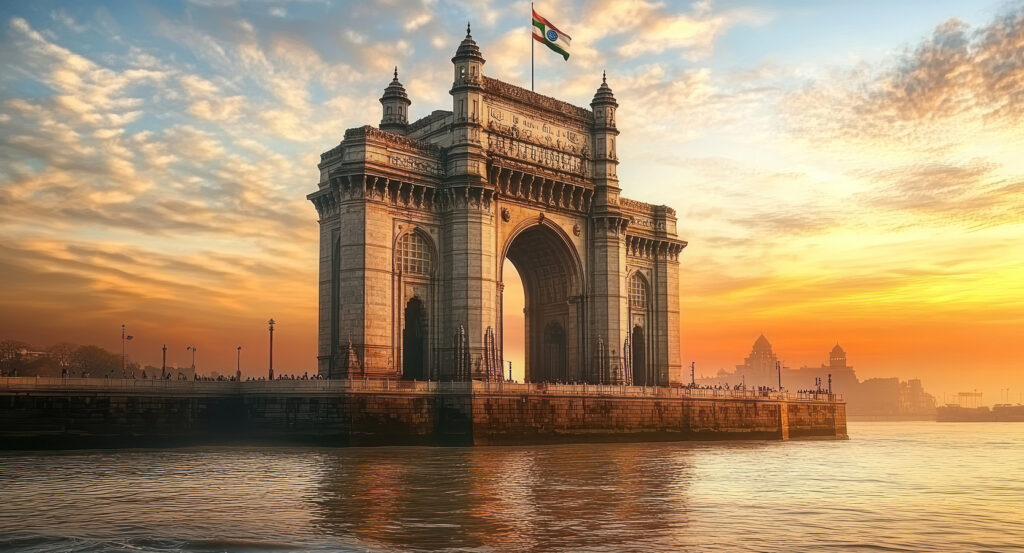
Why you should experience the Gateway of India in Mumbai.
The Gateway of India in Mumbai is not just an architectural landmark, it's the city's grand threshold, where history, culture, and the Arabian Sea converge in timeless rhythm.
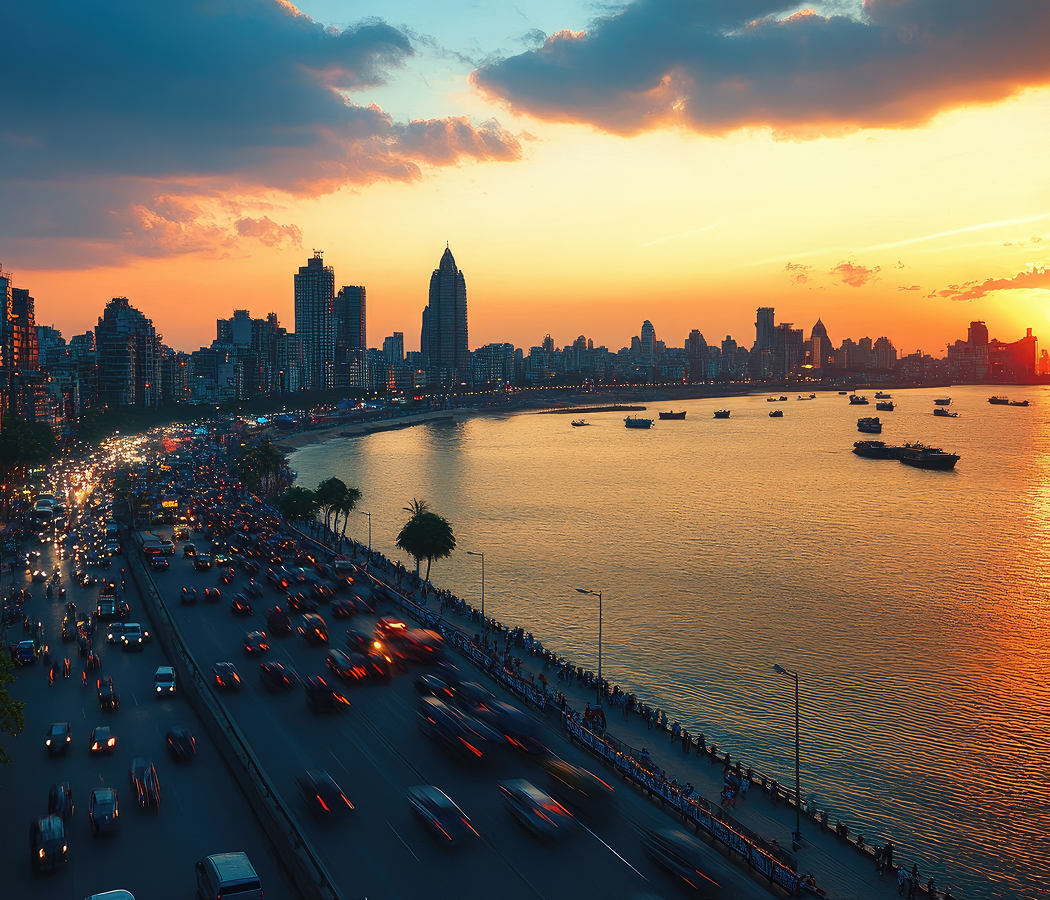
Standing on the waterfront of Apollo Bunder, the monument rises in graceful defiance, a basalt arch crowned with Indo-Saracenic domes, framed by the ceaseless motion of ferries and sea breeze. It is both a portal and a pause: the place where empires once arrived, and where modern India first looked outward to the world. At sunrise, its honey-colored stone catches the first light over the harbor; by evening, its silhouette glows gold against the expanse of the Taj Mahal Palace Hotel. To stand before it is to feel Mumbai's heartbeat, cosmopolitan yet rooted, restless yet enduring, and to sense that every wave against the seawall still carries whispers of the centuries that shaped it.
What you should know about the Gateway of India.
The Gateway of India was conceived as both a symbol of imperial grandeur and, ironically, the stage for the British Empire's final departure from India.
Commissioned in 1911 to commemorate the visit of King George V and Queen Mary, it was designed by architect George Wittet and completed in 1924 using locally quarried yellow basalt and reinforced concrete. The style, a synthesis of Hindu, Muslim, and European elements, reflected the hybrid character of colonial Bombay, where Gothic spires met Mughal arches and Maratha motifs. At its peak, the Gateway served as the ceremonial entrance for viceroys, governors, and visiting dignitaries arriving by sea. But in 1948, just months after India's independence, the last British troops marched through it and sailed away, transforming the arch's meaning forever. The structure stands 26 meters tall, supported by four turrets and intricate latticework, its foundations anchored to reclaim land from the sea. Few realize that beneath the promenade lies a reinforced substructure designed to absorb wave impact, allowing it to withstand monsoons and salt spray for over a century. Surrounding the monument is Apollo Bunder Pier, now home to ferries bound for Elephanta Island, street vendors selling postcards and chai, and crowds of travelers drawn to the same horizon that once defined empire and now defines freedom.
How to fold the Gateway of India into your trip.
Visiting the Gateway of India is a physical experience, the perfect introduction to Mumbai's soul.
Arrive at dawn to see the monument bathed in soft light, with the harbor calm and the air still cool. The early morning hours are ideal for photographs and quiet reflection before the crowds gather. Stand facing the arch, then turn to see the Taj Mahal Palace Hotel, two icons locked in discussion across a century. From here, you can board a ferry to Elephanta Caves, whose boats depart directly from the steps of the Gateway throughout the day. For a deeper perspective, walk along Colaba Causeway, where the city's colonial heritage unfolds through street stalls, cafés, and historic façades. Evening visits are equally magical: the monument glows under amber lights, and the waterfront hums with families, artists, and travelers watching the city's skyline fade into night. Allow 45 minutes to an hour to explore, soak in the energy, and, if you can, pause by the seawall just as the sun dips behind the Taj's dome. The Gateway of India is more than a monument, it's Mumbai's eternal gesture of welcome and farewell, an open arch to the world and to history itself.
Where your story begins.
Foresyte Travel reveals places that feel extraordinary long before you arrive.
Experience premium editorial crafted for luxury travelers.