Why Grand Avenue matters.
Grand Avenue is a spirited corridor where Coconut Grove's Bahamian heritage, artistic spirit, waterfront identity, and tropical character continue defining one of Miami's most culturally significant streets.
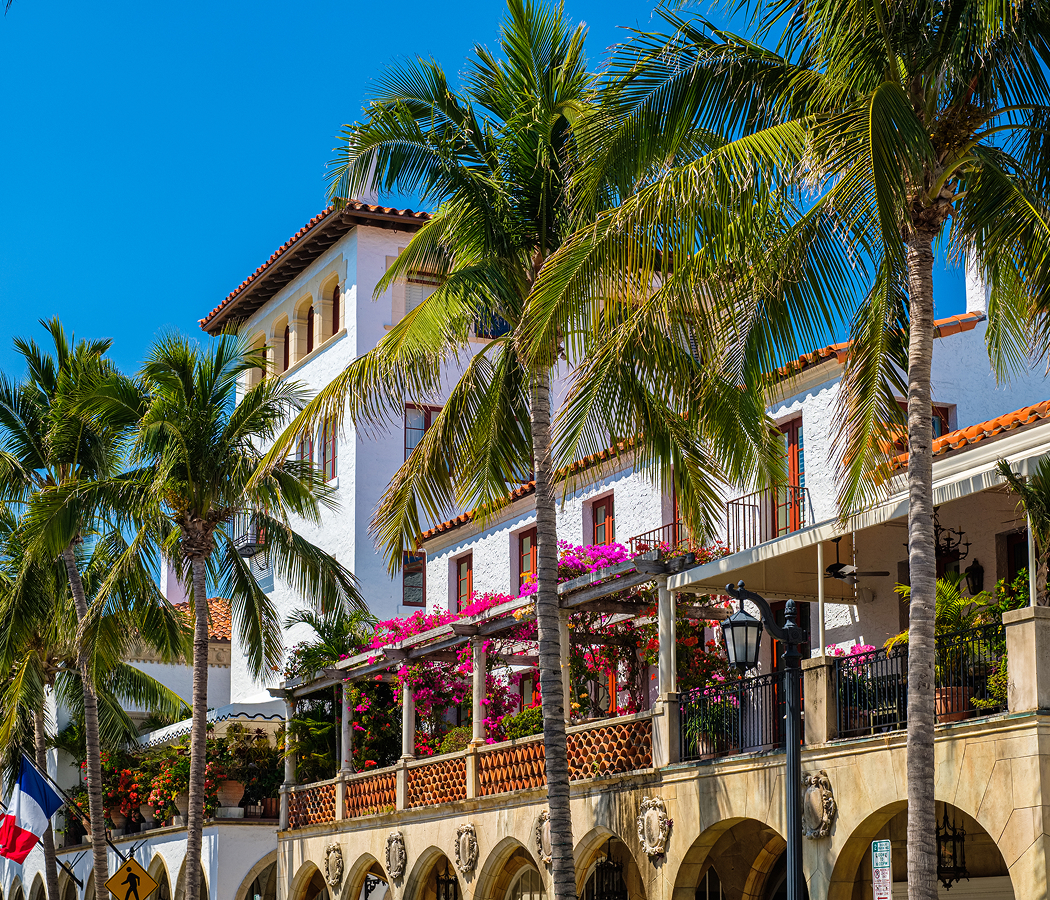
Running through Coconut Grove between North Grove and Center Grove, the corridor links historic commercial buildings, longtime community institutions, architect-designed residences, lush public landscapes, and shaded sidewalks beneath mature banyan trees and royal palms. Early twentieth-century storefronts, Mediterranean Revival architecture, tropical vegetation, and locally owned businesses create a streetscape where generations of community history remain visible within an evolving urban environment. Throughout the corridor, preserved buildings, cultural institutions, and enduring neighborhood traditions reinforce a setting whose character has developed through maritime commerce, immigration, artistic expression, and sustained civic stewardship. The result is an experience defined by cultural richness, architectural variety, and one of Coconut Grove's most engaging corridors.
What defines Grand Avenue.
Grand Avenue is best known as the historic commercial spine of Miami's West Grove, where one of South Florida's oldest Bahamian-American communities established churches, businesses, schools, and social organizations following the arrival of Black settlers during the late nineteenth century. The corridor developed alongside Coconut Grove's emergence as a thriving settlement after the 1873 House of Refuge, expanding through the Florida East Coast Railway era and the regional growth that followed Henry Flagler's arrival in South Florida during the 1890s. Bahamian craftsmen introduced coral rock construction techniques, hand-cut limestone masonry, traditional Caribbean woodworking, and style building practices that continue distinguishing portions of the surrounding neighborhood. Mature live oaks, banyan trees, royal palms, gumbo limbo, mahogany, sea grape, and native tropical vegetation reinforce the lush canopy that has long defined Coconut Grove's streetscape. Grand Avenue also reflects the neighborhood's maritime origins through its historic relationship with nearby Biscayne Bay, where boatbuilding, fishing, and coastal trade supported generations of local families before modern residential expansion reshaped the waterfront.
The Coconut Grove Village West Island District preserves an important collection of historic resources documenting the cultural development of Miami's Bahamian community through churches, residences, and community buildings recognized for their historical significance. The Lyric Theater Circuit, neighborhood festivals, Junkanoo traditions, and longstanding cultural organizations have contributed to the corridor's enduring artistic character while strengthening connections between West Grove and the broader Miami community. Dade County pine, coral limestone, decorative stucco, clay roof tile, original wood siding, and handcrafted architectural detailing incorporated throughout surviving historic buildings demonstrate the materials and craftsmanship that continue defining Grand Avenue's architectural character. Together, these preservation efforts, cultural traditions, and historic construction methods deepen the historical narrative established by Grand Avenue, demonstrating why the corridor remains one of Coconut Grove's most meaningful cultural corridors.
How Grand Avenue fits.
Grand Avenue works as an exploration of Coconut Grove's cultural heritage, tropical landscape, and waterfront setting.
Begin at The Barnacle Historic State Park, where one of Miami-Dade County's oldest surviving homes introduces Coconut Grove's maritime origins through preserved architecture, native hammock forest, and sweeping views across Biscayne Bay. Continue to Peacock Park, whose expansive waterfront lawns, public gathering spaces, and shaded shoreline broaden the appreciation for the coastal landscape that has shaped Coconut Grove for generations. Conclude at CocoWalk, where thoughtfully integrated public plazas, local dining, galleries, and neighborhood gathering spaces provide the culminating reward by showcasing the contemporary energy that complements the Grove's deep historical roots. The progression moves naturally from early settlement through the waterfront landscape before concluding within the neighborhood's contemporary civic heart, revealing how Grand Avenue connects Coconut Grove's past and present through architecture, nature, and community.
Where your story begins.
Foresyte Travel reveals places that feel extraordinary long before you arrive.
Enjoy editorial crafted for luxury travelers.
Foresyte may earn a commission when you book.