Why Hotel Indigo Rome - St. George by IHG matters.
Hotel Indigo Rome - St. George by IHG is where Renaissance history, contemporary boutique design, and a privileged position on one of Rome's most atmospheric streets blend into a stay that feels stylish, intimate, and deeply Roman.
Set along Via Giulia, among the most beautiful and historically significant streets in the city, the hotel occupies a 15th-century palazzo commissioned by Bramante, the master architect of the High Renaissance. Its façade is classic and dignified, with warm stone, elegant symmetry, and an architectural presence that reflects the noble heritage of the street. Via Giulia itself is a masterpiece: long, quiet, lined with artisan workshops, ancient portals, archways, churches, and Renaissance palaces. Staying here feels like stepping into a secret chapter of Roman history, where beauty reveals itself slowly, intimately, and without crowds. Step inside, and the ambiance becomes contemporary, polished, and artistically layered. Interiors blend the building's Renaissance bones with modern Italian design: clean lines, soft lighting, sculptural furniture, rich textiles, and curated art that nods to Rome's eternal layers. The atmosphere strikes the perfect balance between historic soul and boutique sophistication, chic. Rooms at Hotel Indigo Rome - St. George continue this refined aesthetic with warm woods, smooth textiles, muted tones, comfortable bedding, and thoughtful modern comforts. Expect tasteful décor, atmospheric lighting, and layouts that feel both soothing and practical. Some rooms overlook charming internal courtyards, while others look onto the historic street, offering evocative views of Renaissance façades and ancient stone. Suites elevate the experience with expanded space, curated furnishings, sitting areas, and touches of luxury ideal for couples or longer stays. Bathrooms are sleek, contemporary, and beautifully designed, featuring stone or marble finishes, modern showers or deep tubs, quality fixtures, and plush amenities that enhance the boutique feel. Breakfast is served in an elegant dining space or on the rooftop when weather permits, fresh pastries, breads, cheeses, meats, eggs, fruit, yogurt, vegetables, juices, and espresso drinks prepared with care. The rooftop terrace is among the hotel's most beloved features. From here, you can see domes, terracotta rooftops, Baroque spires, and the soft sweep of the Tiber River. It becomes a magnetic place for sunset drinks, romantic dinners, or quiet evening moments under Rome's warm sky. The spa adds another layer of indulgence. Inspired by ancient Roman baths, the wellness area includes a sauna, steam room, whirlpool, and treatments grounded in Italian and Mediterranean traditions. It provides a peaceful retreat from the city's energy, particularly appealing after days of walking cobblestone streets. Service is warm, attentive, and polished. Staff members excel at personalized hospitality, offering curated recommendations for restaurants, hidden courtyards, artisan shops, cathedral visits, scenic routes, and authentic local spots across Trastevere, Campo de' Fiori, and the Vatican district. Their presence adds ease, warmth, and thoughtful guidance to each stay. The location is exceptional, steps from the Tiber River, moments from Trastevere, a short walk to Campo de' Fiori, Piazza Navona, and the Vatican. Via Giulia places you inside a quietly aristocratic Rome, far from tourist congestion yet incredibly close to the city's essential landmarks. Couples love the romance and atmosphere. Solo travelers appreciate the safety and intimacy. Design lovers admire the blend of modern aesthetics with Renaissance architecture. Returning Rome travelers often consider this one of the city's best-kept secrets. Through every season, Hotel Indigo Rome - St. George reflects Rome's shifting moods. In winter, Via Giulia feels contemplative and cinematic. In spring, wisteria blooms across the street's ancient walls. In summer, warm evenings illuminate the river and courtyards. In autumn, golden tones coat the palazzi in soft light. What makes Hotel Indigo Rome - St. George truly exceptional is its fusion of Renaissance architecture, modern boutique style, warm hospitality, and a location on one of Rome's most poetic and iconic streets. It is intimate, stylish, soulful, elegant, atmospheric, and ideal for travelers seeking a refined, design-conscious stay immersed in authentic Roman history.
What defines Hotel Indigo Rome.
The hotel occupies a palazzo with origins reaching back to the early 1500s, built during the height of the Renaissance on Via Giulia-Rome's first planned street and one of Pope Julius II's most ambitious urban projects.
Via Giulia was designed by Bramante as a grand, linear Renaissance boulevard to house government buildings, courthouses, merchant residences, and noble palaces. Before the street existed, this area near the Tiber was a dense patchwork of medieval alleys, workshops, and riverfront trade spaces. When Pope Julius II envisioned a modern Rome worthy of its ancient glory, Via Giulia became a symbol of that vision. Bramante's original plan included palatial structures, elegant loggias, bridges spanning the Tiber, and a sweeping renewal of the district. Although not all elements were completed, the street transformed into one of the most refined corridors in the city, attracting noble families, powerful clerics, goldsmiths, artisans, and the wealthy elite. The building that houses the hotel was constructed within this Renaissance boom, originally serving as a noble residence and later evolving through centuries of use, workshops, private dwellings, artisan spaces, and small administrative roles. The thick walls, vaulted interiors, and architectural proportions retain the character of 16th-century craftsmanship. Over the centuries, Via Giulia remained an artistic center. Caravaggio, Raphael, goldsmiths, silversmiths, and Renaissance architects lived and worked in the surrounding blocks. The nearby Via dei Coronari became a hub of antique dealers. Churches, hidden courtyards, and Baroque renovations added layers of history to the district. In the 20th century, the palazzo that would become the hotel underwent careful restoration. When it was transformed into Hotel Indigo Rome - St. George, designers embraced its Renaissance origins while introducing modern aesthetics and comfort. The palazzo's historic bones remain intact, thick stone walls, Roman urban geometry, Renaissance proportions, while the contemporary interiors celebrate the artistic heritage of the area. Today, the hotel stands as one of the few luxury properties on Via Giulia that fully preserves the spirit of the Renaissance street plan while offering an elevated modern experience.
How Hotel Indigo Rome fits.
Hotel Indigo Rome - St. George becomes the stylish, serene, history-rich anchor of your Roman escape, where mornings begin with Renaissance calm, days unfold into cultural exploration, and evenings settle into soft, atmospheric beauty along the Tiber.
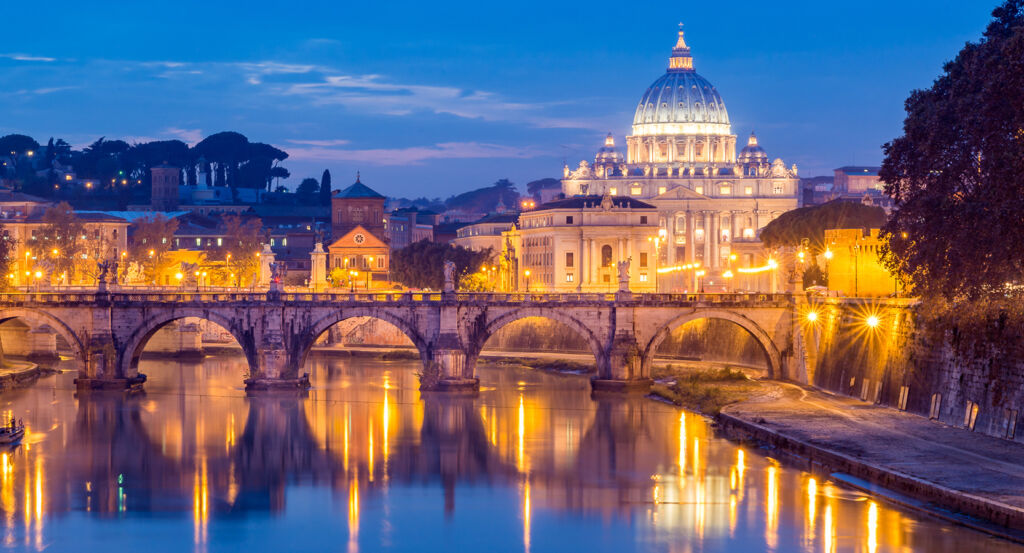
Start the morning with breakfast on the rooftop before strolling Via Giulia's ancient corridor toward Campo de' Fiori or Piazza Navona. Cross the river into Trastevere for cafés, trattorias, and hidden piazzas. Visit Castel Sant'Angelo, St. Peter's Basilica, or the Vatican Museums. Spend the afternoon wandering artisan streets, river paths, or quiet courtyards. Return to the spa or your room for a moment of tranquility before enjoying dinner on the terrace or at a local restaurant on Via dei Banchi Vecchi. End your night with a gentle walk along the Tiber as domes glow under soft Roman light. In winter, the district feels intimate and contemplative. In spring, wisteria cascades over ancient walls. In summer, the rooftop becomes an evening sanctuary. In autumn, golden light elevates every stone façade. Hotel Indigo Rome - St. George becomes not just where you stay, but the intimate, stylish, soulful heart of your entire Roman experience.
Where your story begins.
Foresyte Travel reveals places that feel extraordinary long before you arrive.
Enjoy editorial crafted for luxury travelers.
Foresyte may earn a commission when you book.