
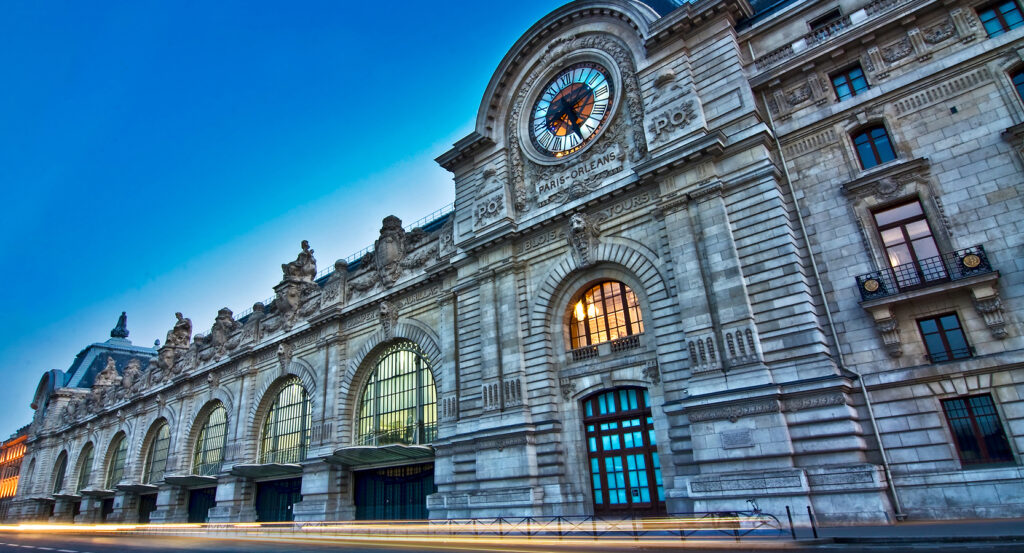
Why you should experience Impressionist Gallery at Musée d'Orsay in Paris, France.
Impressionist Gallery at Musée d'Orsay is a celebrated fine art gallery where Saint-Thomas-d'Aquin's artistic heritage, revolutionary painting, nineteenth-century innovation, and extraordinary cultural stewardship present the world's foremost collection of Impressionist masterpieces.
Set within Musée d'Orsay along Rue de la Légion d'Honneur near Quai Anatole France and just steps from the Great Clock of Musée d'Orsay, this luminous gallery surrounds visitors with radiant canvases by Claude Monet, Pierre-Auguste Renoir, Edgar Degas, Berthe Morisot, Camille Pissarro, Alfred Sisley, Gustave Caillebotte, and other pioneering artists whose revolutionary approaches transformed the history of painting. Natural light, thoughtfully sequenced galleries, refined architectural proportions, and carefully curated sightlines allow each masterpiece to reveal the movement's defining exploration of color, atmosphere, movement, and modern life. Every room traces the remarkable evolution of Impressionism from controversial artistic rebellion to one of the world's most admired artistic achievements. The result is a destination defined by artistic innovation, exceptional scholarship, and unparalleled cultural significance.
What you should know about Impressionist Gallery at Musée d'Orsay.
Impressionist Gallery at Musée d'Orsay is best known for preserving the world's richest collection of Impressionist and Post-Impressionist paintings, bringing together masterpieces assembled through more than a century of acquisitions, state transfers, and landmark private donations, including Gustave Caillebotte's historic bequest of Impressionist works that fundamentally transformed France's national collections. Opened in 1986 within the restored Gare d'Orsay railway station, the museum united paintings formerly dispersed among the Louvre, the Jeu de Paume, the Musée du Luxembourg, and the Musée National d'Art Moderne, creating an unprecedented narrative of French artistic innovation between 1848 and 1914. The galleries present defining works including Monet's Poppies, Blue Water Lilies, and The Saint-Lazare Station, Renoir's Dance at Le Moulin de la Galette, Degas' celebrated ballet scenes, Manet's Olympia and Luncheon on the Grass, Van Gogh's Starry Night Over the Rhône, Self-Portraits, and The Church at Auvers, alongside masterworks by Cézanne, Gauguin, Seurat, Morisot, and Pissarro that collectively document the emergence of modern painting. The collection also preserves the legacy of the eight historic Impressionist exhibitions held between 1874 and 1886 while illustrating how artists rejected academic convention through direct observation, innovative brushwork, modern subject matter, scientific studies of light, and rebellious experimentation that permanently reshaped Western art.
Masterpieces unfold chronologically through galleries that reveal evolving artistic relationships, technical experimentation, and the remarkable diversity of Impressionism beyond its most familiar names. Intimate portraits, expansive landscapes, urban boulevards, rivers, gardens, cafés, ballet rehearsals, and domestic interiors collectively demonstrate how successive generations of artists transformed everyday life into enduring works of art whose influence continues shaping museums, collectors, scholars, and painters throughout the world.
How to fold Impressionist Gallery at Musée d'Orsay into your trip.
Impressionist Gallery at Musée d'Orsay works as the centerpiece of an exploration through Paris's celebrated artistic institutions along the Left Bank.
Begin at Great Clock of Musée d'Orsay, where panoramic views across the Seine establish the museum's architectural character before continuing into Impressionist Gallery at Musée d'Orsay to experience the world's foremost collection of Impressionist painting. Continue to Musée de l'Orangerie, whose immersive Water Lilies installations deepen appreciation of Monet's artistic vision. Conclude at Pont Alexandre III, where Beaux-Arts architecture and sweeping river views provide a memorable finale celebrating the artistic and cultural grandeur of Paris. The progression moves naturally from architectural heritage to revolutionary painting before concluding through two defining Parisian cultural experiences, revealing why Impressionist Gallery at Musée d'Orsay remains the essential destination for understanding the birth of modern art.
Where your story begins.
Foresyte Travel reveals places that feel extraordinary long before you arrive.
Experience premium editorial crafted for luxury travelers.














































































































