Why you should experience Journey to the West at Haw Par Villa in Singapore.
Step into Journey to the West at Haw Par Villa in Singapore, and myth comes alive in color, chaos, and charm, a riotous, larger-than-life retelling of one of Asia's most beloved epics.
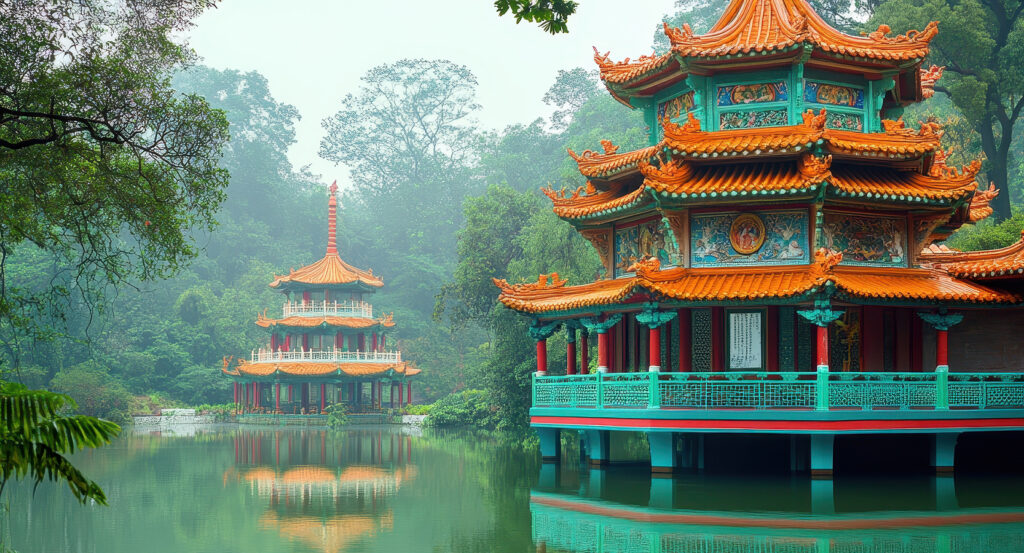
Set along the winding paths of Haw Par Villa, this open-air tableau bursts with energy: warriors frozen mid-battle, celestial maidens swooping from clouds, and the mischievous Sun Wukong, the Monkey King himself, brandishing his staff with immortal swagger. The figures, painted in vivid enamel hues, seem to pulse with motion even in stillness, their exaggerated expressions capturing every ounce of humor and defiance from the original 16th-century Chinese novel. Around them, mist and foliage weave through sculpted mountains and grottoes, transforming the park's hillside into a mythological landscape. The diorama's storytelling is tactile and cinematic, part temple, part theatre. Children gasp, elders smile knowingly, and for a few enchanted moments, everyone becomes a pilgrim on the road to enlightenment. Journey to the West embodies what makes Haw Par Villa so singular: its unabashed fusion of the moral, the mystical, and the absurd.
What you didn’t know about Journey to the West at Haw Par Villa.
What most travelers never realize is that Journey to the West serves as the heart of Haw Par Villa's narrative universe, a monument to redemption, rebellion, and relentless curiosity.
Created in the 1940s by Aw Boon Haw and Aw Boon Par, the visionary brothers behind Tiger Balm, the diorama was intended not merely to entertain but to educate. Through sculpture and spectacle, they transformed the Ming-era text, itself a parable of self-discipline and spiritual awakening, into a visual sermon accessible to every visitor, regardless of literacy. Sun Wukong's journey from chaos to enlightenment mirrored the human condition: mischievous, flawed, yet always striving for grace. The other pilgrims, Tang Sanzang, Zhu Bajie, and Sha Wujing, each represent facets of moral struggle: purity, indulgence, and perseverance. Stylistically, the diorama bridges Chinese opera and Art Deco, a distinctly Singaporean syncretism. Its cement figures, sculpted by local artisans, reflect a vernacular genius: folk art elevated to allegory. Beyond religion, it is also a celebration of imagination, proof that enlightenment need not be solemn; it can be wildly, joyfully alive.
How to fold Journey to the West at Haw Par Villa into your trip.
To fold Journey to the West into your Singapore journey, wander it as both traveler and storyteller.
Approach it from the upper terraces of the park, where the colorful archways lead you through scenes from the pilgrims' odyssey, the Flower-Fruit Mountain, the Flaming Mountain, the heavenly court. Move slowly, pausing before each vignette; read the small signboards that blend moral fable with mythic spectacle. Watch how the figures' faces catch the light, the Monkey King's grin flashing gold in the sun, Tang Sanzang's calm composure framed by foliage. Bring a camera if you must, but take a moment without one: listen to the cicadas, the distant laughter of families, the faint trickle of fountains echoing like ancient chants. If you visit near dusk, the statues take on a surreal glow, their shadows long and luminous against the red stone paths. When you finally emerge, the world will feel a little less ordinary, because Journey to the West doesn't just illustrate myth; it reminds you that every journey, spiritual or otherwise, begins with the courage to imagine the impossible.
Where your story begins.
Start your planning journey with Foresyte Travel.
Experience immersive stories crafted for luxury travelers.