Why Kampong Glam matters.
Kampong Glam is a living mosaic of color, faith, and heritage that captures the soul of Singapore's multicultural identity.
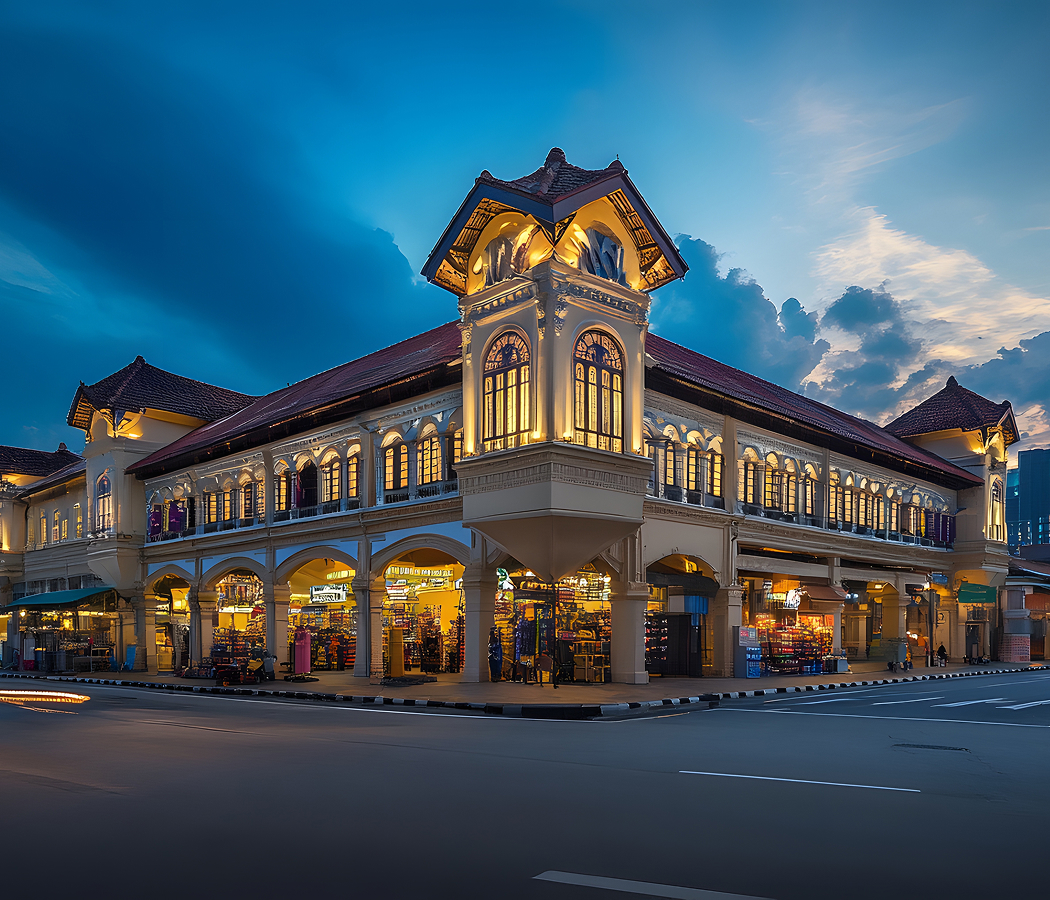
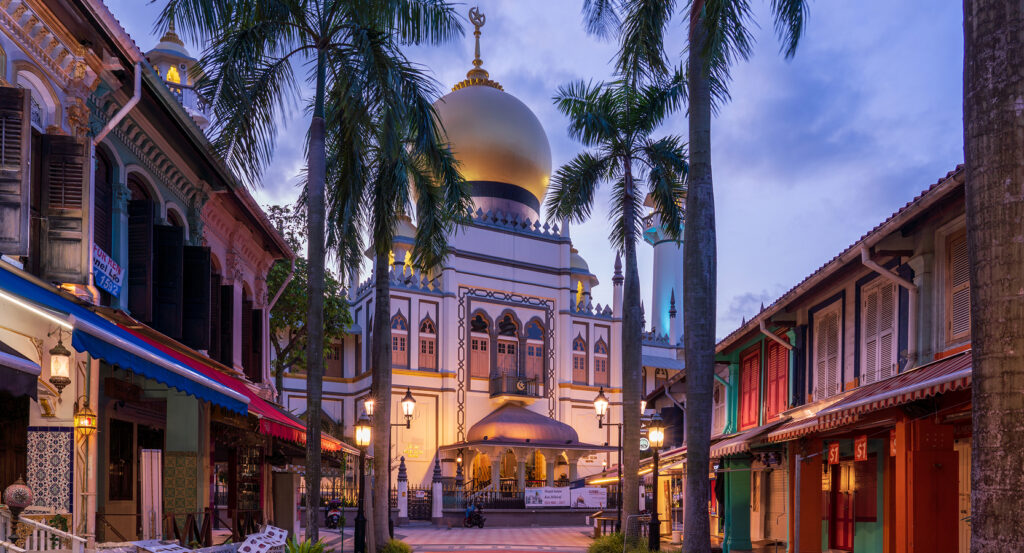
Wander its narrow streets, and every detail seems to hum with rhythm: bold street murals brush up against century-old shophouses, while the scent of Arabic coffee and sizzling satay mingles with oud perfume wafting from hidden boutiques. Once the royal seat of Malay sultans, Kampong Glam has transformed over time into a spirited crossroads of history and modernity. The golden dome of the Sultan Mosque anchors the skyline, its glow mirrored in the polished shop windows of Haji Lane and Bussorah Street, where local designers and artists have reclaimed the past through creativity. Every corner feels like a meeting point between eras: Islamic calligraphy etched on the walls of mosques coexists with neon lights spilling from indie cafés. The neighborhood doesn't simply preserve history, it reinvents it daily, with a pulse that is both reverent and rebellious. To stand in Kampong Glam is to witness Singapore's living heart, layered, radiant, and endlessly in motion.
What defines Kampong Glam.
Beneath its stylish façade lies a story of power, diplomacy, and reinvention stretching back more than two centuries.
The name “Kampong Glam” comes from the Malay words for “village” and the gelam tree, once abundant in the area and used for everything from boat-building to medicine. In 1819, when Sir Stamford Raffles signed the treaty founding modern Singapore, he designated Kampong Glam as the royal enclave for Sultan Hussein Shah and his court. The Sultan's Istana (palace) became the political and cultural nucleus for the Malay and Muslim community, while Arab traders and Bugis seafarers filled the district with goods, language, and faith. Over the 19th century, its streets evolved into a thriving hub of trade and pilgrimage, serving as a waypoint for Muslims en route to Mecca. When the Sultan Mosque was rebuilt in 1928, its onion domes, each ringed with black glass donated by the poor, symbolized unity across class and creed. In recent decades, urban renewal transformed Kampong Glam into a center of design and gastronomy, yet its essence remains untouched. Few realize that the original royal compound still stands within the Malay Heritage Centre, preserving centuries of stories. Kampong Glam isn't simply a heritage district, it's a living tribute to Singapore's evolution, where faith, artistry, and commerce continue their intricate dance.
How Kampong Glam fits.
Exploring Kampong Glam is best done slowly, with open senses and a curious heart.
Begin your walk at the Sultan Mosque, stepping quietly across its courtyard to admire the craftsmanship of its latticework and golden domes. Then wander down Bussorah Street, where cafés spill onto the sidewalks and artisans sell handwoven carpets, brass lamps, and batik fabrics that tell stories of migration and trade. Turn into Haji Lane, a narrow corridor of color where murals bloom across entire buildings and boutiques blend local fashion with global flair. Stop for Turkish tea or a plate of nasi padang before heading to the Malay Heritage Centre, where exhibits trace the community's roots from maritime kingdom to modern city-state. As the sun sets, the call to prayer drifts across the rooftops, merging with laughter from nearby bars and live music seeping from doorways. Stay until the lanterns flicker on, the streets transforming into a mirror of shadow and light. Kampong Glam isn't a stop to rush; it's a feeling to absorb, a reminder that history is most alive when it's still being written.
Where your story begins.
Foresyte Travel reveals places that feel extraordinary long before you arrive.
Enjoy editorial crafted for luxury travelers.
Foresyte may earn a commission when you book.