Why Key West Butterfly and Nature Conservatory matters.
Key West Butterfly and Nature Conservatory is a tropical wildlife sanctuary where Upper Duval Street's historic commercial character meets international butterfly conservation, exotic birdlife, and the botanical diversity of the world's tropical forests.
Occupying a substantial building near the southern end of Duval Street, the conservatory stands between United and South streets, surrounded by the historic wooden residences, independent restaurants, and tropical gardens of southern Old Town Key West. Its street-facing entrance leads into an enclosed botanical environment crowned by a soaring glass roof, where dense vegetation, flowering plants, and tall palms create a layered landscape beneath filtered sunlight. A winding pedestrian pathway passes through the cultivated habitat, bringing free-flying butterflies into close proximity with tropical foliage, cascading waterfalls, and shallow ponds. Colorful birds move among the branches and across the garden floor, and the controlled interior climate sustains a warm, humid atmosphere suited to the plants and animals inhabiting the enclosure. The result is a distinctive urban conservatory whose carefully maintained tropical habitat creates an unusually direct encounter with butterfly diversity and the ecological relationships of rainforest environments.
What defines Key West Butterfly and Nature Conservatory.
Key West Butterfly and Nature Conservatory is best known for transforming an ambitious private project into a substantial public institution devoted to butterfly biology, tropical biodiversity, and the relationship between wildlife education and international butterfly farming. Business partners Sam Trophia and George Fernandez founded the conservatory in January 2003, establishing a 13,000-square-foot facility dedicated to the cultivation of public interest in butterflies and their ecological importance. Their collaboration developed through a shared commitment to creating a tropical wildlife attraction whose educational ambitions extended beyond the conventional display of preserved insects. The founders spent years planning the project and traveled to thirteen butterfly facilities around the world, examining approaches to enclosure design, insect husbandry, botanical cultivation, and public education. Their preparations culminated in a purpose-built institution organized around a 5,000-square-foot glass-enclosed habitat, a substantial investment in the environmental requirements of tropical butterflies. The project incorporated controlled temperature and humidity, creating conditions suited to species originating in geographically distinct tropical regions. Its botanical program introduced thousands of tropical plants and trees, developing a cultivated landscape capable of supporting nectar-feeding butterflies and a complementary population of birds. The completed habitat accommodated hundreds of living butterflies representing more than sixty species during its early development, establishing a diverse collection drawn from multiple continents. The founders also created the Trophia Butterfly Foundation, extending their interests into the educational and conservation dimensions of butterfly cultivation. The conservatory's opening contributed a new natural-history institution to Key West's established concentration of historic houses, maritime museums, and waterfront attractions. Its educational program introduced butterfly anatomy, physiology, geographic distribution, and migration through demonstrated exhibits and interpretive presentations. Monarch butterflies became a particularly important subject through their extensive annual migrations across North America, connecting the conservatory's tropical collection with a widely recognized example of insect navigation and seasonal movement. The institution also developed a close relationship with international butterfly farming, an industry whose cultivation practices supply living pupae to enclosed butterfly gardens and educational institutions. Butterfly farming depends on the controlled reproduction of particular species and the cultivation of suitable host plants, creating an agricultural relationship between tropical insects and the vegetation required for their development. The international trade in farm-raised pupae supports specialized producers in tropical regions, including parts of Central America, South America, Africa, and Southeast Asia. These relationships became central to the conservatory's ability to maintain a varied population of butterflies with comparatively short adult lifespans. Sam Trophia extended his professional interests into the preservation of butterfly specimens through an artistic practice developed around the arrangement of naturally deceased insects. His Wings of Imagination gallery incorporated original compositions using butterfly wings and complete specimens preserved within transparent acrylic cases. The work developed a second educational dimension through the preservation of wing patterns, colors, and structural differences among tropical species. The conservatory's growing public recognition brought awards from local tourism organizations and popular attraction rankings, strengthening its position within the Florida Keys' cultural and educational community. Its twentieth anniversary in January 2023 marked two decades of operation, during which the institution had developed into one of Key West's principal natural-history attractions. The anniversary also recognized the sustained involvement of Trophia and Fernandez in maintaining the original educational purpose of their privately established facility. The conservatory's development connects international butterfly cultivation, tropical horticulture, wildlife education, and artistic preservation within a single institution devoted to the diversity and biological complexity of butterflies.
Rhett and Scarlett, the conservatory's resident flamingos, contribute a distinctive dimension to a habitat whose ecological organization depends on the relationship between butterflies, birds, tropical vegetation, and carefully regulated environmental conditions. The flamingos occupy a garden environment shared with smaller exotic birds, creating an unusual combination of species within the enclosed tropical landscape. Their long legs and specialized bills reflect adaptations associated with feeding in shallow water, where flamingos use their tongues and filtering structures to separate edible particles from water and sediment. The pink coloration of their plumage develops through carotenoid pigments obtained from their diet, connecting their appearance with the biological processes governing pigmentation in birds. Their presence also introduces an important contrast in scale, placing substantial wading birds among insects whose flight depends on exceptionally lightweight bodies and delicate wing structures. The surrounding bird population includes colorful finches, canaries, and other small species whose movements occupy the vegetation at different heights. Zebra finches contribute rapid, short-distance flights between branches, and cordon-bleu finches introduce vivid blue plumage against the green foliage. Chinese painted quail occupy the lower vegetation, using the ground-level environment for movement and foraging. The conservatory's butterflies develop a complementary vertical distribution through species that favor different light conditions, flowering plants, and resting surfaces. Blue morphos provide one of the most recognizable examples through the iridescent blue coloration of their upper wings. Their appearance depends on microscopic structures that interact with light, producing brilliant coloration through physical effects associated with the arrangement of scales. The underside of the wings carries brown patterns and prominent eyespots, providing a contrasting appearance when the insects settle with their wings closed. Emerald swallowtails develop another form of iridescence through green bands extending across dark wings, producing a distinctive appearance associated with their Southeast Asian origins. Other butterflies contribute orange, yellow, white, and patterned coloration, creating a varied collection whose visual differences correspond to species-specific anatomy and behavior. Nectar-feeding adults move among flowering plants, extending their proboscises into blossoms to obtain the sugars required for flight and reproduction. Their feeding activity connects the butterflies with the reproductive biology of flowering plants through the transfer of pollen between blossoms. The relationship becomes especially important in the conservatory's treatment of the butterfly life cycle, which begins with eggs deposited on plants suited to the developing caterpillars. Larvae feed on their host plants through successive growth stages, periodically shedding their outer coverings as their bodies increase in size. The transition into the pupal stage produces a chrysalis, within which extensive biological changes reorganize the insect's body into its adult form. The conservatory's emergence chamber makes this transformation visible through suspended pupae whose development culminates in the appearance of adult butterflies. Newly emerged adults initially possess soft, folded wings, which expand as fluid moves through their veins before the wing structures harden sufficiently for flight. The timing of this process requires suitable environmental conditions, reinforcing the importance of controlled humidity and temperature within the enclosure. The surrounding waterfalls and planted ponds contribute to the habitat's humid character, supporting vegetation whose transpiration also affects the enclosed atmosphere. A continuous pedestrian route allows the relationships among flowers, insects, birds, and water features to unfold through successive sections of the garden. The conservatory's educational program develops these biological connections through close observation of living organisms, making butterfly development, feeding behavior, structural coloration, and tropical habitat management central to its natural-history purpose.
How Key West Butterfly and Nature Conservatory fits.
Key West Butterfly and Nature Conservatory works as the natural-history centerpiece for an exploration connecting Key West's southern maritime geography, nineteenth-century navigational infrastructure, and the preservation of its most celebrated literary residence.
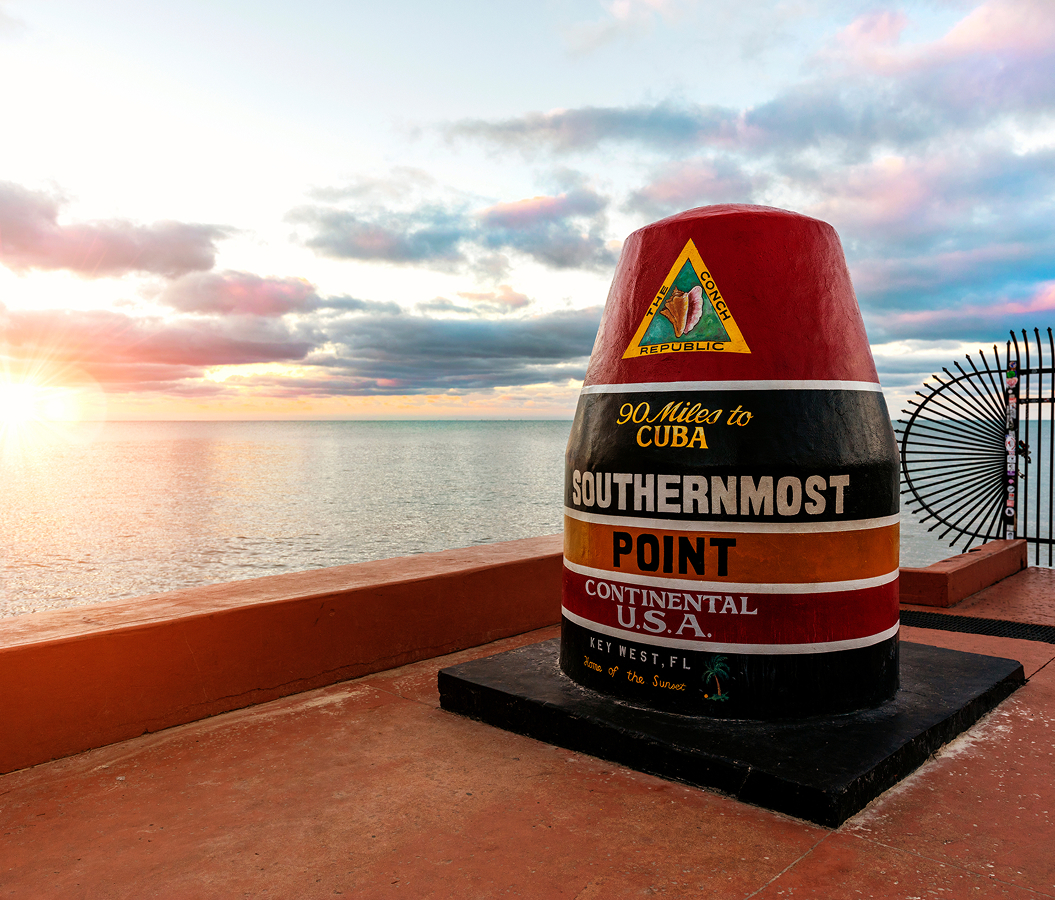
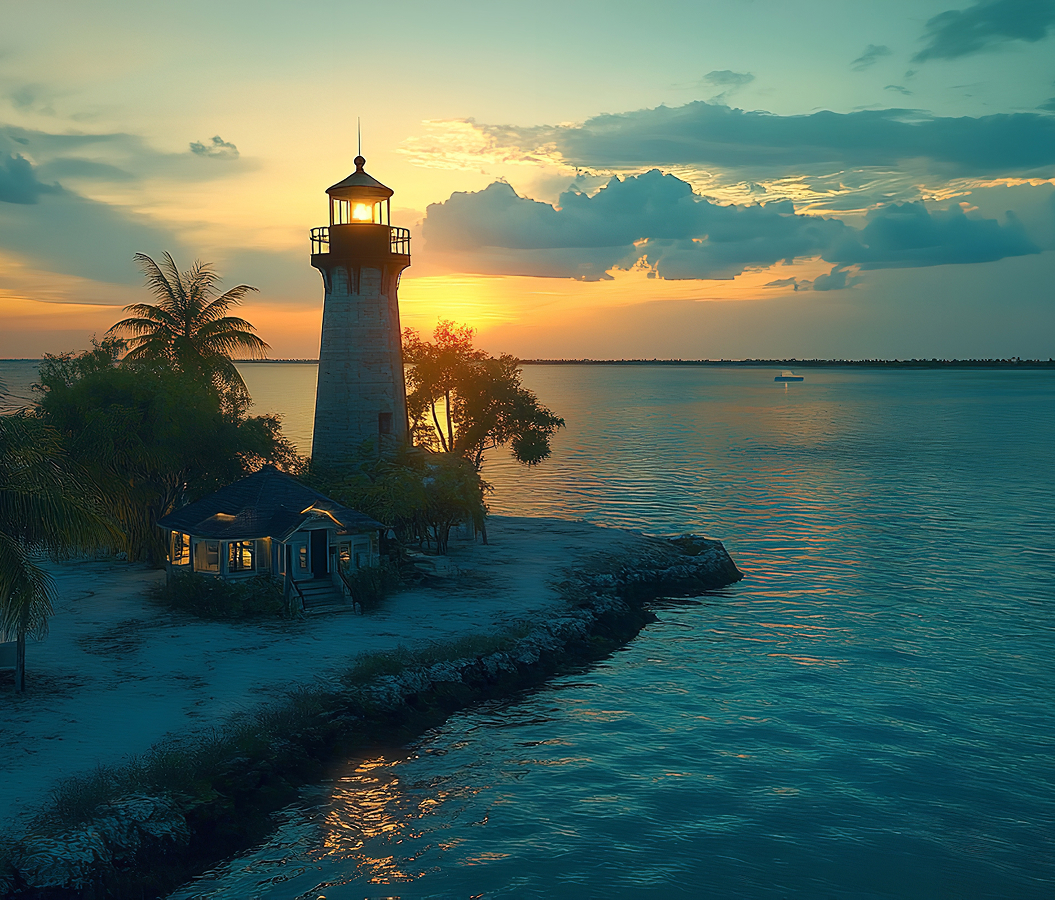
Begin at Southernmost Point Buoy, the brightly painted concrete monument associated with Key West's position near the southern extremity of the continental United States. The marker was installed in 1983, replacing an earlier sign commemorating the location and its geographic relationship with Cuba. Its distinctive red, black, and yellow bands surround lettering celebrating the island's position ninety miles north of the Cuban coast. The monument stands near the southern shoreline, where the Florida Straits form an important maritime passage connecting the Atlantic Ocean with the Gulf of Mexico. This geographic relationship shaped the development of Key West as a naval installation, commercial harbor, and international shipping center. The surrounding coastal district also preserves connections with the island's military history through the former defense installations that protected its southern approaches. Continue to Key West Lighthouse and Keeper's Quarters Museum, the historic navigational station whose development accompanied the expansion of American maritime activity in the Florida Keys. The original lighthouse entered service in 1825, guiding vessels through the dangerous reefs and channels surrounding the island. The Great Havana Hurricane of 1846 destroyed the structure, prompting construction of a replacement farther inland that entered service in 1848. Barbara Mabrity assumed responsibility for the original light following her husband's death in 1832 and continued her service through the rebuilding period, becoming an important figure in the history of American lighthouse keeping. The tower received a third-order Fresnel view in 1858 and underwent a substantial height increase in 1894 to preserve visibility above the surrounding buildings and trees. The station ceased operating as an active lighthouse in 1969, and its preserved keeper's residence subsequently became part of a museum devoted to the island's maritime heritage. Conclude at Ernest Hemingway Home and Museum, the historic residence associated with the American novelist's productive years in Key West during the 1930s. The limestone house was constructed in 1851 by maritime salvage operator Asa F. Tift, whose commercial activities belonged to the wrecking industry that supported the island's nineteenth-century economy. Hemingway and his second wife, Pauline Pfeiffer, acquired the property through a purchase arranged by Pauline's uncle Gus Pfeiffer in 1931. The writer established a working studio above a detached carriage house, completing substantial literary projects during his years on the island. His Key West period included the publication of Death in the Afternoon in 1932, Green Hills of Africa in 1935, and To Have and Have Not in 1937. The property subsequently became a public museum in 1964, preserving the writer's domestic surroundings, personal possessions, and the colony of polydactyl cats associated with his household. The progression moves from Southernmost Point Buoy's coastal geography through Key West Lighthouse and Keeper's Quarters Museum's navigational history and culminates at Ernest Hemingway Home and Museum, connecting the island's maritime position with the literary culture that developed along its historic residential streets.
Where your story begins.
Foresyte Travel reveals places that feel extraordinary long before you arrive.
Enjoy editorial crafted for luxury travelers.
Foresyte may earn a commission when you book.