
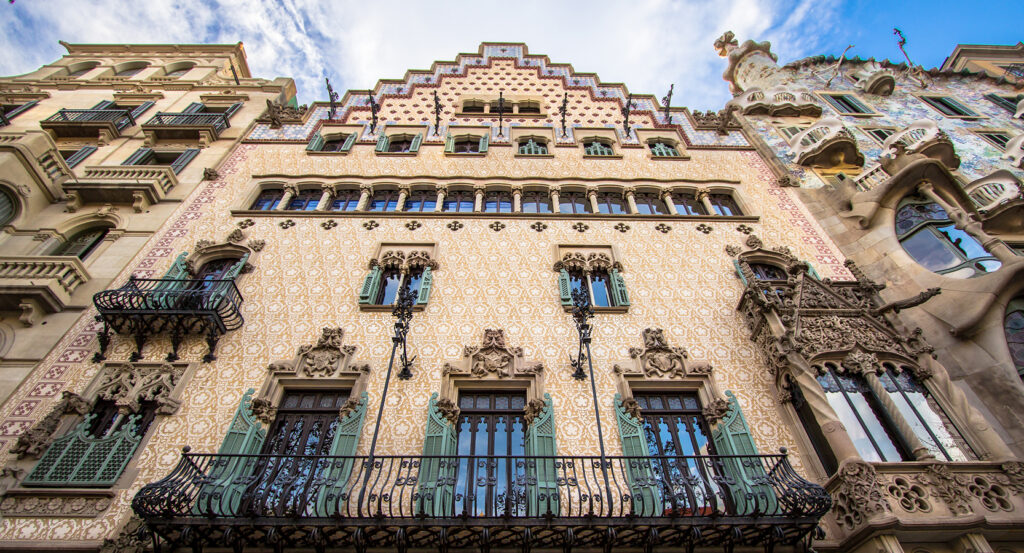
Why Mandarin Oriental matters.
Mandarin Oriental is where sculpted urban luxury, poetic contemporary design, and the refined, almost meditative warmth of Asian hospitality blend into a stay that feels transcendent, intimate, and effortlessly woven into the cultural imagination of Barcelona.
Set along Passeig de Gràcia, among Europe's most storied boulevards, lined with Gaudí masterpieces, haute couture boutiques, and the iconic geometry of the Eixample, the hotel occupies a position that is both prestigious and deeply atmospheric. From the outside, it presents a clean, architectural façade that whispers sophistication. Its entrance, set back from the boulevard behind a long, elegant walkway suspended above a reflecting surface, feels like crossing a threshold from the city's kinetic rhythm into a world of calm intention. Inside, the experience unfolds with quiet drama. The lobby is sculptural and confident: warm woods, soft neutral palettes, brass accents, bold geometric lines, curated floral arrangements, and lighting that creates depth, shadow, and intimacy. This is design with emotion stitched into every angle, meticulous, architectural, and deeply physical. Rooms continue this refined aesthetic, offering a cocoon of tranquility high above the boulevard. Expect natural materials, soft textures, calm color stories, expansive windows, plush bedding, and a kind of elegant minimalism that feels deliberate. Many rooms frame Passeig de Gràcia or the hotel's serene interior garden, transforming the view into part of the design itself. Bathrooms are serene sanctuaries of marble, stone, warm lighting, rainfall showers, deep soaking tubs, and amenities crafted with an uncompromising sense of care. The hotel's rooftop, among Barcelona's true local favorites, opens to sweeping vistas of the city: Gaudí chimneys, tiled rooftops, the shimmer of the Mediterranean beyond the skyline, and the soft grid of the Eixample stretching outward in all directions. Up here, afternoons melt into golden evening hours as guests lounge beside the pool, sip something crisp, or simply let the breeze shift their thoughts into stillness. Dining at Mandarin Oriental carries the same resonant depth. The celebrated restaurant spaces balance contemporary culinary innovation with Mediterranean roots, fresh seafood, seasonal produce, Catalan ingredients, and energetic flavors shaped into dishes that feel both artistic and soulful. Breakfast is a warm, elegant ritual: artisanal breads, pastries, cheeses, fresh fruit, eggs, yogurts, cured meats, and rich coffee served with attentive grace and a sense of unrushed luxury. One of the hotel's most defining features is its internal garden, a lush, green courtyard hidden from the street, designed as a quiet world within a world. Here, guests linger over drinks, read, talk, or simply breathe beneath canopies of green that filter the city's energy into something gentle and grounding. The spa, meanwhile, is a masterpiece of tranquility. Soft lighting, delicate textures, Asian-inspired rituals, aromatherapy, thermal zones, and treatment rooms that feel cocoon-like open the door to deep rest and renewal.
What you did not know about Mandarin Oriental.
Mandarin Oriental occupies land woven into the ambitious urban transformation that defined the Eixample in the 19th century, a project that reshaped Barcelona into a modern city built on light, openness, and human-centered design.
Before the hotel existed, this area along Passeig de Gràcia was part of a broad, largely undeveloped plain situated between the medieval walled city and the independent villages that dotted the surrounding landscape. Farmers tended orchards here; families grazed livestock along dusty paths; and seasonal traders moved goods between coastal ports and the inland routes toward the Pyrenees. In the early 1800s, pressure within the overcrowded medieval core reached a breaking point. When the city walls were torn down, it paved the way for Ildefons Cerdà's visionary urban plan, the Eixample. This district, laid out in a rational grid of octagonal blocks designed for airflow, sunlight, and mobility, became one of the most forward-thinking urban layouts in Europe. Passeig de Gràcia, originally a rural road leading toward the village of Gràcia, evolved into the grand, elegant avenue at the heart of this new district. Wealthy families built modernist mansions; architects like Gaudí, Domènech i Montaner, and Puig i Cadafalch filled the boulevard with breathtaking creativity; cafés, ateliers, and cultural institutions flourished; and the area became a symbol of Barcelona's artistic identity. The site where Mandarin Oriental now stands was once part of this wave of development, land shaped by modernism, prosperity, and the emergence of Barcelona as a global cultural center. Over the decades, the boulevard continued evolving: from aristocratic enclave to commercial center to luxury-shopping corridor to the cosmopolitan, design-forward district it is today. When Mandarin Oriental chose this location, the project embraced the boulevard's legacy by incorporating modern forms, artisanal materials, and a subtle discussion with the architectural heritage of its surroundings. The hotel's interior garden reinterprets the Eixample's traditional inner courtyards, while its emphasis on light, symmetry, and openness honors the ideals that shaped the district's original design. In this way, the property becomes part of the ongoing story of Passeig de Gràcia, respecting the past while offering a contemporary vision of luxury rooted in cultural and architectural history.
How Mandarin Oriental fits.
Mandarin Oriental becomes the refined, atmospheric centerpiece of your Barcelona journey, where mornings begin with soft Mediterranean light filtering across sleek interiors, days unfold into art, architecture, and exploration, and evenings dissolve into warm, cinematic elegance.
Begin your day with a slow, graceful breakfast overlooking the garden or the boulevard, savoring fresh pastries, fruit, eggs, and coffee prepared with perfect attention. Then step out onto Passeig de Gràcia and let the city guide you: wander to Casa Batlló, admire the sinuous lines of La Pedrera, and browse boutique storefronts that reflect Barcelona's design-forward spirit. Continue toward the Gothic Quarter to discover cathedrals, hidden plazas, artisan shops, and centuries-old stone passages that feel alive with history. Spend your afternoon exploring El Born's galleries and wine bars, the waterfront promenade stretching toward Barceloneta, or the leafy paths of Ciutadella Park. In warmer months, consider a leisurely walk to the beach or a scenic ascent to Park Güell for sweeping views of the city and sea. Return to the hotel as the sun lowers over the Eixample rooftops. Unwind with a swim on the rooftop, a drink overlooking the city, or a moment of stillness in the garden's filtered light. For dinner, savor contemporary Mediterranean cuisine in the hotel's restaurant, where local ingredients and global refinement merge into an elegant culinary experience. End your night wrapped in soft bedding, windows open to the warm hum of the city below, the lights of Passeig de Gràcia shimmering like a quiet constellation. Mandarin Oriental becomes not just where you stay, but the poetic, rich soul of your entire Barcelona experience.
Where your story begins.
Foresyte Travel reveals places that feel extraordinary long before you arrive.
Enjoy editorial crafted for luxury travelers.
Foresyte may earn a commission when you book.














































































































