Why you should experience Anzac Cenotaph in Sydney, Australia.
Anzac Cenotaph at Martin Place is Sydney's most sacred silence, a place where the city's heartbeat slows, and the weight of history becomes almost tangible.
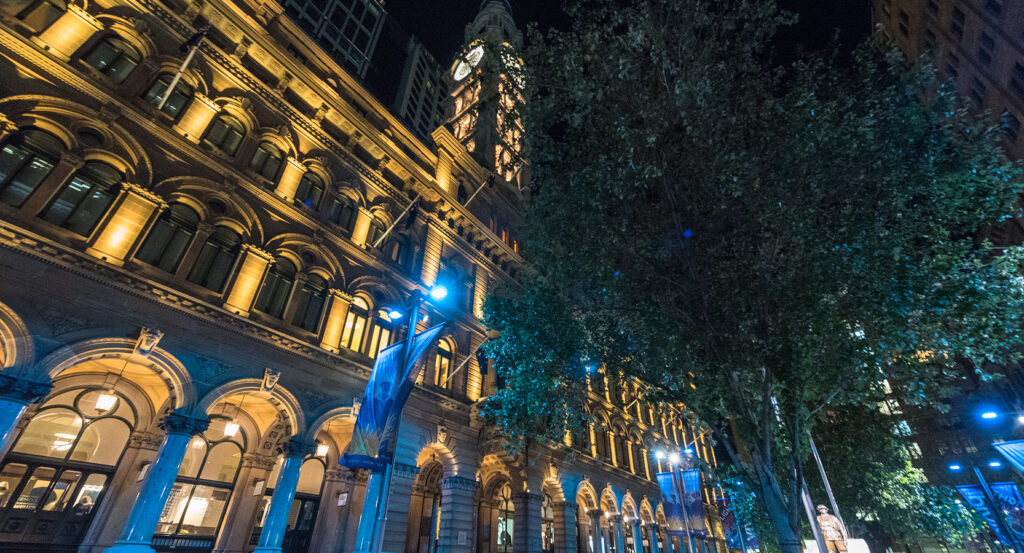
Set against the rhythm of sandstone colonnades and the hum of modern life, the Cenotaph stands as a still point in the city's endless motion. Its form is deceptively simple: a solid block of granite resting in solemn balance beneath the open sky, guarded by two bronze figures, an army soldier and a sailor, both life-sized and eternal. Every contour of the sculpture seems to hold the hush of remembrance. When you stand before it, surrounded by the rush of commuters and the distant clang of the light rail, the contrast is profound, time itself seems to pause. The Cenotaph isn't about spectacle; it's about presence. It asks nothing but acknowledgment. This is the space where dawn breaks differently on April 25th each year, where thousands gather before sunrise for the Anzac Day service, and where the first light spills across bronze and granite in a quiet, wordless salute.
What you should know about Anzac Cenotaph.
Anzac Cenotaph was among the first major war memorials erected in Australia after World War I, and its creation marked the beginning of a new kind of national architecture: solemn, symbolic, and deeply human.
Commissioned in 1927 and completed in 1929, the memorial was designed by architect Sir Bertram Mackennal, a sculptor of rare resonant precision. He resisted the ornamental flourishes common in war monuments of the era, opting instead for restraint, the kind of quiet strength that outlasts marble rhetoric. The granite block was quarried from Moruya on the New South Wales South Coast, the same source as the Sydney Harbour Bridge pylons, connecting two icons of endurance through stone. The bronze figures were modeled on real servicemen, one from the Australian Imperial Force and one from the Royal Australian Navy, representing not just the dead, but the living guardians of their memory. Every element of the design was deliberate: the east, west alignment ensures that the rising sun on Anzac morning illuminates the figures in a slow crescendo of gold, symbolizing rebirth and resilience. The inscription, “To Our Glorious Dead,” is as stark and understated as the structure itself, Mackennal believed that no other words were necessary. Over time, the Cenotaph became more than a memorial; it became ritual ground. Each dawn service, each wreath laid, each moment of silence reinforces a tradition that transcends generations. Even the surrounding paving was designed to accommodate the gathering of thousands without overwhelming the monument, a space that expands with emotion rather than scale. Beneath the granite surface lies a sealed cavity containing soil from battlefields across Europe and the Middle East - Gallipoli, France, Palestine, connecting Sydney's heart to distant lands where Australians fell.
How to fold Anzac Cenotaph into your trip.
To visit Anzac Cenotaph is to step into the quiet center of Sydney's collective memory, a moment of pause that transforms even the most hurried itinerary.
You'll find it near the eastern end of Martin Place, framed by the stately façades of sandstone banks and government buildings. Approach from George Street if you can, the gradual narrowing of the plaza creates a natural procession, a kind of architectural reverence that draws you inward. Visit early in the morning or at dusk, when the light softens and the sound of the city feels muffled, as if the space itself enforces respect. Take a few minutes to stand before the bronze figures, look at their faces, calm but unyielding, gazing forever into history. If you visit on Anzac Day (April 25), arrive before dawn; the experience is incomparable. Thousands stand shoulder to shoulder in complete silence as the Last Post sounds through the city, echoing off glass towers that were once scaffolds of war-time industry. But even on an ordinary day, the Cenotaph holds power. Watch as passersby slow their steps, as strangers unconsciously remove their hats, as birds circle above the granite and then settle on nearby lampposts, silent. Allocate 20-30 minutes for reflection, enough time to let the stillness work its way through you. Then step back and look down Martin Place: the fountains glinting, the city alive again. The world resumes, but you've touched something eternal. Anzac Cenotaph doesn't end your journey, it anchors it.
Where your story begins.
Foresyte Travel reveals places that feel extraordinary long before you arrive.
Experience premium editorial crafted for luxury travelers.